
Limestone Grinding Mill for Calcium Carbonate in Power Plant Desulfurization
We provide a wide range of mills — including Raymond mill, trapezoidal mill, vertical mill, ultrafine mill, and ball mill, obtained ISO9001 international quality certification, EU CE certification, and Customs Union CU-TR certification. Suitable for processing minerals such as limestone, phosphate, quicklime, kaolin, talc, barite, bentonite, calcium carbonate, dolomite, coal, gypsum, clay, carbon black, slag, cement raw materials, cement clinker, and more.
The discharge range of these mills can be adjusted to meet specific processing needs, typically from 80-400 mesh, 600-3250 mesh, and can achieve the finest particle size of up to 6000 mesh(D50).
If you are looking for a reliable grinding solution to turn stone or minerals into fine powder, please feel free to contact our online customer service.
Limestone Grinding for Flue Gas Desulfurization: A Critical Process
Flue Gas Desulfurization (FGD) is an essential process for coal-fired power plants to meet stringent environmental regulations by removing sulfur dioxide (SO₂) from exhaust flue gases. The heart of a wet limestone FGD system is the preparation of a high-quality limestone slurry. This slurry, typically consisting of 20-30% finely ground calcium carbonate (CaCO₃) by weight, is sprayed into the flue gas stream. The SO₂ reacts with the limestone to form gypsum, a saleable by-product.
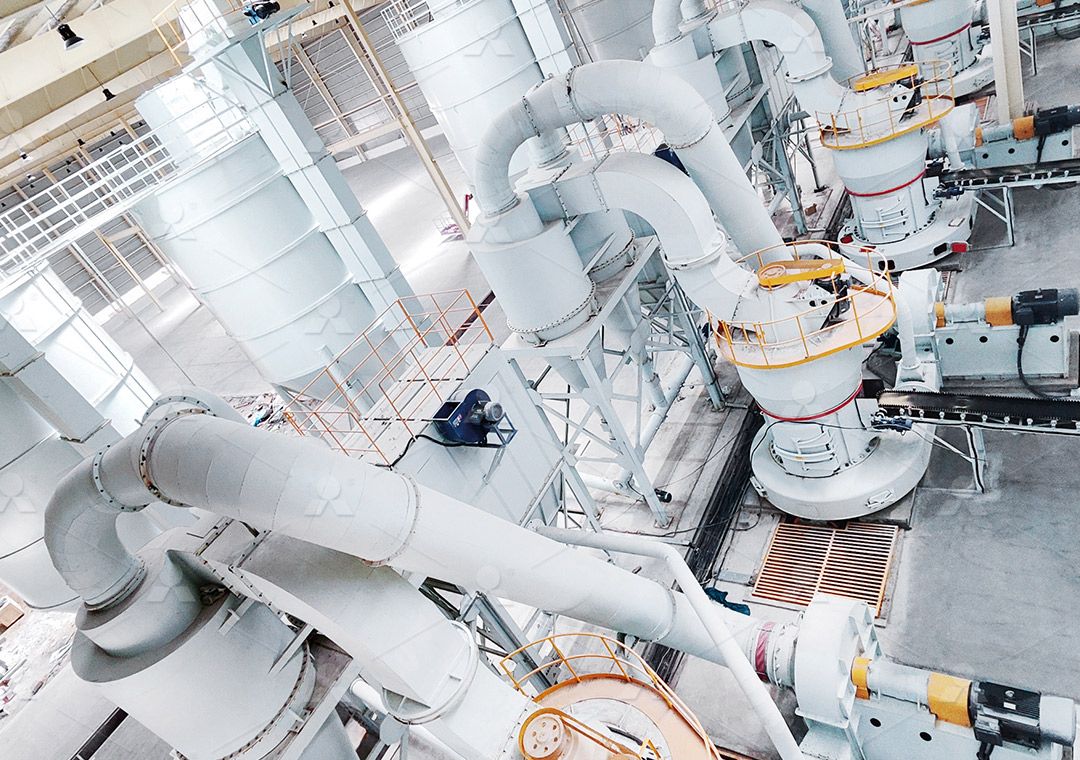
The efficiency of this chemical reaction is heavily dependent on the fineness and surface area of the limestone powder. Finer particles dissolve more rapidly, leading to higher SO₂ removal efficiency, reduced limestone consumption, and more manageable by-products. Consequently, selecting the right grinding mill is not just an operational decision but a strategic one impacting compliance, operational cost, and overall plant efficiency.
Key Considerations for Mill Selection in FGD Applications
When choosing a grinding mill for FGD limestone preparation, several factors are paramount:
- Particle Size Distribution: The target fineness is usually 90-95% passing 325 mesh (44 μm). A narrow particle size distribution ensures consistent reactivity.
- Capacity & Reliability: Power plants operate continuously. The mill must deliver a consistent output (tph) with high availability and minimal unplanned downtime.
- Energy Efficiency: Grinding is an energy-intensive process. A mill with lower specific energy consumption (kWh/t) significantly reduces operating costs.
- Environmental Compatibility: The system must be fully enclosed with effective dust collection to prevent particulate emissions and maintain a clean plant environment.
- Low Maintenance: Design features that simplify maintenance and extend the life of wear parts are crucial for minimizing long-term costs.
Recommended Solution: The MW Ultrafine Grinding Mill
For power plants seeking to optimize their FGD reagent preparation, our MW Ultrafine Grinding Mill presents an ideal solution. Engineered for high-capacity production of ultra-fine powders, it excels in the precise demands of limestone desulfurization.
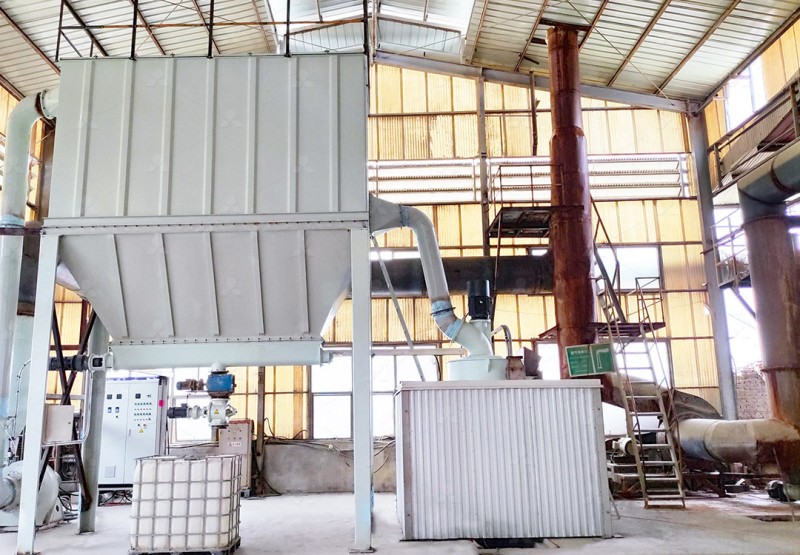
The MW Series is designed with a robust construction that guarantees stable, continuous operation. Its cage-type powder selector, incorporating German technology, allows for precise control over fineness, easily achieving the desired d97 ≤ 44μm for optimal SO₂ absorption. A significant advantage for 24/7 power plant operations is its external lubrication system, enabling maintenance without shutdowns. Furthermore, the integrated efficient pulse dust collector and muffler ensure the entire milling process is environmentally sound, with no dust pollution and reduced noise levels.
Key Specifications for FGD Application:
- Input Size: 0-20 mm
- Capacity: 0.5 – 25 tph
- Adjustable Fineness: 325-2500 meshes
- Feature: Higher yielding with 40% higher capacity than jet mills and lower energy consumption, only 30% of jet mill system energy use.
Alternative for Larger Capacities: LM Vertical Grinding Mill
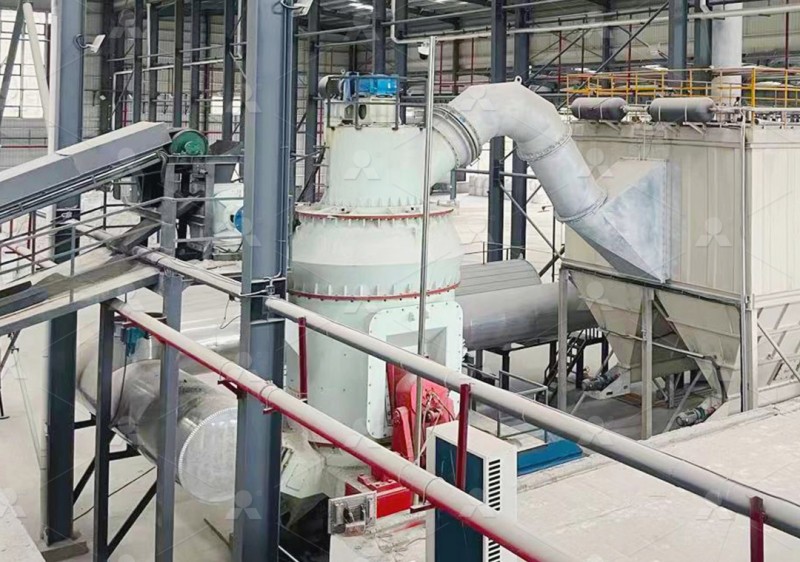
For massive power generation facilities requiring even higher throughput, our LM Vertical Grinding Mill is a proven workhorse. It integrates crushing, grinding, drying, classifying, and conveying in a single unit, offering a compact footprint and remarkable energy savings of 30%-40% compared to traditional ball mills. Its short material lingering time reduces over-grinding and ensures a consistent product quality essential for efficient desulfurization.
\n
Frequently Asked Questions (FAQ)
What fineness of limestone powder is required for wet FGD systems?
Most wet FGD systems require a limestone powder fineness of 90-95% passing 325 mesh (44 micrometers). This ensures a high surface area for rapid dissolution and reaction with SO₂.
Why is the MW Mill particularly suitable for power plant FGD?
The MW Ultrafine Grinding Mill is designed for high-efficiency, low-energy consumption grinding of limestone to the exact fineness required. Its external lubrication and lack of internal screws and bearings in the grinding chamber allow for maintenance without prolonged shutdowns, which is critical for continuous power plant operation. Its built-in pulse dust collector guarantees an environmentally clean process.
How does grinding mill selection impact overall FGD operating costs?
The grinding mill is a major consumer of energy within the FGD system. Selecting an energy-efficient mill like the MW or LM series directly reduces electricity costs. Furthermore, a mill that produces a consistent, high-quality powder maximizes SO₂ removal efficiency, minimizing limestone consumption and reducing waste handling costs. Low maintenance requirements also contribute to lower long-term operating expenses.