
Latest Raymond Mill Models: Features and Industrial Applications
We provide a wide range of mills — including Raymond mill, trapezoidal mill, vertical mill, ultrafine mill, and ball mill, obtained ISO9001 international quality certification, EU CE certification, and Customs Union CU-TR certification. Suitable for processing minerals such as limestone, phosphate, quicklime, kaolin, talc, barite, bentonite, calcium carbonate, dolomite, coal, gypsum, clay, carbon black, slag, cement raw materials, cement clinker, and more.
The discharge range of these mills can be adjusted to meet specific processing needs, typically from 80-400 mesh, 600-3250 mesh, and can achieve the finest particle size of up to 6000 mesh(D50).
If you are looking for a reliable grinding solution to turn stone or minerals into fine powder, please feel free to contact our online customer service.
Latest Raymond Mill Models: Features and Industrial Applications
The industrial milling landscape has evolved dramatically from the traditional Raymond mill designs that once dominated powder processing. Today’s advanced grinding systems offer unprecedented levels of efficiency, precision, and environmental compliance, catering to increasingly stringent industry demands. Modern Raymond-type mills incorporate cutting-edge technologies in grinding mechanics, material handling, and process control, transforming them into sophisticated production centers for fine and ultra-fine powders.
Contemporary models are engineered to address core challenges in mineral processing, chemical production, and advanced material manufacturing. Key advancements include intelligent grinding curve designs, multi-head powder separation systems, and fully integrated digital control platforms. These innovations translate directly into higher throughput, reduced specific energy consumption, and superior product consistency across diverse material types.
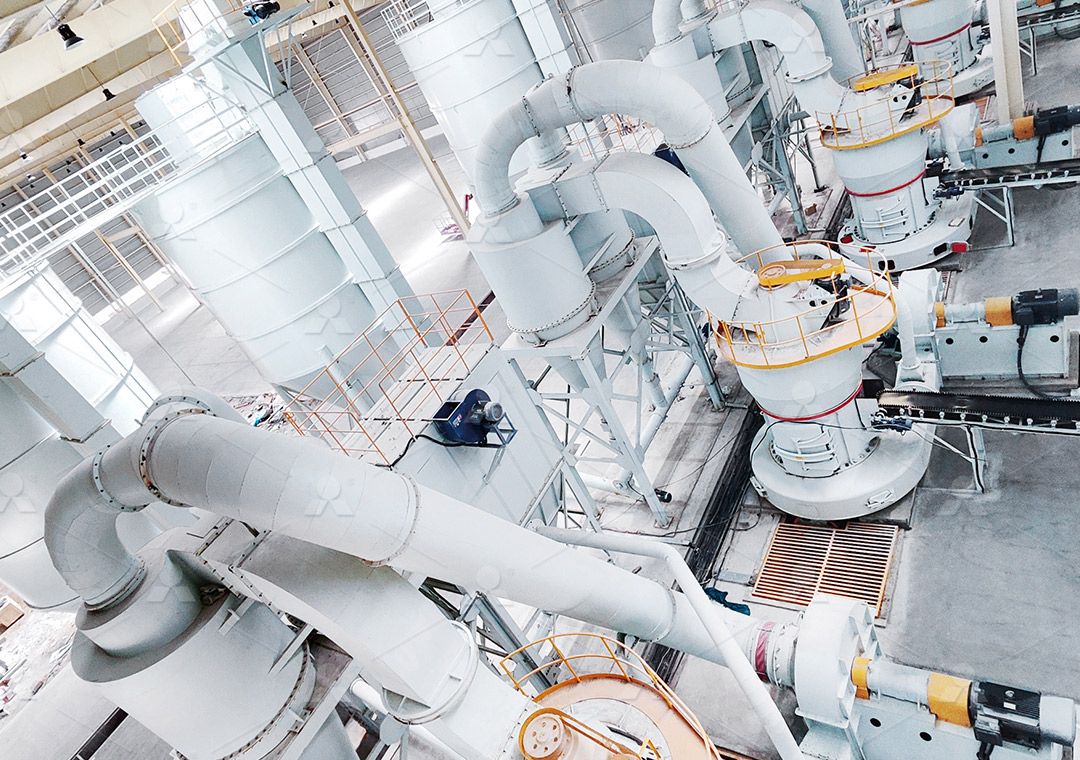
Core Technological Advancements in Modern Grinding Systems
The most significant leap in milling technology lies in precision engineering and intelligent system design. Modern mills utilize numerical control machining for core components, ensuring exceptional dimensional accuracy and operational reliability. The elimination of traditional design limitations—such as internal rolling bearings and screws in grinding chambers—has dramatically reduced maintenance downtime and vulnerability to mechanical failure.
Powder separation technology represents another critical frontier. Advanced cage-type selectors, often incorporating German engineering principles, enable precise particle size classification with screening rates achieving d97≤5μm in single passes. This allows operators to adjust product fineness across wide ranges (typically 325-2500 meshes) without compromising system stability or efficiency. Furthermore, integrated pulse-jet dust collection systems and acoustic damping technologies ensure operations meet stringent international environmental and workplace safety standards.
Specialized Models for Diverse Industrial Applications
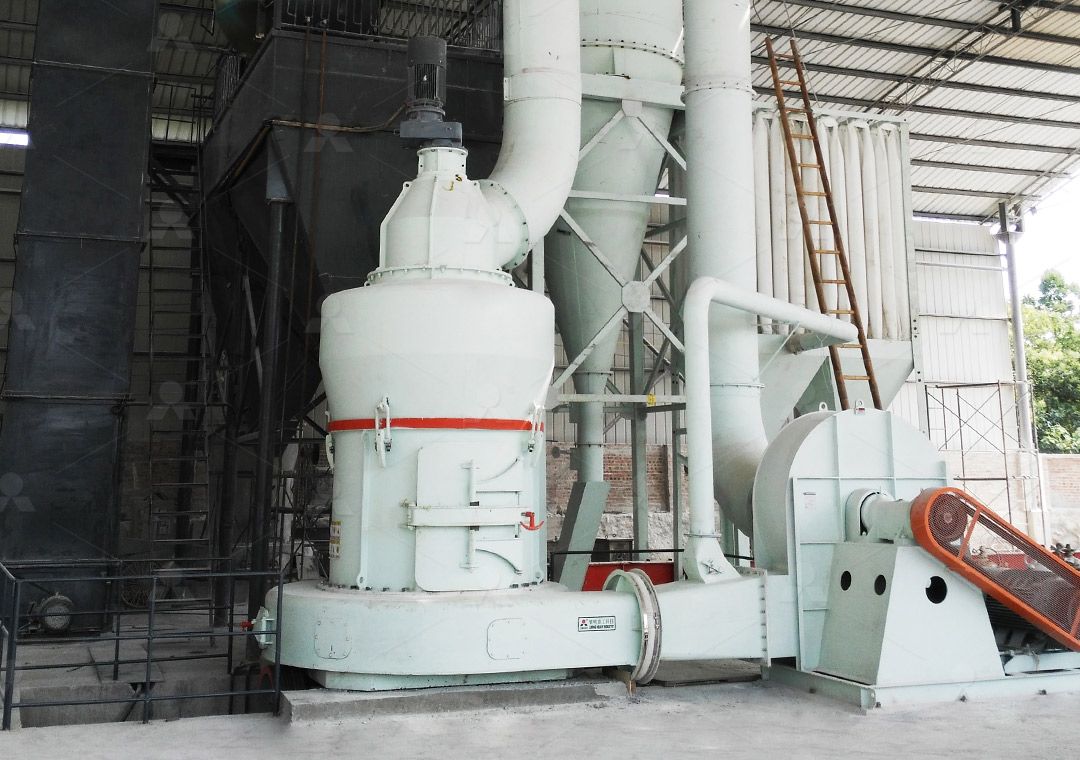
Different industries demand unique milling solutions. For ultra-fine powder production in sectors like cosmetics, pharmaceuticals, and high-performance plastics, specialized equipment is essential. The MW Ultrafine Grinding Mill exemplifies this specialization. Designed for customers requiring ultra-fine powders, it handles inputs up to 20mm with capacities ranging from 0.5 to 25 tph. Its design eliminates rolling bearings and screws within the grinding chamber, removing primary failure points. The integrated efficient pulse dust collector and muffler system ensures a clean, low-noise operation that minimizes environmental impact. It is particularly effective on materials like limestone, calcite, dolomite, talc, and barite, as well as specialized applications in chemicals, paints, and food additives.

For operations prioritizing vertical integration and space efficiency, vertical roller mills have become the benchmark. The LUM Ultrafine Vertical Grinding Mill integrates grinding, grading, and transporting into a single compact unit. With an input size of 0-10mm and capacity of 5-18 tph, it features unique roller shell and lining plate grinding curves that promote stable material bed formation and efficient single-pass milling. Its reversible structure, facilitated by a hydraulic system, allows grinding rollers to be easily moved out for maintenance, significantly reducing service time and associated production losses.
Selecting the Optimal Mill for Your Operation
Choosing the right mill requires a thorough analysis of material characteristics, desired product specifications, and production economics. Key selection criteria include:
- Material Hardness & Abrasiveness: Determines wear part design and material selection.
- Target Fineness & Particle Distribution: Dictates the required separator technology and grinding pressure.
- Moisture Content: Influences the need for integrated drying capabilities.
- Production Volume & Scalability: Guides capacity sizing and system modularity.
- Energy & Operational Costs: Highlights the importance of specific energy consumption and maintenance accessibility.
Modern systems like the MW and LUM mills address these factors through designs that offer higher yield with lower energy consumption—often 30-50% more efficient than jet or ball mills—and features that ensure worry-free, continuous 24/7 operation with readily available original spare parts and technical support.
The Future of Industrial Grinding
The trajectory of milling technology points toward greater automation, connectivity, and sustainability. Future developments will likely focus on AI-driven process optimization, predictive maintenance through IoT sensors, and even lower energy footprints through advanced aerodynamic designs and regenerative systems. The integration of real-time particle size analyzers for closed-loop control is already becoming a reality in premium models.
For industries ranging from construction materials to advanced ceramics and from coal processing to specialty chemicals, investing in the latest Raymond mill technology is not merely an equipment upgrade—it’s a strategic move toward greater profitability, product quality, and environmental stewardship. The combination of robust mechanical design, like that seen in the MW Ultrafine Grinding Mill, with sophisticated process control creates a powerful tool for competitive advantage in today’s global market.
Frequently Asked Questions (FAQ)
Q1: What is the primary advantage of modern Raymond mills over traditional ball mills?
A1: Modern Raymond-type mills offer significantly higher energy efficiency (often 30-50% less power consumption), a much smaller footprint, integrated drying and classification, and superior control over product fineness and particle size distribution compared to traditional ball mills.
Q2: How does the MW Ultrafine Grinding Mill achieve its high efficiency and low maintenance?
A2: The MW Mill utilizes newly designed grinding curves for higher efficiency and a chamber free from rolling bearings and screws—common failure points. Its external lubrication system allows for maintenance without shutdown, and the German-technology cage-type powder selector ensures precise, high-yield separation.
Q3: Can these mills handle abrasive materials without excessive wear?
A3: Yes. High-end models feature wear-resistant alloys for grinding rollers and rings, developed through collaborations with scientific institutes. These materials can extend service life by 1.7 to 2.5 times compared to traditional high manganese steel, and many designs allow for easy reversal or replacement of worn parts.
Q4: What fineness range can I expect from an ultra-fine grinding mill?
A4: Advanced models like the MW Ultrafine Grinding Mill can adjust product fineness between 325 and 2500 meshes, with the capability to achieve a screening rate of d97≤5μm in a single pass, suitable for the most demanding ultra-fine powder applications.
Q5: Are these milling systems environmentally friendly?
A5: Absolutely. Contemporary designs are built with national environmental standards in mind. They incorporate efficient pulse-jet dust collectors for near-zero dust emission, mufflers and noise reduction rooms to lower acoustic impact, and closed-circuit systems that operate under negative pressure to prevent material spillage.
Q6: How important is digital control in modern grinding operations?
A6: Digital control is critical for consistency, efficiency, and safety. PLC systems allow precise control over grinding pressure, rotational speed, and feed rates. Numerical control in manufacturing also ensures high precision for core components, leading to more stable and reliable mill operation.