
Key Technical Points for Ultrafine Calcium Carbonate Grinding Process
We provide a wide range of mills — including Raymond mill, trapezoidal mill, vertical mill, ultrafine mill, and ball mill, obtained ISO9001 international quality certification, EU CE certification, and Customs Union CU-TR certification. Suitable for processing minerals such as limestone, phosphate, quicklime, kaolin, talc, barite, bentonite, calcium carbonate, dolomite, coal, gypsum, clay, carbon black, slag, cement raw materials, cement clinker, and more.
The discharge range of these mills can be adjusted to meet specific processing needs, typically from 80-400 mesh, 600-3250 mesh, and can achieve the finest particle size of up to 6000 mesh(D50).
If you are looking for a reliable grinding solution to turn stone or minerals into fine powder, please feel free to contact our online customer service.
Key Technical Points for Ultrafine Calcium Carbonate Grinding Process
Producing high-quality ultrafine calcium carbonate (CaCO3) powder is a precision task that demands careful consideration of several technical aspects. The process involves more than just reducing particle size; it encompasses achieving the desired fineness distribution, maintaining product purity, and ensuring operational efficiency. From feed material preparation to final product collection, each stage requires meticulous control.
1. Feed Material Preparation and Characterization
Before grinding begins, proper preparation of the raw calcium carbonate is crucial. The feed material should be consistently sized to ensure uniform processing. Typically, the starting material should be crushed to below 20mm to prevent blockages and ensure efficient feeding into the grinding mill. Moisture content is another critical factor – excessive moisture can lead to agglomeration and reduced grinding efficiency. For most ultrafine grinding applications, the moisture content should be maintained below 1-2%.
Characterization of the raw material’s chemical and physical properties is equally important. Variations in hardness, purity, and crystal structure can significantly affect grinding performance and final product quality. Impurities such as silica or iron compounds can cause excessive wear on grinding components and contaminate the final product.
2. Selection of Grinding Technology
Choosing the appropriate grinding technology is perhaps the most critical decision in the ultrafine calcium carbonate production process. Different mill types offer varying advantages in terms of energy efficiency, particle size distribution control, and operational stability.
For ultrafine applications where precise control over particle size distribution is required, advanced grinding systems with integrated classification technology are essential. The grinding mechanism – whether impact, compression, or attrition – will significantly influence the final product characteristics including particle shape, surface area, and activation level.
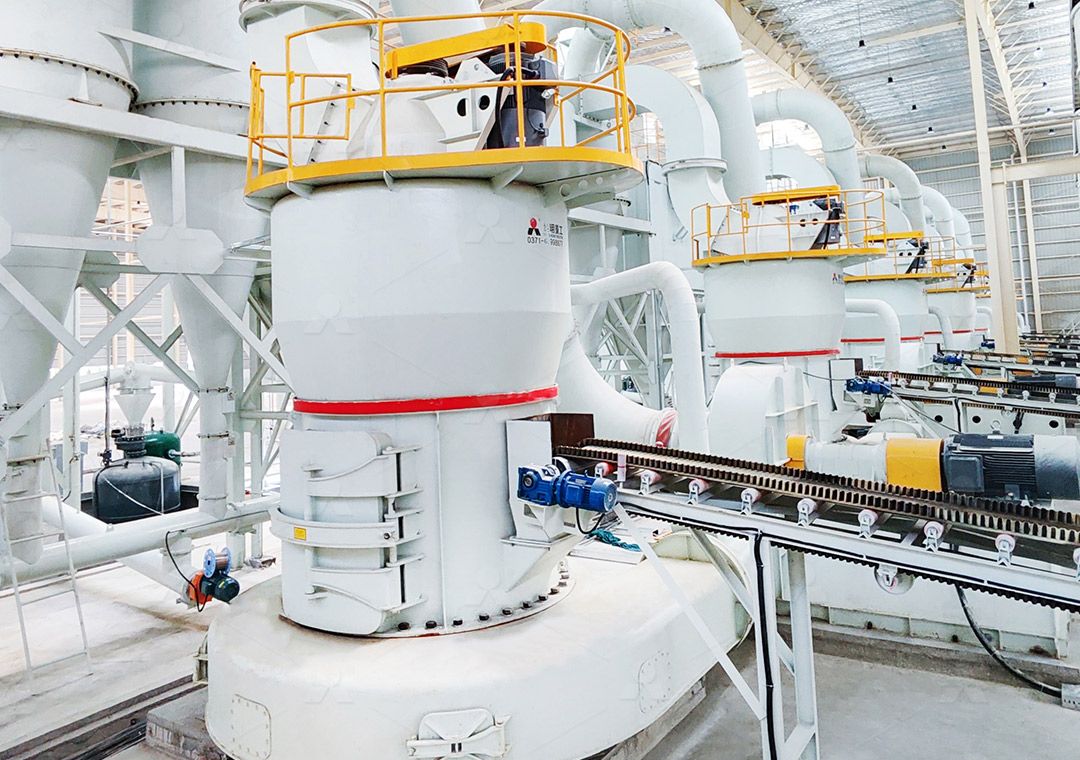
Among the various options available, our MW Ultrafine Grinding Mill stands out for calcium carbonate applications. With an input size capability of 0-20 mm and capacity ranging from 0.5-25 tph, this system is specifically engineered for ultra-fine powder production. The mill features higher yielding with lower energy consumption – achieving 40% higher production capacity than jet mills with the same fineness and power requirements. Its cage-type powder selector, incorporating German technology, allows precise fineness adjustment between 325-2500 meshes with screening rates achieving d97≤5μm in a single pass.
3. Particle Size Control and Classification
Effective classification is paramount in ultrafine calcium carbonate production. The grinding system must incorporate efficient separation technology to ensure that only properly sized particles proceed to product collection, while oversize material is returned for further grinding. Modern mills utilize advanced air classification systems that provide precise cut-point control and high separation efficiency.
The classification system must work in harmony with the grinding mechanism to optimize overall system performance. Factors such as air flow rate, classifier speed, and system pressure must be carefully balanced to achieve the desired product characteristics while maintaining energy efficiency.
4. Energy Efficiency Considerations
Grinding operations are notoriously energy-intensive, particularly when pursuing ultrafine particle sizes. Implementing energy-saving technologies and operating strategies can significantly reduce production costs while maintaining product quality. Key approaches include optimizing the grinding media size and distribution, maintaining proper mill loading, and implementing advanced control systems that adjust operational parameters in real-time based on feed characteristics and product requirements.
The MW Ultrafine Grinding Mill addresses these concerns through its innovative design that eliminates rolling bearings and screws in the grinding chamber, reducing energy losses from mechanical friction. The external lubrication system allows continuous operation without shutdowns for maintenance, further enhancing energy efficiency over the system’s operational life.
5. Environmental and Safety Aspects
Modern grinding operations must address environmental concerns, particularly dust control and noise pollution. Calcium carbonate dust can pose respiratory hazards and create housekeeping challenges if not properly contained. Effective dust collection systems are essential, not only for environmental compliance but also for product recovery and operational efficiency.
Our grinding systems incorporate efficient pulse dust collectors and mufflers that minimize environmental impact. The MW mill’s fully enclosed design operates under negative pressure, preventing dust escape while the integrated silencer and noise elimination room reduce operational noise to environmentally acceptable levels. These features ensure compliance with national environmental protection standards while maintaining a safe working environment.
6. System Integration and Automation
Modern ultrafine grinding plants benefit greatly from advanced automation and control systems. Integrated PLC controls allow precise adjustment of grinding parameters, monitoring of system performance, and automatic response to changing conditions. Digital control systems enable operators to maintain optimal grinding conditions consistently, reducing quality variations and improving overall efficiency.
The MW Ultrafine Grinding Mill exemplifies this approach with its digitally processed components and precision machining. The system’s design incorporates数十lines of numerical controlling machine tools, ensuring high precision in manufacturing, particularly for core components that directly affect grinding performance and product quality.
Conclusion
Successful ultrafine calcium carbonate grinding requires a holistic approach that considers all technical aspects from feed preparation to final product collection. The selection of appropriate grinding technology, particularly advanced systems like the MW Ultrafine Grinding Mill, provides the foundation for efficient, consistent production of high-quality ultrafine calcium carbonate products. By addressing the key technical points outlined above, producers can optimize their operations for maximum productivity, quality, and environmental compliance.
For operations requiring even higher precision and specialized performance, our LUM Ultrafine Vertical Grinding Mill offers additional advantages with its latest Taiwan grinding roller technology and German powder separating technology, handling input sizes of 0-10 mm at capacities of 5-18 tph.