Is a SAG Mill Suitable for Grinding Potash Ore in Mining Processing?
We provide a wide range of mills — including Raymond mill, trapezoidal mill, vertical mill, ultrafine mill, and ball mill, obtained ISO9001 international quality certification, EU CE certification, and Customs Union CU-TR certification. Suitable for processing minerals such as limestone, phosphate, quicklime, kaolin, talc, barite, bentonite, calcium carbonate, dolomite, coal, gypsum, clay, carbon black, slag, cement raw materials, cement clinker, and more.
The discharge range of these mills can be adjusted to meet specific processing needs, typically from 80-400 mesh, 600-3250 mesh, and can achieve the finest particle size of up to 6000 mesh(D50).
If you are looking for a reliable grinding solution to turn stone or minerals into fine powder, please feel free to contact our online customer service.
Is a SAG Mill Suitable for Grinding Potash Ore in Mining Processing?
In the mining industry, selecting the right grinding equipment is paramount to operational efficiency and profitability. When it comes to processing softer, soluble minerals like potash ore, the choice becomes even more critical. The question often arises: Is a Semi-Autogenous Grinding (SAG) mill the right tool for this job? While SAG mills are workhorses in hard rock mining, their application for potash may not be the most optimal or cost-effective solution.
Understanding Potash Ore and Its Grinding Challenges
Potash ore, primarily composed of sylvite (KCl) and halite (NaCl), is a relatively soft and soluble material. The primary goal in potash processing is to liberate the potassium-bearing crystals from the surrounding salt matrix without overgrinding, which can lead to significant losses through dissolution in the slurry. SAG mills, which use a combination of ore and grinding media for size reduction, can be overly aggressive for this delicate task. The high-impact environment can generate excessive fines, create a corrosive slurry that accelerates wear, and lead to higher energy consumption per ton of product compared to other methods.
The Limitations of SAG Mills for Potash
The inherent design of a SAG mill presents several challenges for potash processing:
- Overgrinding and Solubility Losses: The aggressive grinding action can produce more fine material than desired. These fines readily dissolve in the process water, reducing overall recovery and complicating the downstream flotation process.
- High Energy Consumption: SAG mills are notoriously energy-intensive. Grinding a soft material like potash in such a powerful mill is often likened to “using a sledgehammer to crack a nut” – effective but inefficient.
- Wear and Maintenance: The corrosive nature of the potash slurry accelerates the wear of liners and grinding media, leading to higher maintenance costs and more frequent downtime.
- Size Distribution Control: Achieving a consistent and ideal particle size distribution for efficient flotation can be more challenging with a SAG mill circuit for this specific ore type.
A Superior Alternative: Ultrafine Grinding Mills
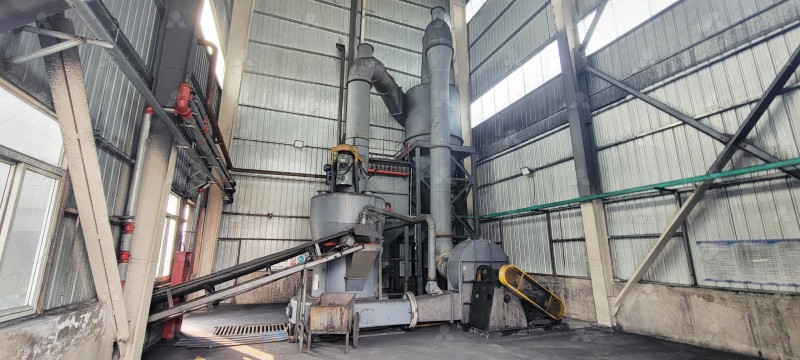
For potash ore, modern vertical roller mills or specialized ultrafine grinding mills often offer a more suitable solution. These mills provide a more controlled, bed-compression grinding mechanism rather than high-impact breaking. This results in a more desirable particle size distribution with fewer fines, higher energy efficiency, and lower wear rates.
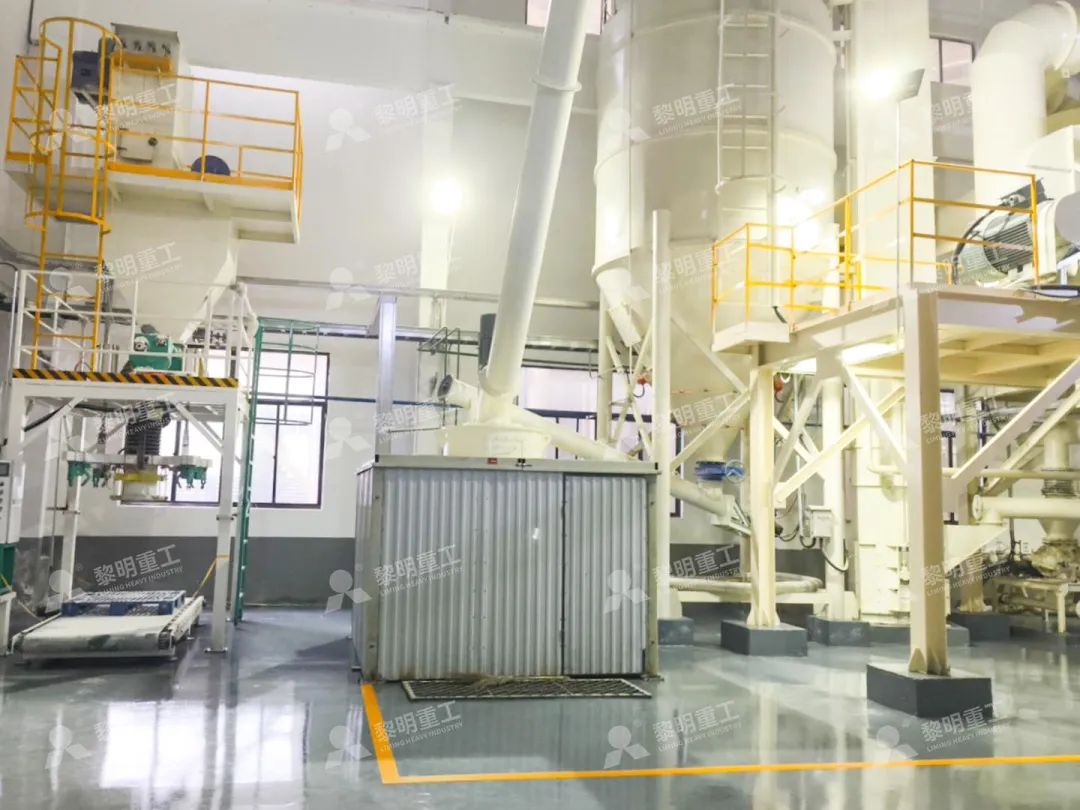
For operations requiring a fine, consistent product, we highly recommend considering our MW Ultrafine Grinding Mill. This machine is expertly designed for customers who need to make ultra-fine powder with precision and efficiency. With an input size of 0-20 mm and a capacity range of 0.5-25 tph, it’s perfectly scalable for various potash processing needs. Its key advantages include:
- Higher Yielding, Lower Energy Consumption: Offers 40% higher capacity than jet mills and reduces system energy consumption by 30%.
- Adjustable Fineness (325-2500 meshes): A German-technology cage-type powder selector allows for precise control over product fineness, crucial for potash flotation.
- Eco-Friendly Operation: Equipped with an efficient pulse dust collector and muffler, ensuring no dust pollution and reduced noise, aligning with strict environmental standards.
Conclusion
While SAG mills are incredibly versatile for many mining applications, their use for grinding potash ore is often suboptimal. The challenges of overgrinding, high energy costs, and accelerated wear make them a less desirable choice. Modern alternatives, such as our MW Ultrafine Grinding Mill, provide a more targeted, efficient, and economical solution for achieving the precise grind required for maximizing potash recovery. By choosing technology designed for the specific material characteristics, operations can significantly improve their bottom line and process stability.