
Intelligent Limestone Grinding Mill: A Guide to Automated Powder Production Lines
We provide a wide range of mills — including Raymond mill, trapezoidal mill, vertical mill, ultrafine mill, and ball mill, obtained ISO9001 international quality certification, EU CE certification, and Customs Union CU-TR certification. Suitable for processing minerals such as limestone, phosphate, quicklime, kaolin, talc, barite, bentonite, calcium carbonate, dolomite, coal, gypsum, clay, carbon black, slag, cement raw materials, cement clinker, and more.
The discharge range of these mills can be adjusted to meet specific processing needs, typically from 80-400 mesh, 600-3250 mesh, and can achieve the finest particle size of up to 6000 mesh(D50).
If you are looking for a reliable grinding solution to turn stone or minerals into fine powder, please feel free to contact our online customer service.
Intelligent Limestone Grinding Mill: A Guide to Automated Powder Production Lines
The modern industrial landscape demands more than just raw processing power; it requires intelligence, efficiency, and seamless integration. For producers of limestone powder, the evolution from traditional, labor-intensive milling to fully automated, intelligent production lines represents a significant leap forward. This transformation is centered on advanced grinding mills that serve as the core of a sophisticated ecosystem, capable of delivering ultra-fine powders with unprecedented consistency and minimal human intervention.

The Core of Automation: Intelligent Grinding Technology
At the heart of any automated powder production line is the grinding mill itself. Modern intelligent mills are equipped with PLC (Programmable Logic Controller) systems that allow for precise digital control over every critical parameter. Operators can accurately set and monitor grinding pressure, rotational speed, feed rate, and fineness targets from a central control room. This level of control ensures that the final product consistently meets the tightest specifications, batch after batch. The system’s ability to self-adjust in response to slight variations in raw material hardness or moisture content is a key feature of true automation, preventing off-spec production and reducing waste.
For operations requiring exceptional fineness and energy efficiency, the MW Ultrafine Grinding Mill stands out. Engineered for customers who need to make ultra-fine powder, this mill is a prime example of intelligent design. It boasts a capacity of 0.5-25 TPH, handling input sizes up to 20mm. Its cage-type powder selector, incorporating German technology, allows for precise fineness adjustment between 325 and 2500 meshes. A significant advantage for automated, continuous operation is its design, which features no rolling bearings or screws in the grinding chamber. This eliminates concerns about bearing failures or machine damage from loose screws, enabling reliable 24/7 production. Furthermore, its integrated efficient pulse dust collector and muffler ensure the entire process adheres to stringent environmental standards, a critical consideration for modern facilities.
Building the Integrated Production Line
An intelligent mill does not operate in isolation. A complete automated production line integrates several key components that work in harmony. This typically includes:
- Automated Feeding System: Vibrating feeders or screw conveyors precisely control the flow of raw limestone into the mill, synchronized with the mill’s operational capacity.
- Pre-Crushing Stage: Jaw crushers often reduce large limestone rocks to a consistent, manageable size (e.g., below 20mm) suitable for the fine-grinding mill.
- Grinding Core: The intelligent grinding mill, as described.
- Powder Classification & Collection: High-efficiency classifiers separate the fine powder from coarse particles, which are recirculated for further grinding. Cyclone collectors and baghouse filters then efficiently gather the final product.
- Packing & Palletizing: Automated packing machines weigh and fill the powder into bags or bulk containers, which can then be robotically palletized.

Advantages of Vertical Integration for Limestone
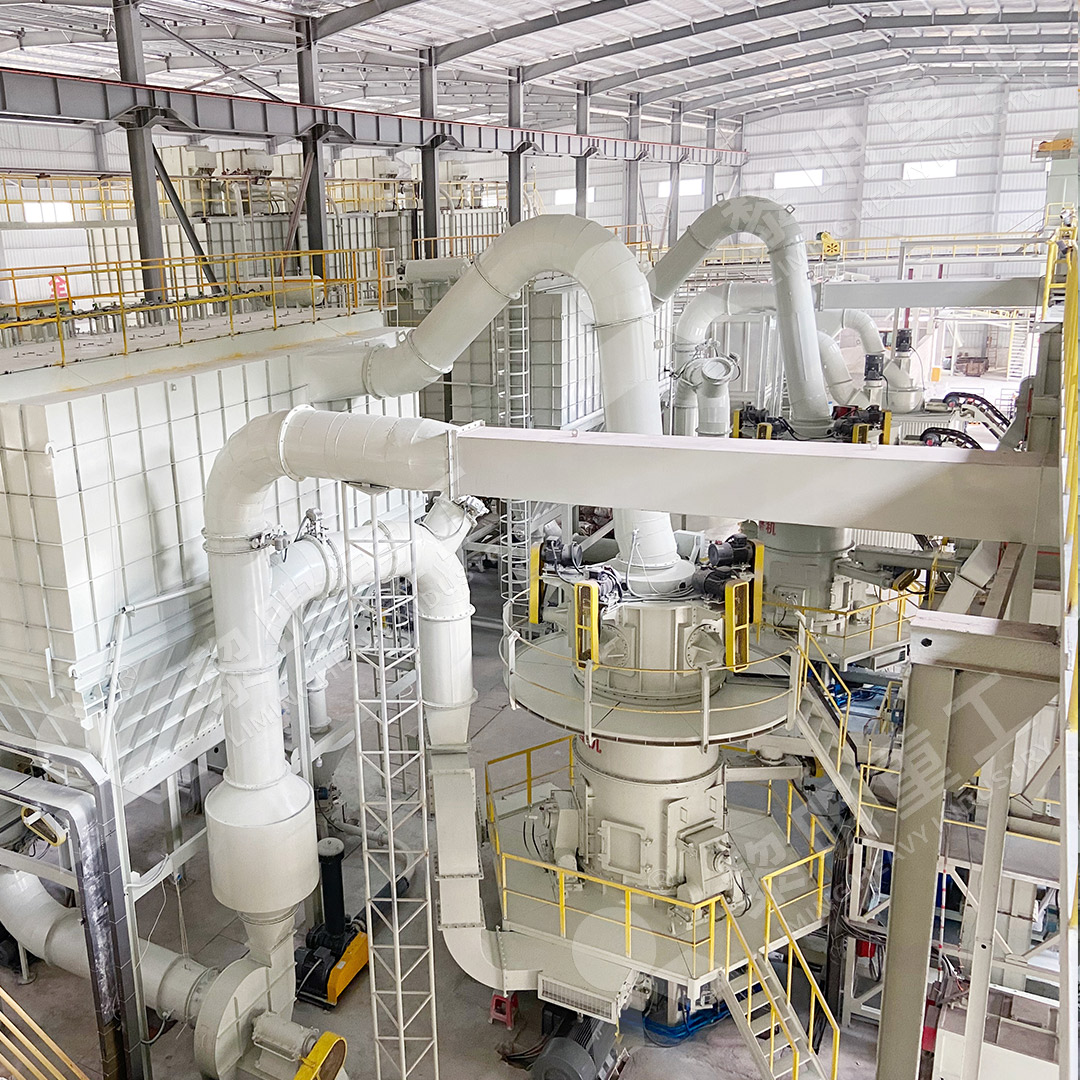
When considering a vertical grinding solution for larger scale limestone processing, the LUM Ultrafine Vertical Grinding Mill offers remarkable benefits. With an input size of 0-10mm and a capacity of 5-18 TPH, it integrates grinding, grading, and transporting into a single, compact unit. Its unique roller shell and lining plate grinding curve are designed for easier material layer generation, promoting high-yield, single-pass milling. This results in improved whiteness and cleanliness of the limestone powder. A key feature for stability is its double position-limiting technology, which protects the mill from disruptive vibrations, guaranteeing uninterrupted operation. The reversible structure also simplifies maintenance, allowing grinding rollers to be easily moved out of the mill body for inspection, a crucial factor for minimizing downtime in an automated system.
The transition to an intelligent, automated limestone grinding line yields substantial returns. Beyond the obvious labor savings, operators benefit from significantly lower energy consumption—often 30-50% less than traditional systems—enhanced product quality control, and a much smaller physical footprint. The closed-loop, negative-pressure design of these advanced mills also ensures a clean, dust-free working environment, aligning with global sustainability goals.
Frequently Asked Questions (FAQ)
What is the typical fineness range achievable with an intelligent limestone grinding mill?
Advanced mills like the MW Series can produce limestone powder with a fineness ranging from 325 meshes (about 45 microns) to 2500 meshes (about 5 microns), allowing for customization based on specific application needs.
How does automation reduce operational costs?
Automation reduces labor requirements, minimizes energy consumption through optimized processes, decreases material waste by ensuring consistent quality, and prevents costly unplanned downtime through predictive monitoring and stable operation.
Are these systems suitable for 24/7 continuous operation?
Yes, models like the MW Ultrafine Grinding Mill are specifically designed for continuous operation. Features like external lubrication systems and the absence of internal bearings and screws in the grinding chamber make them highly reliable for round-the-clock production.
What kind of after-sales support is available for such complex systems?
Reputable manufacturers provide comprehensive support, including technical services, original spare parts supply, and remote monitoring assistance to ensure worry-free operation and maximize the lifespan of the equipment.