
Hydrocyclone in Gold Mining: Optimizing Ball Mill Performance with Gold Ore Crusher
We provide a wide range of mills — including Raymond mill, trapezoidal mill, vertical mill, ultrafine mill, and ball mill, obtained ISO9001 international quality certification, EU CE certification, and Customs Union CU-TR certification. Suitable for processing minerals such as limestone, phosphate, quicklime, kaolin, talc, barite, bentonite, calcium carbonate, dolomite, coal, gypsum, clay, carbon black, slag, cement raw materials, cement clinker, and more.
The discharge range of these mills can be adjusted to meet specific processing needs, typically from 80-400 mesh, 600-3250 mesh, and can achieve the finest particle size of up to 6000 mesh(D50).
If you are looking for a reliable grinding solution to turn stone or minerals into fine powder, please feel free to contact our online customer service.
Hydrocyclone in Gold Mining: Optimizing Ball Mill Performance with Gold Ore Crusher
In the gold mining industry, achieving optimal grinding efficiency is paramount to maximizing recovery rates and operational profitability. The integration of hydrocyclones with ball mills and gold ore crushers forms a critical circuit that ensures precise particle size classification and consistent feed to downstream processes. This article explores how hydrocyclones enhance ball mill performance and highlights advanced grinding solutions for modern gold processing plants.
The Role of Hydrocyclones in Grinding Circuits
Hydrocyclones are indispensable in closed-circuit grinding operations. They classify milled ore slurry by particle size, returning coarse material to the ball mill for regrinding while directing fine particles to leaching or flotation. This separation reduces overgrinding, conserves energy, and maintains ideal grind size for gold liberation. Without efficient classification, ball mills suffer from diminished throughput and increased wear.

Synergy with Gold Ore Crushers and Ball Mills
Primary crushing by gold ore crushers reduces run-of-mine ore to a manageable size for milling. The ball mill then grinds this feed into a fine slurry. However, uncontrolled discharge leads to uneven particle distribution. Here, hydrocyclones provide real-time feedback, ensuring only optimally sized particles exit the circuit. This synergy minimizes recirculation load and boosts overall efficiency.
Upgrading to Advanced Grinding Technology
While traditional ball mills are effective, evolving ore grades demand finer grinding and lower energy consumption. For operations seeking to enhance performance, our MW Ultrafine Grinding Mill offers a revolutionary solution. With an input size of 0-20 mm and capacity ranging from 0.5-25 tph, it produces ultra-fine powders up to 2500 meshes. Its innovative design features higher yielding and lower energy consumption—40% more efficient than jet mills and twice as productive as ball mills. The absence of rolling bearings in the grinding chamber eliminates maintenance headaches, while pulse dust collectors ensure eco-friendly operation.
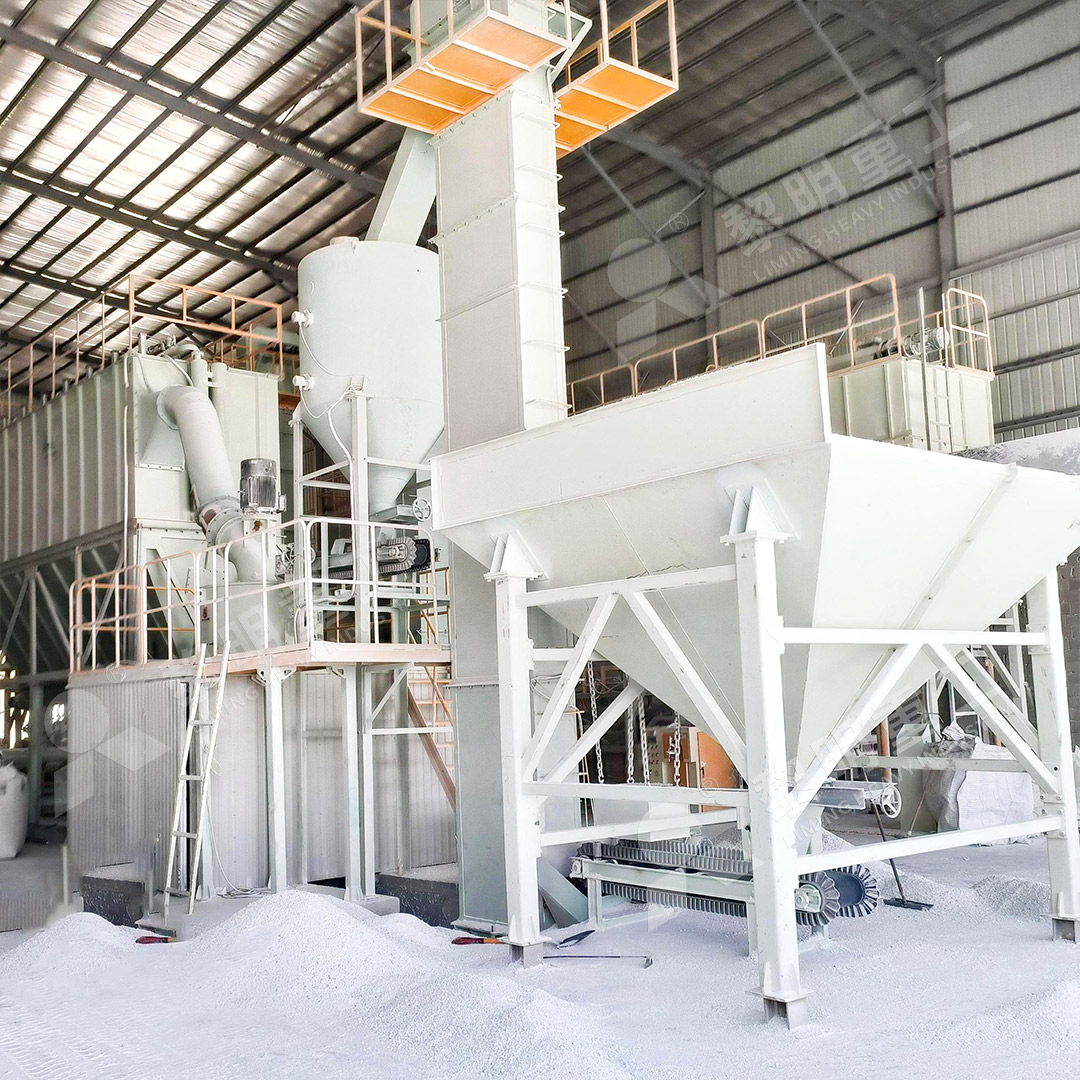
Case Study: Implementing MW Mill in a Gold Plant
A gold mine in West Africa replaced its conventional ball mill with our MW Ultrafine Grinding Mill, integrating it with existing hydrocyclones and crushers. The result? A 30% reduction in energy costs and a 40% increase in fine gold recovery due to more consistent particle size. The mill’s adjustable fineness (325-2500 meshes) allowed operators to tailor output to leaching requirements, proving ideal for refractory ores.
Conclusion
Hydrocyclones are the linchpin in optimizing ball mill performance, but pairing them with advanced grinding technology like the MW Ultrafine Grinding Mill unlocks new levels of efficiency. For gold miners aiming to reduce costs and improve recovery, upgrading to precision grinding systems is no longer optional—it’s essential.
