
How to Process Limestone with a Raymond Mill for Powder Production
We provide a wide range of mills — including Raymond mill, trapezoidal mill, vertical mill, ultrafine mill, and ball mill, obtained ISO9001 international quality certification, EU CE certification, and Customs Union CU-TR certification. Suitable for processing minerals such as limestone, phosphate, quicklime, kaolin, talc, barite, bentonite, calcium carbonate, dolomite, coal, gypsum, clay, carbon black, slag, cement raw materials, cement clinker, and more.
The discharge range of these mills can be adjusted to meet specific processing needs, typically from 80-400 mesh, 600-3250 mesh, and can achieve the finest particle size of up to 6000 mesh(D50).
If you are looking for a reliable grinding solution to turn stone or minerals into fine powder, please feel free to contact our online customer service.
How to Process Limestone with a Raymond Mill for Powder Production
Limestone powder production is a critical process in various industries, including construction, agriculture, and chemical manufacturing. Using a Raymond mill for this purpose has been a traditional and reliable method, though modern advancements have introduced more efficient alternatives. This article outlines the steps involved in processing limestone with a Raymond mill and highlights key considerations for optimal powder production.
1. Understanding Limestone and Its Properties
Limestone is a sedimentary rock composed primarily of calcium carbonate (CaCO3). Its hardness ranges from 2 to 4 on the Mohs scale, making it relatively easy to grind. However, the presence of impurities like silica or clay can affect the grinding efficiency and equipment wear. Before processing, it’s essential to analyze the limestone’s composition to determine the appropriate grinding parameters.
2. Preparation of Limestone
The first step in limestone powder production is crushing the raw material to a size suitable for the Raymond mill. Typically, limestone is crushed to below 25 mm using a jaw crusher or hammer crusher. This ensures uniform feeding and prevents blockages in the mill. Proper drying may also be necessary if the limestone has high moisture content, as excess moisture can lead to clogging and reduced efficiency.
3. Grinding with Raymond Mill
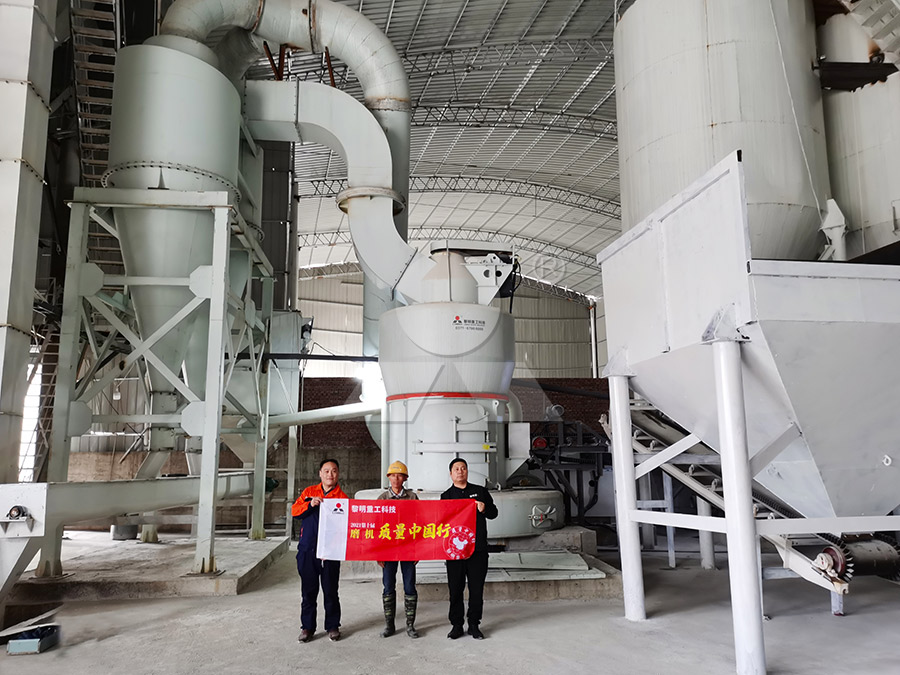
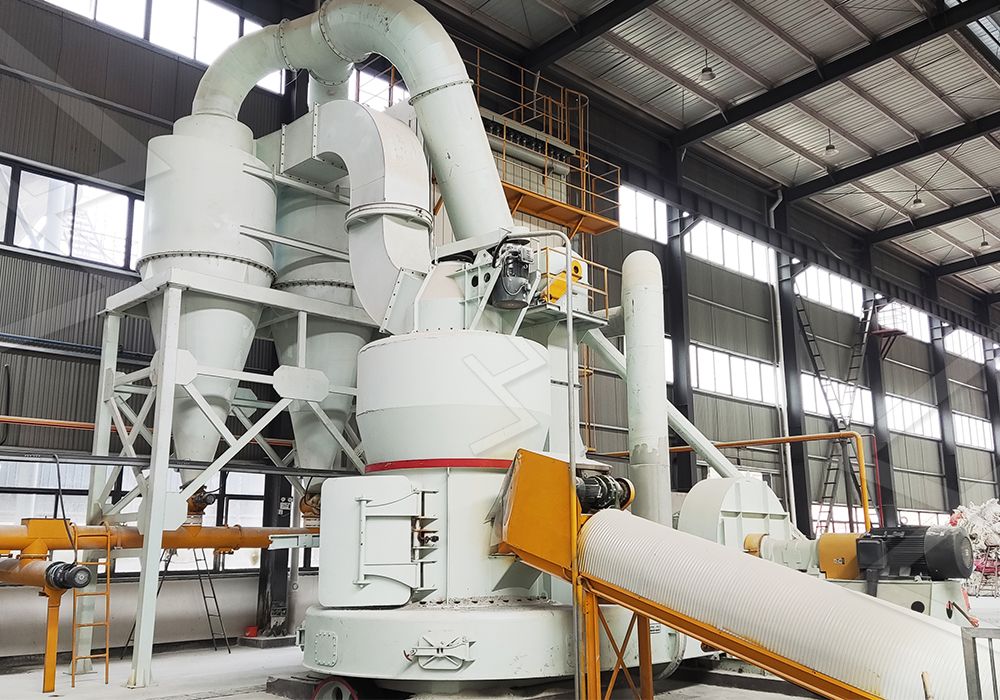
Raymond mills operate on the principle of roller grinding combined with air classification. The crushed limestone is fed into the grinding chamber via a vibrating feeder. Inside, grinding rollers rotate against a grinding ring, crushing the material into fine powder. The blower system then carries the powder to a classifier, where coarse particles are separated and returned for regrinding, while fine powder is collected as the final product.
Key parameters to control include:
- Feed size: Ensure particles are uniformly below 25 mm.
- Grinding pressure: Adjust the spring pressure on rollers for desired fineness.
- Airflow rate: Regulate the blower to optimize classification and prevent over-grinding.
Raymond mills are capable of producing powder with fineness ranging from 80 to 325 mesh, suitable for many applications. However, for ultra-fine powder requirements (up to 2500 mesh), advanced mills like our MW Ultrafine Grinding Mill are recommended. This machine offers higher efficiency, adjustable fineness between 325-2500 meshes, and eco-friendly operation with integrated dust collection and noise reduction features. It’s perfect for producing high-quality limestone powder with lower energy consumption.
4. Collection and Packaging
After grinding, the fine limestone powder is collected using a cyclone separator or bag filter. It’s crucial to ensure the collection system is airtight to prevent dust leakage and product loss. The powder can then be packaged in bags or stored in silos for distribution. Quality checks, such as fineness testing and purity analysis, should be conducted to meet industry standards.
5. Maintenance and Optimization
Regular maintenance of the Raymond mill is essential for sustained performance. Key aspects include:
- Inspecting and replacing worn grinding rollers and rings.
- Checking the classifier blades for wear.
- Lubricating moving parts to reduce friction and energy consumption.
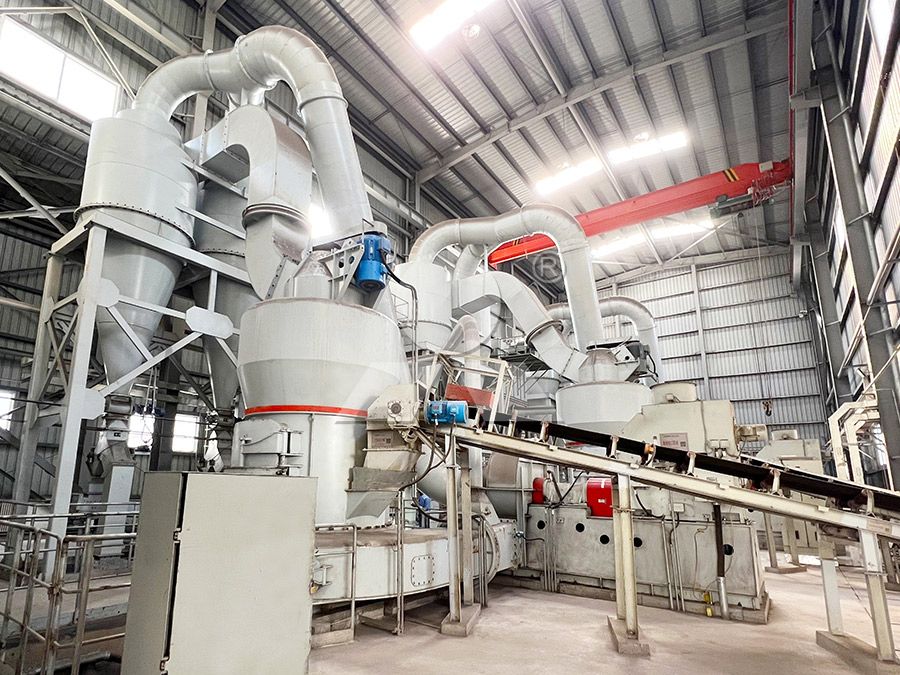
For those seeking enhanced reliability and lower maintenance, consider our LUM Ultrafine Vertical Grinding Mill. It features advanced roller technology and a reversible structure for easy maintenance, along with energy-saving benefits and stable operation. This mill is ideal for producing ultra-fine limestone powder with higher yielding rates and better quality.
Conclusion
Processing limestone with a Raymond mill is a proven method for powder production, but modern mills like the MW Ultrafine Grinding Mill and LUM Ultrafine Vertical Grinding Mill offer superior efficiency, flexibility, and environmental benefits. By following proper preparation, grinding, and maintenance practices, operators can achieve high-quality limestone powder for diverse industrial applications. Always choose equipment that matches your production needs and sustainability goals.