
How to Increase Cement Grinding Capacity Using Vertical Roller Mills
We provide a wide range of mills — including Raymond mill, trapezoidal mill, vertical mill, ultrafine mill, and ball mill, obtained ISO9001 international quality certification, EU CE certification, and Customs Union CU-TR certification. Suitable for processing minerals such as limestone, phosphate, quicklime, kaolin, talc, barite, bentonite, calcium carbonate, dolomite, coal, gypsum, clay, carbon black, slag, cement raw materials, cement clinker, and more.
The discharge range of these mills can be adjusted to meet specific processing needs, typically from 80-400 mesh, 600-3250 mesh, and can achieve the finest particle size of up to 6000 mesh(D50).
If you are looking for a reliable grinding solution to turn stone or minerals into fine powder, please feel free to contact our online customer service.
Maximizing Output: Strategies for Cement Grinding Optimization
In today’s competitive cement industry, maximizing grinding capacity isn’t just a goal—it’s a necessity for operational efficiency and profitability. Vertical Roller Mills (VRMs) have become the technology of choice for cement raw material and finish grinding due to their superior energy efficiency and drying capabilities compared to traditional ball mills. However, simply installing a VRM is not enough; operators must understand how to optimize its performance to unlock its full potential.

Key Operational Levers for Capacity Enhancement
The grinding capacity of a VRM is influenced by several interconnected factors. Understanding and precisely controlling these parameters is crucial for achieving higher throughput without compromising product quality or equipment longevity.
Grinding Pressure and Bed Stability: The hydraulic pressure applied to the grinding rollers directly impacts grinding efficiency. Increasing pressure can enhance comminution, but only up to a point. Beyond the optimal range, it leads to excessive vibration and instability of the grinding bed. The key is to maintain a stable, compact material bed that allows for efficient inter-particle comminution. Modern VRMs are equipped with sophisticated control systems that automatically adjust the pressure based on the feed rate and material characteristics.
Classifier Speed and Product Fineness: The integrated dynamic classifier is the gatekeeper of product fineness. A higher classifier speed results in a finer product but reduces mill capacity by returning more coarse material to the grinding table. To increase capacity, the target product fineness should be reviewed. Often, a slight adjustment towards the coarser end of the specification limit can yield a significant capacity boost without negatively affecting cement quality.
Air Flow and Drying Capacity: VRMs also function as efficient dryers. The volume and temperature of the process air are critical, especially when grinding materials with high moisture content. Insufficient air flow can lead to material settling in the mill and poor transport to the classifier, creating a bottleneck. Optimizing the mill fan speed and the gas inlet temperature ensures that the drying capacity matches the grinding capacity, allowing for smooth operation at higher feed rates.
Advanced Solutions for Demanding Applications
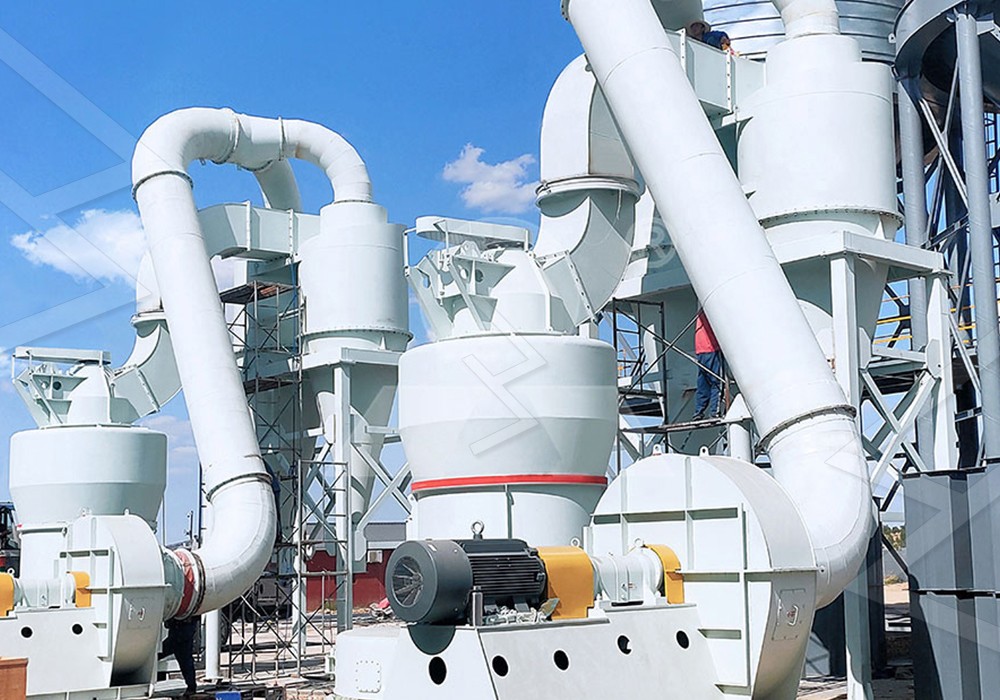
For operations requiring the highest levels of fineness and production stability, standard VRMs may reach their limits. In such cases, advanced mill designs offer a significant advantage. Our MW Ultrafine Grinding Mill is engineered to overcome these challenges. With an input size of 0-20 mm and a capacity range of 0.5-25 tph, it is specifically designed for customers who need to make ultra-fine powder. Its newly designed grinding curves of the roller and ring enhance grinding efficiency, yielding a production capacity up to 40% higher than jet mills and twice that of ball mills, while consuming only 30% of the energy of a jet mill. The cage-type powder selector allows for precise fineness adjustment between 325-2500 meshes, making it an ideal solution for producing high-value cement additives or specialty cements.
Another powerful option for integrated operations is the LUM Ultrafine Vertical Grinding Mill. With a capacity of 5-18 tph, it integrates ultrafine powder grinding, grading, and transporting into a single, highly efficient unit. Its unique roller shell and lining plate grinding curve are designed to generate a material layer more easily, enabling a high rate of finished product from a single pass. This design, combined with multi-head powder separating technology controlled by a PLC system, reduces energy consumption by 30%-50% compared to common grinding mills, directly increasing your plant’s cost-effectiveness.
Maintenance and Process Control: The Unsung Heroes
Sustained high capacity is impossible without reliable operation. Proactive maintenance is essential. Regularly monitoring the wear of grinding elements (rollers and table liners) and maintaining the grinding profile ensures consistent performance. Furthermore, leveraging the mill’s automation system to maintain stable operation parameters—such as mill differential pressure, grinding bed thickness, and outlet temperature—is key to avoiding unplanned downtime and maximizing runtime at peak capacity.

Frequently Asked Questions (FAQ)
What is the single most important factor for increasing VRM capacity?
There is no single factor, but the most common bottleneck is an unstable grinding bed. Achieving and maintaining a stable, compact material layer on the grinding table is foundational. This is primarily controlled by the feed rate, roller pressure, and table speed working in harmony.
Can I increase capacity without investing in new equipment?
Absolutely. Many capacity gains can be achieved through operational optimizations, such as optimizing the classifier speed for your target fineness, ensuring optimal grinding pressure, and improving the consistency of the raw material feed. A process audit can often identify significant opportunities for improvement.
How does the MW Ultrafine Grinding Mill handle maintenance?
The MW Mill is designed for reliability and easy maintenance. A key feature is that there are no rolling bearings or screws inside the grinding chamber, eliminating worries about bearing damage or issues caused by loose screws. The lubricating device is external, allowing for lubrication without shutdown and supporting continuous 24/7 operation.
What makes the LUM Mill more energy-efficient?
The LUM Mill’s energy efficiency stems from its multi-head powder separating technology and unique grinding curve. The PLC control system allows for precise control of grinding parameters, while the design promotes efficient layer grinding, reducing energy waste associated with repeated grinding and high iron content.