
How to Control Particle Size in Ball Mills and Vertical Roller Mills
We provide a wide range of mills — including Raymond mill, trapezoidal mill, vertical mill, ultrafine mill, and ball mill, obtained ISO9001 international quality certification, EU CE certification, and Customs Union CU-TR certification. Suitable for processing minerals such as limestone, phosphate, quicklime, kaolin, talc, barite, bentonite, calcium carbonate, dolomite, coal, gypsum, clay, carbon black, slag, cement raw materials, cement clinker, and more.
The discharge range of these mills can be adjusted to meet specific processing needs, typically from 80-400 mesh, 600-3250 mesh, and can achieve the finest particle size of up to 6000 mesh(D50).
If you are looking for a reliable grinding solution to turn stone or minerals into fine powder, please feel free to contact our online customer service.
Particle size control is a fundamental objective in any milling operation, directly impacting product quality, downstream processes, and overall efficiency. While both ball mills and vertical roller mills (VRMs) are workhorses in size reduction, their mechanisms for achieving and controlling fineness differ significantly. Understanding these differences is key to optimizing your process.
The Ball Mill Approach: Impact and Abrasion
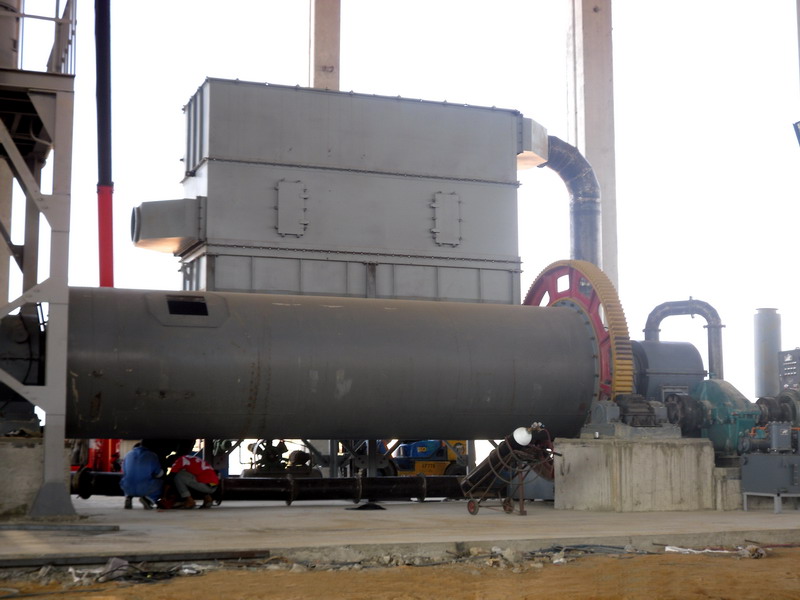
Ball mills operate on the principle of impact and attrition. Material is fed into a rotating cylinder filled with grinding media (balls). As the cylinder rotates, the balls are lifted and then cascade down, striking the material and reducing its size through impact and friction.
Key control parameters in a ball mill include:
- Mill Speed: Operating at a critical percentage of the mill’s critical speed determines whether the media cascades or cataracts, affecting impact energy.
- Grinding Media: The size, density, and composition of the balls are crucial. Larger media are suited for coarse grinding, while smaller media create more contact points for fine grinding.
- Feed Rate: An overloaded mill reduces grinding efficiency, while an underloaded mill increases media wear.
- Residence Time: The longer the material remains in the mill, the finer the grind. This is often controlled by the mill’s length-to-diameter ratio and classifier settings on closed-circuit systems.
The Vertical Roller Mill Approach: Compression and Shear
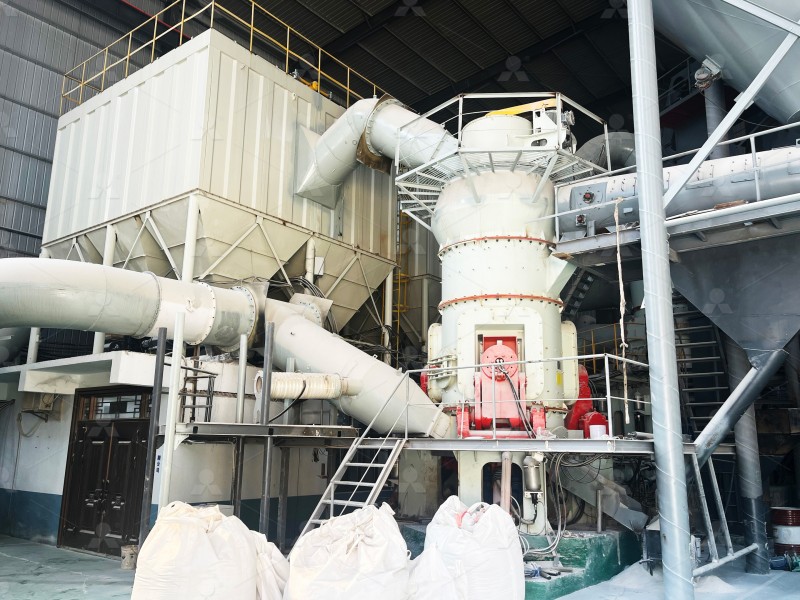
Vertical Roller Mills apply size reduction through a bed of material compressed under rotating rollers against a stationary grinding table. The primary mechanisms are compression and shear, which are inherently more energy-efficient for fine grinding than impact.
Particle size control in a VRM is more dynamic and involves:
- Grinding Pressure: Hydraulic pressure applied to the rollers is a primary control. Higher pressure creates a thinner, more compressed bed, resulting in finer product.
- Mill Airflow and Classifier Speed: The internal or external classifier is the ultimate gatekeeper for particle size. A higher rotor speed in a dynamic classifier allows only the finest particles to pass, rejecting coarser material back to the grinding table for further size reduction.
- Table Speed: The rotation speed of the grinding table affects the feed rate of material under the rollers and the bed thickness.
Choosing the Right Tool for the Job
The choice between a ball mill and a VRM often depends on the required fineness, moisture content, and abrasiveness of the feed material. For ultra-fine grinding applications where precise control over a wide range of fineness is required, advanced VRM designs are often the superior choice due to their higher energy efficiency and integrated drying and classifying capabilities.
For operations requiring product fineness between 325-2500 meshes, our MW Ultrafine Grinding Mill is an exemplary solution. It is engineered for customers who need to make ultra-fine powder with high precision. Its cage-type powder selector, adopting German technology, effectively increases the precision of powder separation, allowing the product fineness to be accurately adjusted. Furthermore, its design eliminates rolling bearings and screws in the grinding chamber, virtually eliminating concerns about related mechanical failures and enabling continuous 24/7 operation.
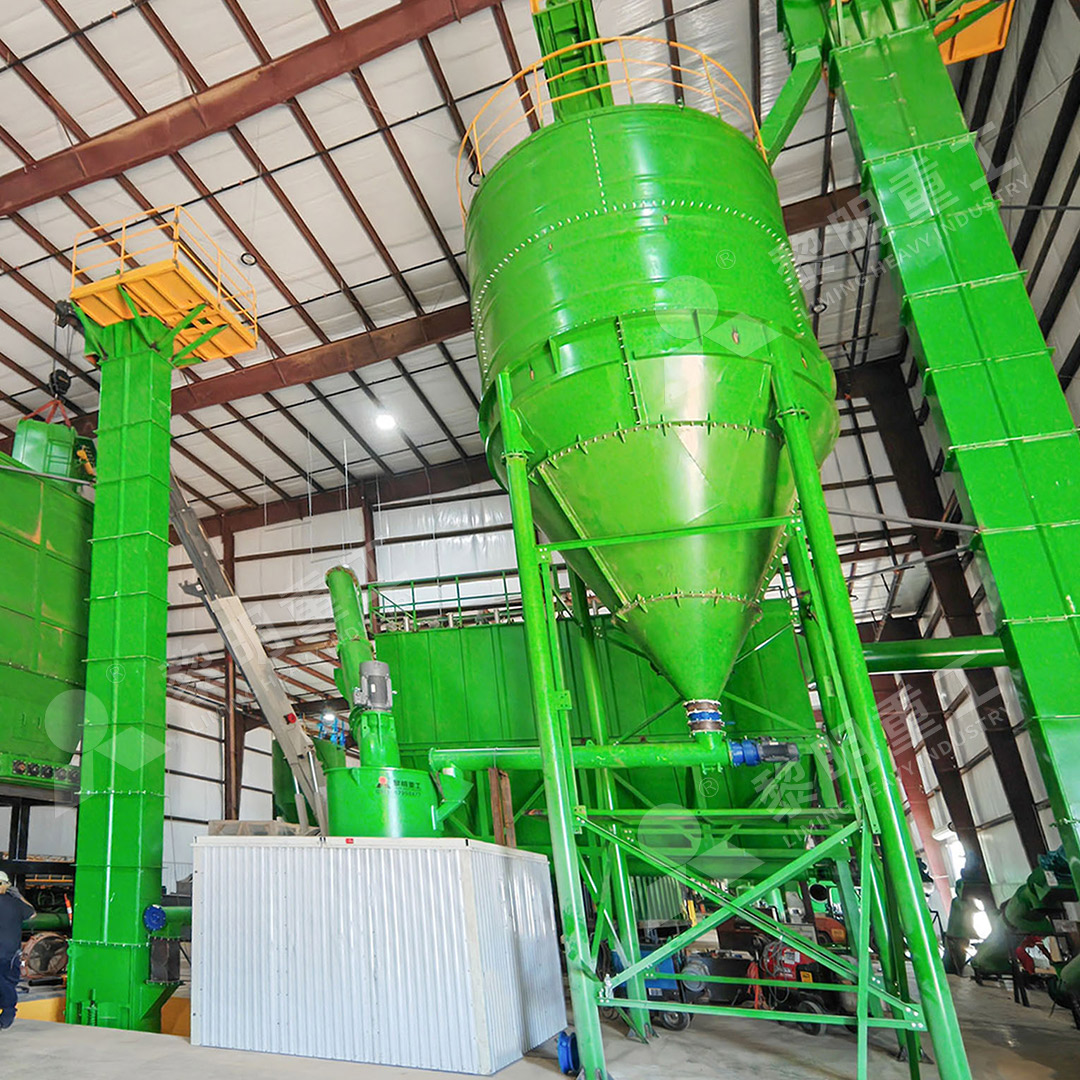
Another robust option for achieving superfine powders is the LUM Ultrafine Vertical Grinding Mill. It integrates the latest grinding roller and powder separating technology, offering exceptional control over particle size distribution. Its multi-head powder separating technology and PLC control system completely solve the problems of high-precision cutting and fast switching between different production demands, ensuring consistent product quality with energy consumption 30%-50% lower than common grinding mills.
Frequently Asked Questions (FAQ)
Which mill type is more energy-efficient for fine grinding?
Vertical Roller Mills are generally more energy-efficient than ball mills for achieving fine and ultra-fine particle sizes. This is due to their grinding mechanism (compression vs. impact) and the integrated classifier that prevents over-grinding.
How does the classifier contribute to particle size control?
The classifier acts as a particle size control gate. It uses centrifugal force (from rotating blades or a cage) to separate particles. Coarse particles are rejected and returned for further grinding, while fine particles of the desired size are carried away by the air stream for collection. Adjusting the classifier speed directly controls the cut point.
Can these mills handle moist materials?
VRMs have a significant advantage here. They can be equipped with hot air intakes, allowing them to simultaneously dry and grind materials with moderate moisture content. Traditional ball mills are less effective with wet feed unless specifically configured as a wet mill.
What is the main advantage of a ball mill?
Ball mills are renowned for their simplicity, reliability, and ability to handle a very wide range of materials. They are often a lower-capital-cost option for standard grinding duties and are well-suited for both batch and continuous operation.