
How to Choose the Right Size Limestone Grinding Mill for Your Production Needs
We provide a wide range of mills — including Raymond mill, trapezoidal mill, vertical mill, ultrafine mill, and ball mill, obtained ISO9001 international quality certification, EU CE certification, and Customs Union CU-TR certification. Suitable for processing minerals such as limestone, phosphate, quicklime, kaolin, talc, barite, bentonite, calcium carbonate, dolomite, coal, gypsum, clay, carbon black, slag, cement raw materials, cement clinker, and more.
The discharge range of these mills can be adjusted to meet specific processing needs, typically from 80-400 mesh, 600-3250 mesh, and can achieve the finest particle size of up to 6000 mesh(D50).
If you are looking for a reliable grinding solution to turn stone or minerals into fine powder, please feel free to contact our online customer service.
How to Choose the Right Size Limestone Grinding Mill for Your Production Needs
Selecting the perfect limestone grinding mill isn’t just about picking a machine; it’s about matching a sophisticated piece of engineering to your specific production goals, budget, and space constraints. Get it right, and you unlock efficiency, quality, and profitability. Get it wrong, and you face a constant battle with downtime, high energy bills, and inconsistent product. Let’s break down the key factors you need to consider.
1. Understand Your Feed and Desired Output
This is the foundation of your selection. You must have a clear understanding of two things:
- Input Size: What is the maximum size of the limestone chunks entering the mill? Is it 0-20mm, 0-50mm, or larger?
- Required Fineness (Mesh Size): How fine does your final powder need to be? Are you aiming for a coarse 325 mesh or an ultra-fine 2500 mesh powder? This dramatically influences the type of mill you need.
2. Define Your Required Capacity (TPH)
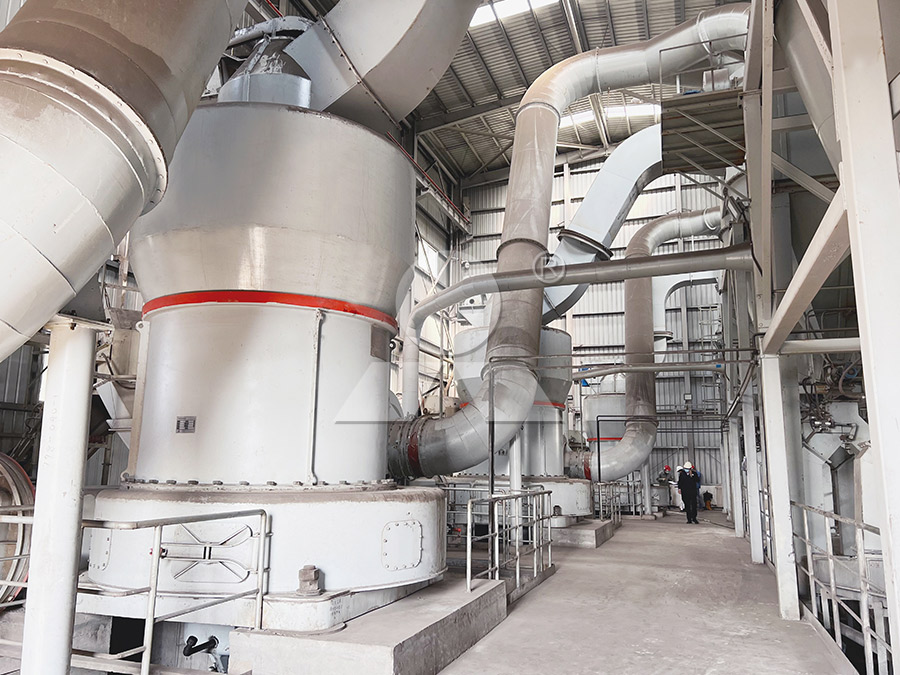
Capacity, measured in tons per hour (TPH), is the heartbeat of your operation. You need to calculate both your current and projected future needs. Undersizing a mill will bottleneck your entire production line, while oversizing one leads to wasted capital and inefficient energy use. Be realistic about your average and peak production demands.
3. Consider Energy Consumption and Operational Costs
The initial purchase price is just one part of the Total Cost of Ownership. A mill that is 30-40% more energy-efficient can save you a fortune in electricity bills over its lifespan. Look for modern designs that offer higher yields with lower energy consumption. Also, factor in maintenance costs—mills with easily accessible parts and reliable sealing systems reduce downtime and labor costs.
4. Evaluate Space and Installation Requirements
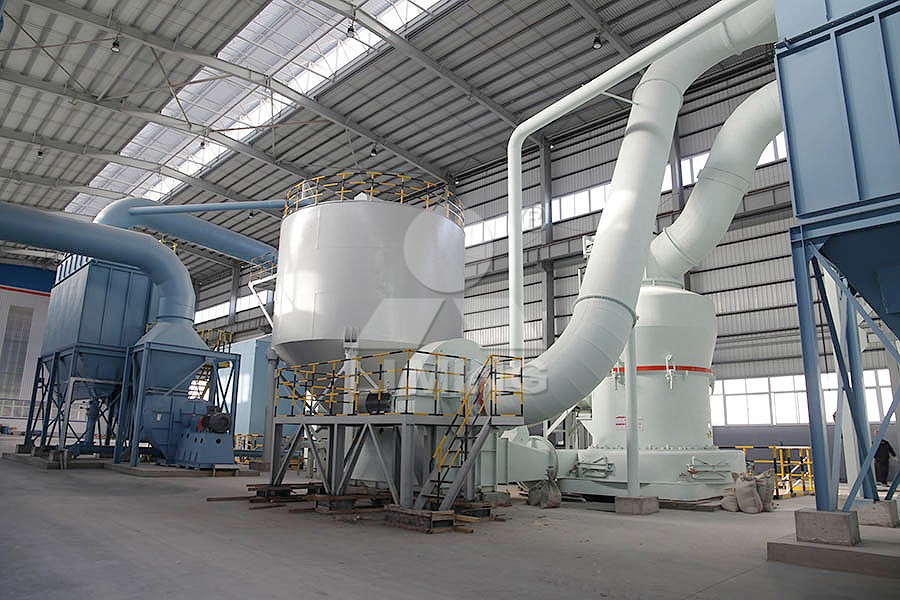
Not all mills have the same footprint. Vertical mills, for example, are renowned for their compact design, often occupying 50% less space than traditional ball mill systems. Consider the headroom and floor space available in your plant. Also, think about the auxiliary equipment needed, like crushers, feeders, and dust collectors, and how they will all fit together.
5. Prioritize Environmental and Safety Features
Modern operations must adhere to strict environmental standards. A good mill should incorporate efficient pulse dust collectors to ensure no dust pollution and feature noise reduction technologies like mufflers and soundproof rooms. This creates a safer, healthier work environment and keeps you compliant with regulations.
Our Recommended Solution: The MW Ultrafine Grinding Mill
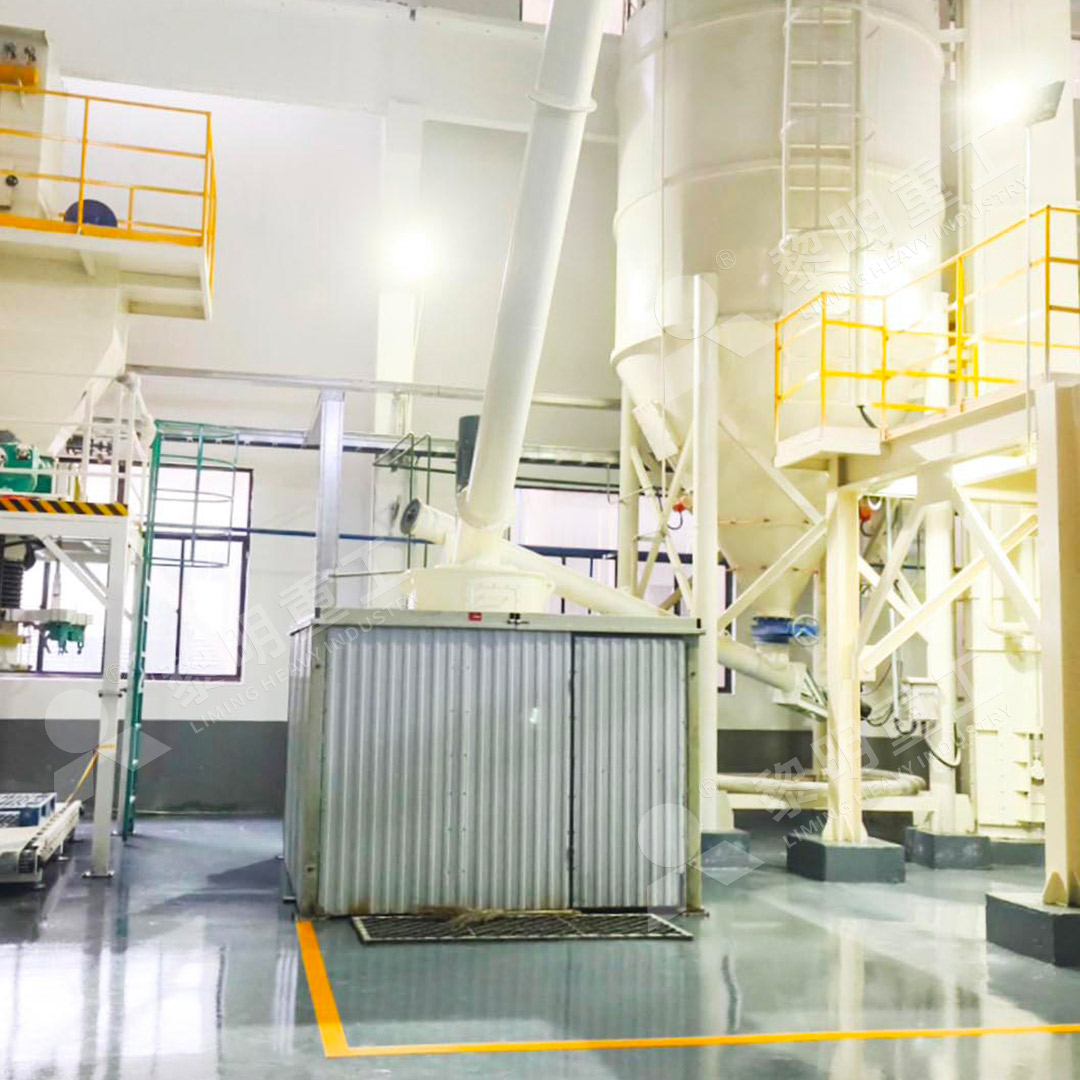
Based on the common need for high-quality, ultra-fine limestone powder, we highly recommend our MW Ultrafine Grinding Mill. This machine is a powerhouse designed for precision and efficiency, making it an ideal choice for producing powders between 325-2500 meshes.
Why the MW Series stands out:
- Superior Efficiency: It boasts a production capacity 40% higher than jet mills and double that of ball mills, all while consuming 30% less energy. Its innovative grinding curve design is the secret behind this performance.
- Unmatched Precision: Equipped with a German-technology, multi-head cage-type powder selector, it allows for precise fineness adjustment to meet your exact specifications.
- Robust & Worry-Free Design: A key advantage is the absence of rolling bearings and screws in the grinding chamber. This eliminates common failure points, preventing machine damage from loose screws or bearing seizures. External lubrication allows for 24/7 operation.
- Eco-Friendly Operation: The integrated pulse dust collector and silencer ensure a clean, quiet, and compliant operation.
Key Specs: Input Size: 0-20 mm | Capacity: 0.5-25 tph
For larger capacity needs or slightly different applications, our LUM Ultrafine Vertical Grinding Mill is another excellent option. It features advanced roller technology and powder separating capabilities for exceptional performance with a capacity of 5-18 tph.
Conclusion
Choosing the right limestone grinding mill is a critical decision. By carefully analyzing your material, desired output, capacity, and operational constraints, you can select a machine that becomes a profit center, not a problem child. For operations demanding ultra-fine powder with maximum efficiency and reliability, the MW Ultrafine Grinding Mill represents the pinnacle of modern milling technology. Contact our team today to discuss your specific needs and find the perfect fit for your production line.