
How to Choose the Right Activated Carbon Grinding Mill for Your Industry
We provide a wide range of mills — including Raymond mill, trapezoidal mill, vertical mill, ultrafine mill, and ball mill, obtained ISO9001 international quality certification, EU CE certification, and Customs Union CU-TR certification. Suitable for processing minerals such as limestone, phosphate, quicklime, kaolin, talc, barite, bentonite, calcium carbonate, dolomite, coal, gypsum, clay, carbon black, slag, cement raw materials, cement clinker, and more.
The discharge range of these mills can be adjusted to meet specific processing needs, typically from 80-400 mesh, 600-3250 mesh, and can achieve the finest particle size of up to 6000 mesh(D50).
If you are looking for a reliable grinding solution to turn stone or minerals into fine powder, please feel free to contact our online customer service.
How to Choose the Right Activated Carbon Grinding Mill for Your Industry
Selecting the optimal grinding mill for activated carbon processing represents one of the most critical decisions facing industrial operations managers today. The right equipment can dramatically enhance production efficiency, reduce operational costs, and ensure consistent product quality that meets stringent industry standards. With numerous grinding technologies available, making an informed choice requires careful consideration of multiple technical factors specific to your operational requirements.
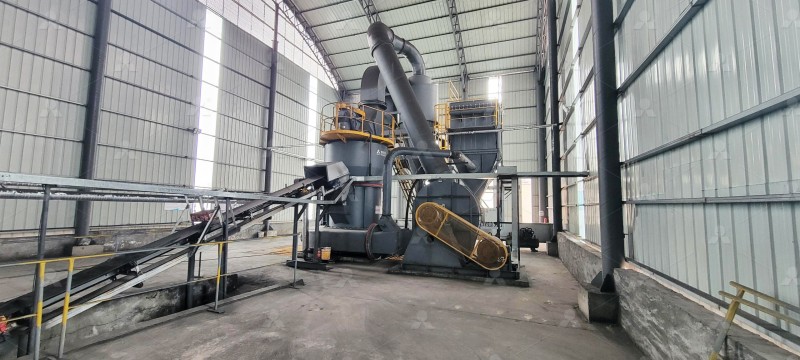
Key Factors in Grinding Mill Selection
When evaluating grinding mills for activated carbon processing, several technical parameters demand careful assessment. The particle size distribution requirements represent perhaps the most fundamental consideration, as different applications demand specific fineness levels. The chemical industry typically requires medium fineness around 200-400 mesh, while high-end applications like pharmaceuticals and cosmetics may demand ultra-fine powders reaching 2500 mesh.
Production capacity requirements directly influence mill selection, with throughput needs ranging from small-scale laboratory operations processing under 1 tph to large industrial facilities requiring 25 tph or more. The moisture content of your raw activated carbon significantly impacts drying requirements, while the material’s abrasiveness affects wear part longevity and maintenance schedules. Energy consumption represents another crucial factor, as grinding operations typically account for a substantial portion of overall production costs.
Understanding Grinding Technologies
The landscape of grinding technologies offers diverse solutions tailored to different processing needs. Traditional ball mills provide reliable service for coarse to medium grinding but suffer from relatively high energy consumption and limited fineness control. Raymond mills offer improved efficiency for medium-fine applications but may struggle with ultra-fine requirements.
European trapezium mills incorporate advanced features like dilute oil lubrication systems and elastic volute damping structures that enhance operational stability and reduce maintenance requirements. These mills typically handle input sizes up to 50mm with capacities reaching 55 tph, making them suitable for medium-scale operations.

Advanced Solutions for Demanding Applications
For operations requiring superior fineness control and highest efficiency, advanced grinding technologies deliver exceptional performance. Our MW Ultrafine Grinding Mill represents a technological breakthrough specifically engineered for customers requiring ultra-fine powder production. With an adjustable fineness range between 325-2500 meshes and capacity from 0.5 to 25 tph, this machine incorporates German cage-type powder selector technology that ensures precise particle separation.
The MW series distinguishes itself through several innovative features. Its unique grinding chamber design eliminates rolling bearings and screws entirely, eliminating concerns about bearing damage or loose screw-related failures. The external lubrication system enables maintenance without production stoppages, supporting continuous 24-hour operation. With energy consumption approximately 30% of comparable jet grinding mills and production capacity 40% higher than alternative technologies, the MW Ultrafine Grinding Mill delivers outstanding operational economics.
For operations prioritizing vertical integration and space efficiency, our LUM Ultrafine Vertical Grinding Mill offers another compelling solution. Integrating ultrafine powder grinding, grading, and transporting in a single unit, this mill handles input sizes up to 10mm with capacities from 5-18 tph. Its unique roller shell and lining plate grinding curve design generates material layers more effectively, enabling high finished product rates through single-pass milling.

Industry-Specific Considerations
Different industrial applications impose distinct requirements on activated carbon grinding. Water treatment facilities typically prioritize consistent particle size distribution and reliable operation over extreme fineness. The chemical industry often demands precise control over particle morphology and surface characteristics. Pharmaceutical and food-grade applications require exceptional product purity and contamination prevention, making equipment with minimal iron contamination and comprehensive sealing systems essential.
Environmental compliance represents another critical consideration. Modern grinding mills must incorporate effective dust collection and noise reduction systems to meet increasingly stringent regulatory standards. Our MW Ultrafine Grinding Mill addresses these concerns with efficient pulse dust collectors and specialized mufflers that minimize environmental impact while maintaining production efficiency.
Operational and Maintenance Considerations
Beyond initial performance specifications, long-term operational factors significantly impact total cost of ownership. Equipment reliability, maintenance requirements, and spare parts availability all influence production continuity and operating expenses. Modern grinding mills incorporate digitalized processing with numerical control throughout manufacturing, ensuring high precision especially for core components.
Comprehensive technical support and genuine spare parts availability provide operational security. Our grinding mills come with complete responsibility for every machine produced, offering customers technical services and original spare parts to ensure worry-free operation. The reversible structure of our LUM Ultrafine Vertical Grinding Mill exemplifies this approach, allowing operators to easily move grinding rollers outside the body for inspection and maintenance, significantly reducing downtime.

Making the Final Decision
Selecting the ideal activated carbon grinding mill requires balancing multiple technical, operational, and economic factors. Begin by clearly defining your product specifications, capacity requirements, and budget constraints. Evaluate potential suppliers based on their technical expertise, industry experience, and after-sales support capabilities. Consider arranging material testing with prospective equipment to verify performance claims with your specific activated carbon feedstock.
The substantial investment in grinding technology justifies thorough due diligence. By carefully matching equipment capabilities to your specific operational needs, you can optimize production efficiency, product quality, and long-term profitability. With advanced solutions like our MW Ultrafine Grinding Mill and LUM Ultrafine Vertical Grinding Mill, operations can achieve new levels of performance in activated carbon processing across diverse industrial applications.
Frequently Asked Questions
What is the typical energy consumption of an ultrafine grinding mill for activated carbon?
Energy consumption varies significantly based on the required fineness and material characteristics. Our MW Ultrafine Grinding Mill consumes approximately 30% of the energy required by comparable jet grinding mills while delivering 40% higher production capacity, making it exceptionally efficient for ultra-fine applications.
How does the MW Ultrafine Grinding Mill prevent contamination of the final product?
The MW series incorporates several contamination prevention features. The absence of rolling bearings and screws in the grinding chamber eliminates concerns about metallic contamination from these components. Additionally, the specialized grinding curve design and precision manufacturing ensure minimal wear part debris enters the product stream.
What maintenance requirements should I expect with an ultrafine grinding mill?
Maintenance requirements depend on the specific technology. Our MW Ultrafine Grinding Mill features an external lubrication system that enables maintenance without shutdowns. The LUM Ultrafine Vertical Grinding Mill incorporates a reversible structure that allows easy access to grinding rollers for inspection and maintenance, significantly reducing downtime.
Can the same grinding mill handle different fineness requirements for various products?
Yes, advanced mills like our MW series offer adjustable fineness between 325-2500 meshes through advanced cage-type powder selectors. This flexibility allows operations to produce different product grades without equipment modification, simply by adjusting operational parameters.
How important is after-sales support when selecting a grinding mill supplier?
After-sales support is critical for minimizing downtime and ensuring long-term equipment performance. We provide comprehensive technical services and guarantee original spare parts availability, taking full responsibility for every machine we produce to ensure continuous, worry-free operation.
What environmental considerations should I evaluate when selecting a grinding mill?
Modern grinding equipment should incorporate effective dust collection systems, noise reduction features, and energy-efficient operation. Our mills include efficient pulse dust collectors, silencers, and noise elimination rooms that ensure compliance with environmental standards while maintaining production efficiency.