
How to Choose the Best Grinding Mill for Calcium Carbonate Processing
We provide a wide range of mills — including Raymond mill, trapezoidal mill, vertical mill, ultrafine mill, and ball mill, obtained ISO9001 international quality certification, EU CE certification, and Customs Union CU-TR certification. Suitable for processing minerals such as limestone, phosphate, quicklime, kaolin, talc, barite, bentonite, calcium carbonate, dolomite, coal, gypsum, clay, carbon black, slag, cement raw materials, cement clinker, and more.
The discharge range of these mills can be adjusted to meet specific processing needs, typically from 80-400 mesh, 600-3250 mesh, and can achieve the finest particle size of up to 6000 mesh(D50).
If you are looking for a reliable grinding solution to turn stone or minerals into fine powder, please feel free to contact our online customer service.
How to Choose the Best Grinding Mill for Calcium Carbonate Processing
Selecting the right grinding mill for calcium carbonate (CaCO3) processing is a critical decision that impacts your product quality, operational costs, and overall profitability. With various technologies available, from traditional ball mills to advanced ultrafine systems, understanding your specific needs is paramount. This guide will walk you through the key considerations to make an informed choice.
Key Factors to Consider
The ideal mill for your operation depends on several interconnected factors:
- Desired Fineness (Mesh Size): Are you producing coarse fillers (200-400 mesh) or high-value ultrafine powders (over 800 mesh) for plastics, paints, or cosmetics?
- Required Production Capacity (TPH): The volume of material you need to process per hour dictates the size and type of mill.
- Energy Consumption: Grinding can be energy-intensive. Modern mills are designed for higher efficiency, significantly reducing kWh per ton.
- Product Purity & Whiteness: Some mills generate more heat or mechanical wear, which can contaminate the product and affect its brightness.
- Operation & Maintenance (O&M): Consider the ease of maintenance, availability of spare parts, and the overall robustness of the machine.
- Environmental Impact: Dust and noise pollution are major concerns that need to be mitigated with integrated collection and damping systems.
Types of Mills for Calcium Carbonate
Each mill type has its strengths and ideal application range:
- Ball Mills: A traditional, cost-effective option for coarse to medium grinding. However, they are less efficient for ultrafine grades and can have higher iron contamination.
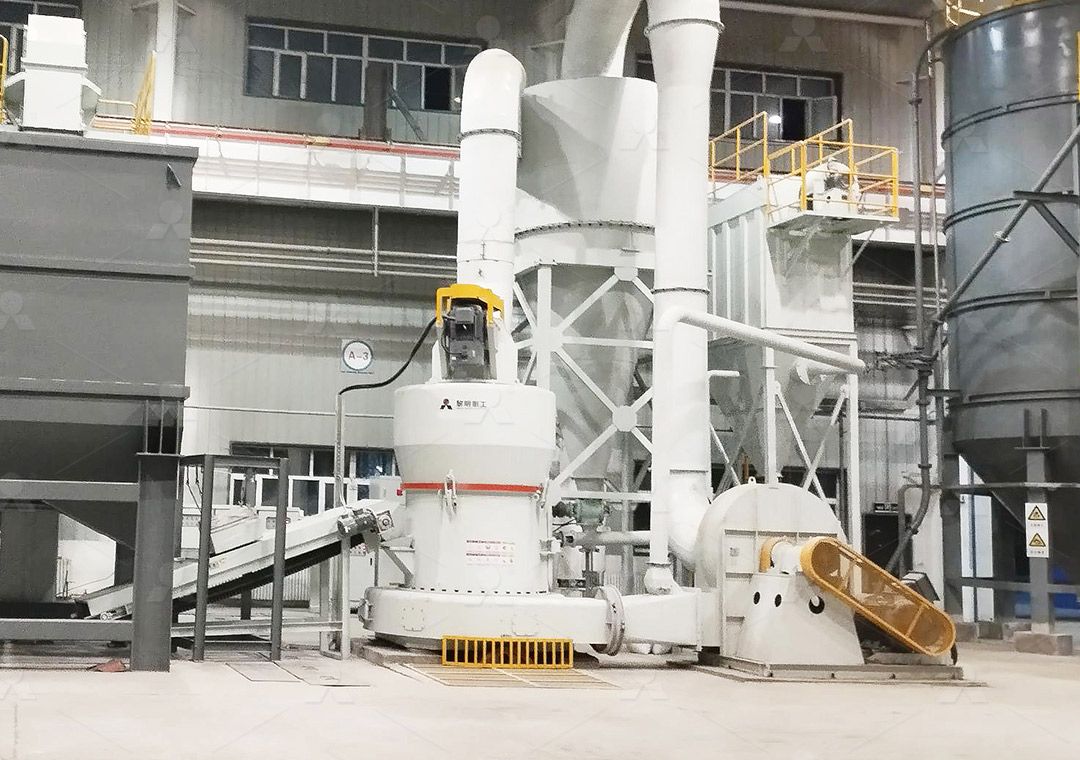
- Raymond Mills (Roller Mills): Excellent for producing powders in the 80-400 mesh range. They offer good efficiency and are a workhorse in many industries.
- Vertical Roller Mills (VRM): Like our LM Vertical Grinding Mill, these are excellent for large-capacity projects (3-340 tph). They integrate drying, grinding, and classifying, offering high efficiency and lower energy consumption compared to ball mills.
- European Trapezium Mills: Such as the MTW series, offer advanced features like dilute oil lubrication for rollers and efficient powder concentrators for stable, high-yield production.
- Ultrafine Grinding Mills: This is where technology shines for high-value products. For producing superfine calcium carbonate powder between 325-2500 meshes, an ultrafine mill is essential.
Recommended Solution for Ultrafine Processing
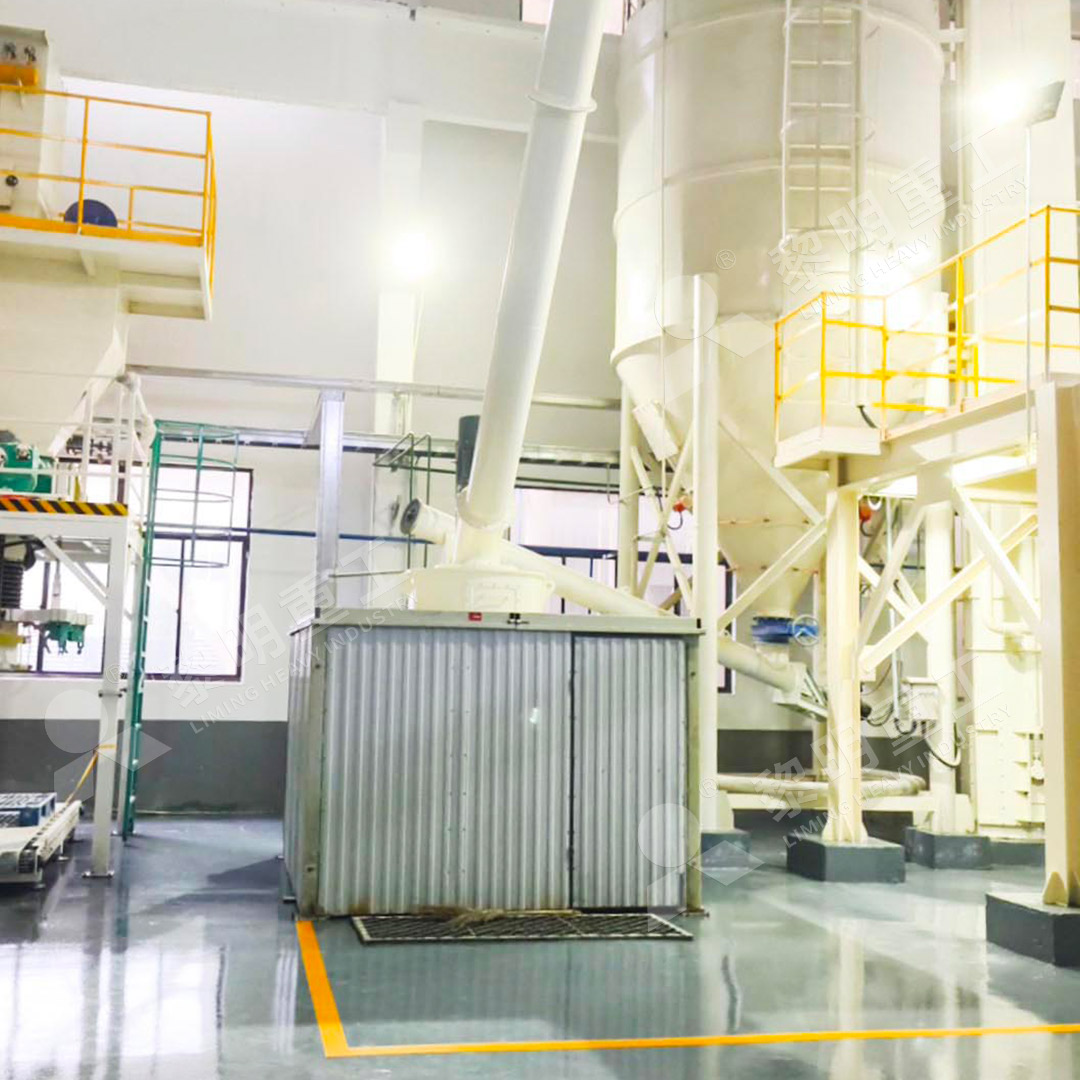
For operations focusing on high-value, ultra-fine calcium carbonate, the MW Ultrafine Grinding Mill is a standout choice. This machine is engineered for customers who need to make precisely controlled ultra-fine powder with exceptional efficiency.
Key advantages of the MW Mill for CaCO3 include:
- Higher Yielding, Lower Energy Consumption: Its newly designed grinding curves enhance efficiency. Production capacity is 40% higher than jet mills with system energy consumption only 30% of jet mills.
- Adjustable Fineness (325-2500 meshes): A German-technology cage-type powder selector allows for precise control over the final product’s fineness, achieving d97≤5μm.
- Reliable & Worry-Free Operation: A critical design feature is the absence of rolling bearings and screws in the grinding chamber. This eliminates failures related to these components and allows for external lubrication without shutdown, enabling 24/7 continuous production.
- Eco-Friendly Operation: It comes equipped with an efficient pulse dust collector and muffler, ensuring no dust pollution and reduced noise, fully complying with national environmental standards.
Specs Overview: Input Size: 0-20 mm | Capacity: 0.5-25 tph
Making the Final Decision
Always match the mill’s capabilities to your product specifications. Request test reports where the mill processes a sample of your specific calcium carbonate ore. This provides real-world data on output, particle size distribution, and energy use. Furthermore, choose a supplier like us (LIMING) that offers comprehensive technical support and a guaranteed supply of original spare parts, ensuring your operation remains productive and profitable for years to come.
Investing in the right technology from the start is the most effective strategy for long-term success in the competitive calcium carbonate market.