
How to Adjust the Outlet Particle Size of a 300-Mesh Coal Mill in a Power Plant
We provide a wide range of mills — including Raymond mill, trapezoidal mill, vertical mill, ultrafine mill, and ball mill, obtained ISO9001 international quality certification, EU CE certification, and Customs Union CU-TR certification. Suitable for processing minerals such as limestone, phosphate, quicklime, kaolin, talc, barite, bentonite, calcium carbonate, dolomite, coal, gypsum, clay, carbon black, slag, cement raw materials, cement clinker, and more.
The discharge range of these mills can be adjusted to meet specific processing needs, typically from 80-400 mesh, 600-3250 mesh, and can achieve the finest particle size of up to 6000 mesh(D50).
If you are looking for a reliable grinding solution to turn stone or minerals into fine powder, please feel free to contact our online customer service.
How to Adjust the Outlet Particle Size of a 300-Mesh Coal Mill in a Power Plant
Maintaining the correct particle size distribution from a coal mill is a critical operational parameter in any power plant. For a mill set to produce a 300-mesh product (approximately 50 microns), consistent fineness directly impacts combustion efficiency, emissions, and overall plant performance. This article outlines the primary methods for adjusting and controlling the outlet particle size, drawing from established grinding principles and modern mill technology.
Understanding the Key Variables
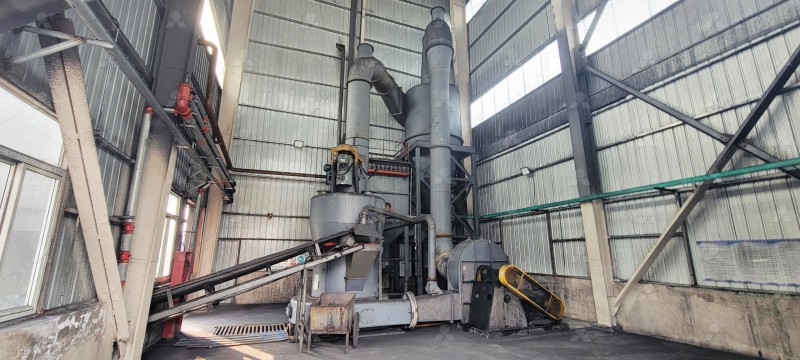
The fineness of pulverized coal is primarily controlled by two interdependent factors: the grinding force and the classification efficiency. The grinding force, determined by the pressure applied by the grinding rollers, dictates how effectively raw coal is crushed. The classifier, typically located at the mill’s outlet, then separates fine particles from coarse ones, returning the latter for further grinding. Adjusting the outlet size is a matter of fine-tuning this entire system.
Primary Adjustment Methods
Operators have several levers to control particle size:
- Classifier Rotor Speed: This is the most direct and common adjustment. Increasing the rotational speed of the classifier rotor increases the centrifugal force, allowing only finer particles to pass through. Conversely, reducing the speed results in a coarser product. Modern mills feature variable frequency drives (VFDs) for precise, real-time control of the classifier.
- Grinding Pressure: The hydraulic pressure applied to the grinding rollers influences the fineness of the initial grind. Higher pressure creates finer particles but also increases energy consumption and wear. This parameter must be balanced with the classifier settings.
- Primary Air Flow: The air flowing through the mill carries the pulverized coal to the classifier and burners. Higher air velocity can carry coarser particles, leading to a larger product size if the classifier cannot effectively reject them. Optimal air flow is essential for efficient transport without compromising fineness.
- Feed Rate: A consistent and appropriate feed rate is crucial. Overloading the mill can lead to poor grinding and a coarser product, as the grinding elements cannot effectively reduce all the material passing through.
The Importance of Advanced Mill Design
While adjustments can be made on most mills, the inherent design of the grinding system sets the baseline for performance and ease of control. For power plants seeking superior control over particle size, especially in the ultra-fine range, advanced grinding technologies offer significant advantages.
For instance, our MW Ultrafine Grinding Mill is engineered specifically for precise particle size distribution. With an input size of 0-20 mm and a capacity range of 0.5-25 tph, it is well-suited for power plant applications requiring consistent, fine coal powder. Its cage-type powder selector, which incorporates German technology, allows for high-precision separation. The product fineness can be accurately adjusted between 325-2500 meshes, making the 300-mesh target easily achievable and stable. The mill’s design, which eliminates rolling bearings and screws from the grinding chamber, also enhances reliability during continuous operation.
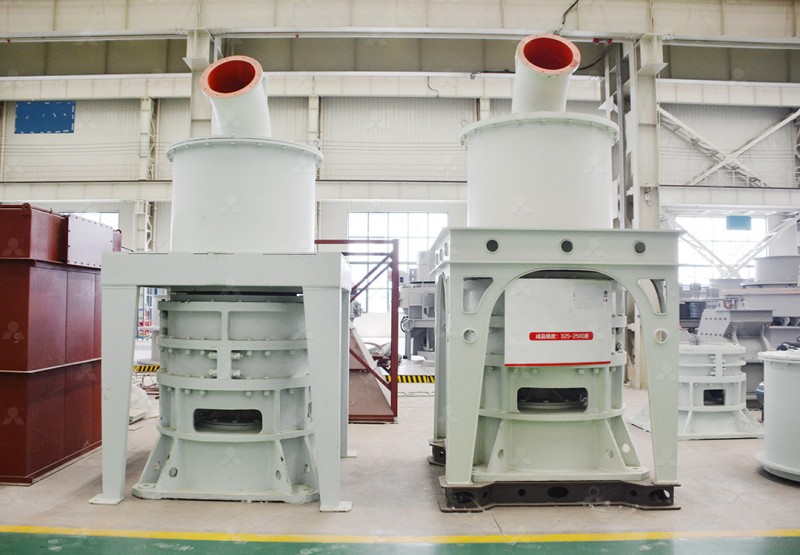
Another excellent solution for power generation is the LUM Ultrafine Vertical Grinding Mill. This mill integrates ultrafine powder grinding, grading, and transporting with remarkable efficiency. Its multi-head powder separating technology, controlled by a PLC system, solves the challenges of high-precision powder diameter cutting and fast switching between different production demands. This results in energy savings of 30%-50% compared to conventional mills while maintaining exact control over the final product’s fineness.
Best Practices for Stable Operation
Beyond mechanical adjustments, consistent operation is key. Regularly monitor the mill’s power consumption, differential pressure, and outlet temperature. These parameters can indicate changes in grindability or feed characteristics. Implement a proactive maintenance schedule for grinding elements and classifier blades to prevent unexpected shifts in performance due to wear.
Frequently Asked Questions (FAQ)
What is the most immediate way to correct a sudden change in coal fineness?
The first step is to adjust the classifier speed. If the product is too coarse, increase the rotor speed. If it is too fine, decrease the speed. This is the fastest-acting control.
How does coal moisture content affect particle size?
High moisture can lead to poor grinding efficiency and agglomeration, resulting in a coarser product. Ensure the mill’s drying capacity (via primary air temperature) is sufficient to handle the incoming coal’s moisture.
Can worn grinding components affect particle size?
Absolutely. Worn rollers and grinding tables will reduce grinding efficiency, leading to a higher proportion of coarse particles in the output, even if classifier settings remain unchanged.
Why is consistent 300-mesh fineness important for combustion?
A consistent and fine particle size ensures complete combustion, maximizing heat release and minimizing unburned carbon in ash. It also reduces NOx emissions by allowing for more stable and controlled flame temperatures.