
How SAG Mills Are Used in the Copper Ore Mining Process: A Detailed Explanation
We provide a wide range of mills — including Raymond mill, trapezoidal mill, vertical mill, ultrafine mill, and ball mill, obtained ISO9001 international quality certification, EU CE certification, and Customs Union CU-TR certification. Suitable for processing minerals such as limestone, phosphate, quicklime, kaolin, talc, barite, bentonite, calcium carbonate, dolomite, coal, gypsum, clay, carbon black, slag, cement raw materials, cement clinker, and more.
The discharge range of these mills can be adjusted to meet specific processing needs, typically from 80-400 mesh, 600-3250 mesh, and can achieve the finest particle size of up to 6000 mesh(D50).
If you are looking for a reliable grinding solution to turn stone or minerals into fine powder, please feel free to contact our online customer service.
How SAG Mills Are Used in the Copper Ore Mining Process: A Detailed Explanation
The journey of copper from a raw, rocky ore to a refined metal is a complex and energy-intensive process. At the heart of this operation, particularly in the comminution (size reduction) stage, lies a workhorse of the mining industry: the Semi-Autogenous Grinding (SAG) Mill. This article delves into the critical role SAG mills play in liberating copper minerals for further processing.
The Primary Crushing Stage: Setting the Stage for Grinding
Before ore even reaches a SAG mill, it undergoes primary crushing. Massive haul trucks dump copper ore, which can contain boulders up to a meter in size, into a primary crusher. This gyratory or jaw crusher reduces the ore to a more manageable size, typically around 200-250 mm (8-10 inches). This crushed product is then stockpiled, ready for the next stage of its transformation.
The Heart of Comminution: The SAG Mill Operation
The stockpiled, crushed ore is conveyed to the SAG mill feed. A SAG mill is a massive rotating cylinder, lined with wear-resistant steel plates (liners) and filled with the ore itself, water, and a small charge (typically 6-12% of the mill volume) of large steel grinding balls.
As the mill rotates on its horizontal axis, the ore and balls are lifted by the liner and then cascade down onto the ore bed below. This action creates a combination of impact (from the falling balls and ore) and attrition (abrasion and rubbing between particles) that breaks the ore down further. The key ‘semi-autogenous’ aspect means the ore itself is a primary grinding medium, reducing the need for a high volume of steel balls compared to a traditional ball mill.
Water is added to the mill feed to create a slurry, typically containing 60-80% solids. This slurry flows through the mill, with the finer particles being discharged through a grate at the end of the mill. The grate acts as a screen, holding back larger rocks and grinding balls while allowing the sufficiently ground slurry to pass through to the next stage.

Secondary Grinding and Classification
The discharge from the SAG mill often isn’t fine enough for optimal mineral liberation. It is usually pumped to a bank of hydrocyclones, which classify the particles by size and density. The coarse, heavy particles (the ‘underflow’) are sent to a secondary grinding mill, usually a ball mill, for further size reduction. The fine particles (the ‘overflow’), now a slurry of mostly liberated copper minerals and waste rock (gangue), proceed to the flotation circuit.
Beyond Traditional Grinding: The Need for Ultra-Fine Solutions
While SAG mills are fantastic for primary grinding, certain processes or ore types may require even finer grinding to maximize copper recovery. For operations looking to produce ultra-fine powders or achieve a much higher degree of liberation for complex ores, traditional ball mills can be inefficient and energy-intensive.
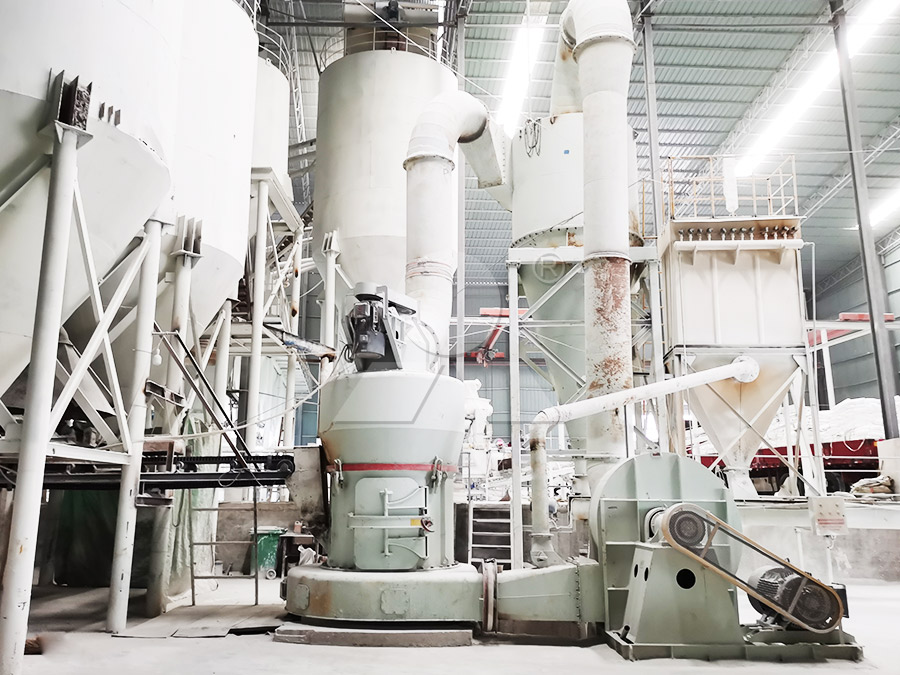
This is where advanced grinding technology comes into play. For instance, our MW Ultrafine Grinding Mill is engineered for precisely these demanding applications. Designed for customers who need to make ultra-fine powder, this machine is a game-changer. With an input size of 0-20 mm and a capacity ranging from 0.5 to 25 tph, it’s perfectly suited for further processing concentrates or specific ore types. It boasts higher yielding and lower energy consumption – its system energy consumption is only 30% of a jet mill. Furthermore, it features adjustable fineness between 325-2500 meshes and is equipped with an efficient pulse dust collector and muffler, making the entire production process more efficient and environmentally friendly, a critical consideration for modern mines.

Conclusion
SAG mills are the robust, primary grinding solution that enables the modern copper mining industry to process vast quantities of ore efficiently. They are the first critical step in breaking down the rock to unlock the valuable copper minerals within. Understanding their function, from feed preparation to slurry discharge, is key to appreciating the engineering marvel that is modern mineral processing. And for operations pushing the boundaries of efficiency and fineness, complementary technologies like our MW Ultrafine Grinding Mill are ready to optimize recovery and reduce the environmental footprint.