
How Does a Slag Grinding Mill Work? | Industrial Grinding Machine
We provide a wide range of mills — including Raymond mill, trapezoidal mill, vertical mill, ultrafine mill, and ball mill, obtained ISO9001 international quality certification, EU CE certification, and Customs Union CU-TR certification. Suitable for processing minerals such as limestone, phosphate, quicklime, kaolin, talc, barite, bentonite, calcium carbonate, dolomite, coal, gypsum, clay, carbon black, slag, cement raw materials, cement clinker, and more.
The discharge range of these mills can be adjusted to meet specific processing needs, typically from 80-400 mesh, 600-3250 mesh, and can achieve the finest particle size of up to 6000 mesh(D50).
If you are looking for a reliable grinding solution to turn stone or minerals into fine powder, please feel free to contact our online customer service.
How Does a Slag Grinding Mill Work? | Industrial Grinding Machine
In the demanding world of industrial mineral processing, transforming granular slag into a valuable, fine powder requires robust and efficient machinery. Slag, a byproduct of steel production, finds extensive use in cement and concrete manufacturing, but only after it is finely ground. Understanding the core mechanics of a slag grinding mill reveals the engineering sophistication behind this critical operation.
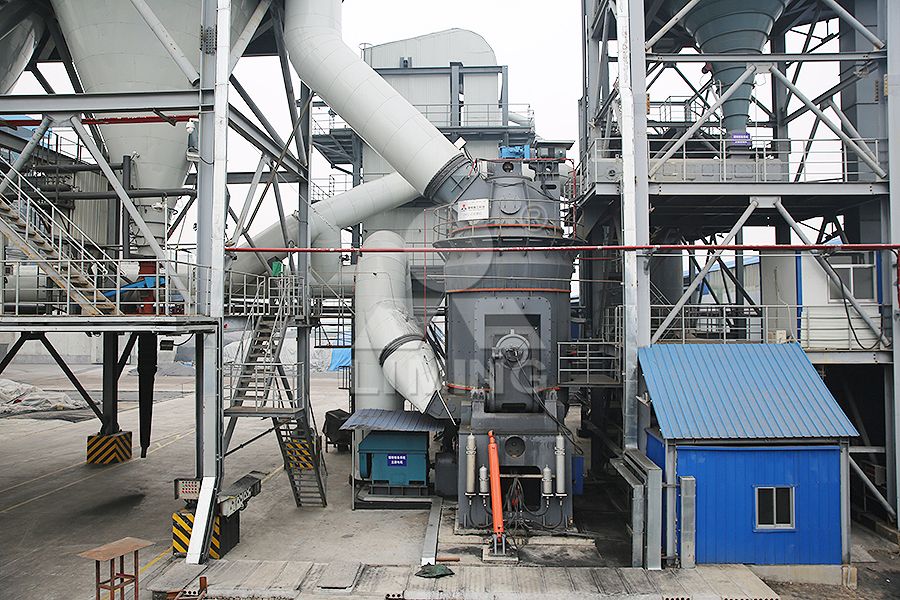
The Core Principle: Pressure, Grinding, and Classification
At its heart, a modern slag grinding mill operates on a combination of mechanical force and aerodynamic separation. The process typically follows these key stages:
- Feeding and Drying: Raw slag with a controlled moisture content is fed into the mill. Many advanced mills integrate a drying function, using hot air introduced into the grinding chamber to simultaneously dry and grind the material, which is crucial for slag processing.
- Grinding Action: This is the core of the operation. The material is ground between rotating grinding elements—such as rollers or balls—and a stationary or rotating track (a grinding table or ring). The immense pressure and shear forces applied here fracture the slag particles. A critical design feature in vertical mills is that the grinding rollers do not directly contact the table, crushing the material through a bed of particles, which reduces wear and metal contamination.
- Material Transport and Classification: As particles are ground, an internal air stream, generated by a large fan, carries them upward. This air stream transports the fine powder to an integrated high-efficiency classifier (or separator). This classifier acts as a precision gatekeeper: particles fine enough to meet the target specification pass through, while coarser particles are rejected by centrifugal force and fall back onto the grinding bed for further milling.
- Collection and Emission Control: The fine powder that passes the classifier is then separated from the air stream in a downstream cyclone or bag filter, collected as the final product. The cleaned air is often recirculated, creating a closed-loop, negative-pressure system that ensures no dust escapes, making the operation environmentally sound.
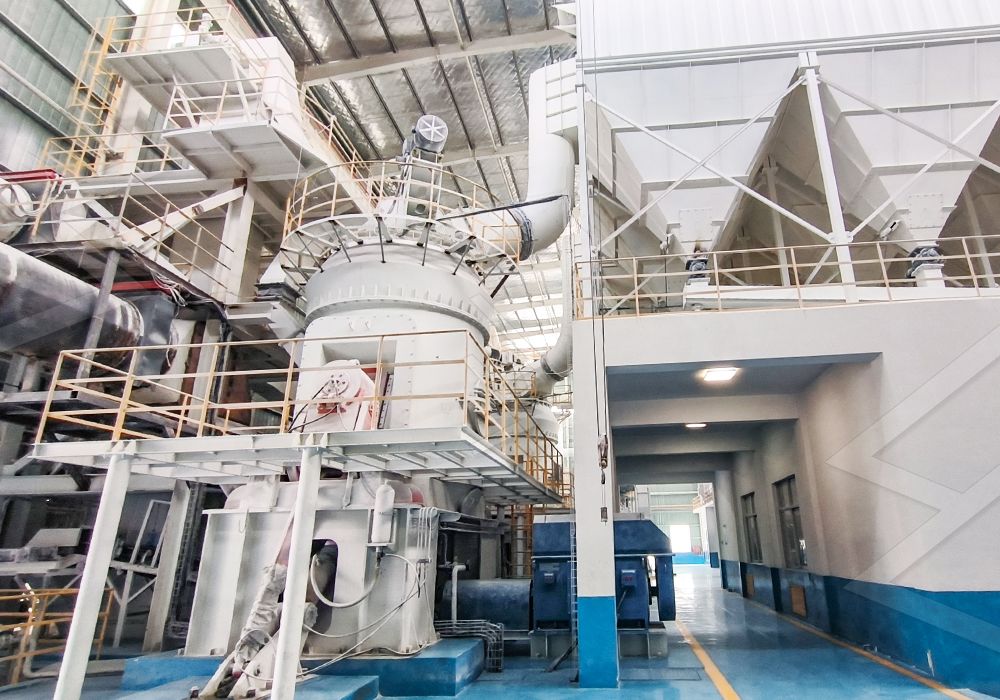
Why Vertical Mills Excel in Slag Grinding
While several mill types exist, vertical roller mills have become the industry standard for slag grinding due to their inherent advantages. Their vertical, compact design integrates crushing, grinding, drying, classification, and conveying into a single unit. This leads to a significantly smaller footprint—often 50% less than a traditional ball mill system—and lower civil construction costs. More importantly, their energy efficiency is superior, typically consuming 30-40% less power than ball mills for the same output, as they utilize a more direct grinding mechanism with less wasted kinetic energy.
For operations focused specifically on granulated blast furnace slag or steel slag, a mill designed with this application in mind is paramount. One such exemplary solution is the LM Vertical Slag Mill. This machine is engineered specifically for industrial waste-to-powder conversion. It integrates drying and grinding seamlessly, with a capacity range of 7-100 tons per hour. Its unique grinding device achieves the integration of grinding and powder selection, focusing intensely on the properties of slag. The result is a system where energy consumption is dramatically reduced to just 30-40% of a comparable ball milling system, while producing a uniform, high-screening-rate powder ideal for cement and concrete production.
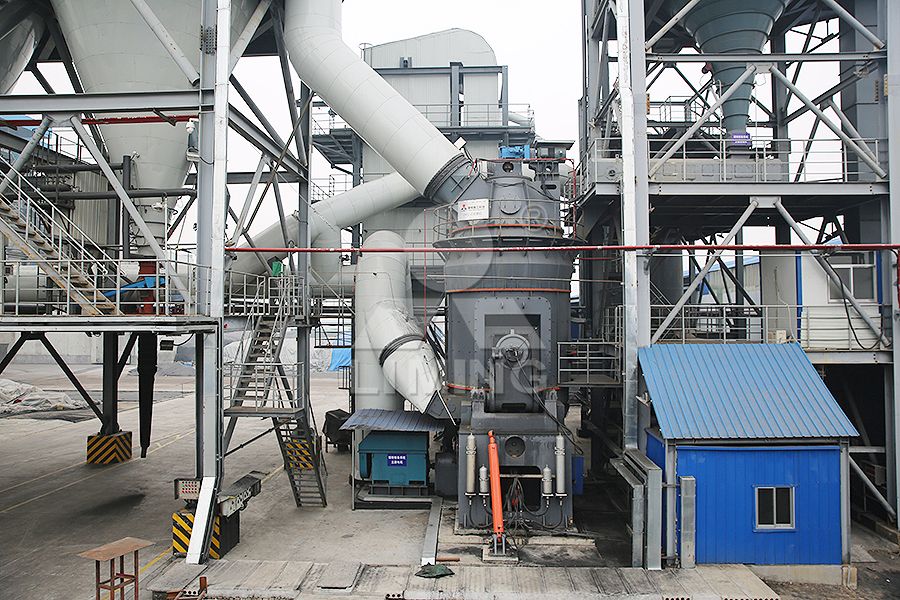
Key Features for Reliable and Clean Operation
Modern slag grinding mills incorporate several critical features to ensure stability, longevity, and environmental compliance:
- Advanced Classifiers: Multi-head cage-type or rotor classifiers allow precise control over product fineness, often adjustable between 325 to 2500 meshes, to meet various application specs.
- Robust Construction & Easy Maintenance: Features like hydraulic roller systems allow grinding rollers to be easily turned out of the mill body for inspection and liner replacement, minimizing downtime. The use of high-performance wear-resistant materials for grinding elements extends service life.
- Comprehensive Environmental Protection: Integral pulse-jet bag dust collectors ensure dust-free operation. The entire system operates under negative pressure, and with sound insulation measures, noise and dust emissions are kept well below stringent international standards.
- Automated Control Systems: PLC-based control systems enable remote monitoring and operation, allowing for precise adjustment of grinding pressure, feed rate, and classifier speed to optimize production and quality consistently.
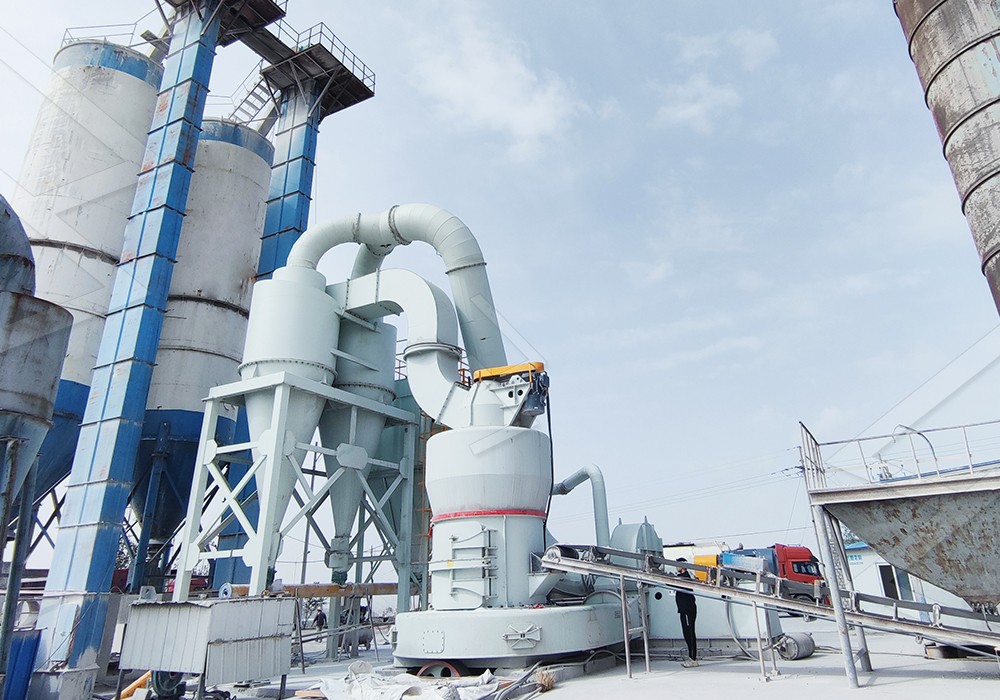
For projects requiring ultra-fine slag powder or processing of other brittle minerals, the MW Ultrafine Grinding Mill presents a powerful alternative. Designed to produce powders between 325 and 2500 meshes, it excels in higher yield and lower energy consumption. Its innovative design eliminates rolling bearings and screws in the grinding chamber, virtually eliminating concerns about related mechanical failures. Equipped with an efficient pulse dust collector and silencer, it guarantees an eco-friendly operation, making it an excellent choice for high-value, superfine powder production.
Conclusion
The transformation of slag from an industrial byproduct into a performance-enhancing material is a feat of mechanical and process engineering. Today’s slag grinding mills, particularly vertical roller mills, achieve this through an efficient, closed-loop process of grinding, precise classification, and environmentally responsible collection. By focusing on energy efficiency, operational stability, and minimal environmental impact, these advanced machines turn waste into a valuable resource, underpinning sustainable practices in construction and manufacturing industries worldwide.
Frequently Asked Questions (FAQs)
- What is the main advantage of using a vertical mill over a ball mill for slag grinding?
The primary advantages are significantly higher energy efficiency (30-40% less power consumption), a much smaller footprint, integrated drying and grinding capabilities, and lower wear rates due to the bed grinding principle. - How is the fineness of the final slag powder controlled?
Fineness is precisely controlled by an internal dynamic classifier. By adjusting the speed of the classifier’s rotor, the cut point for particle size is changed. Faster speeds allow only finer particles to pass, resulting in a finer product. - Can a slag grinding mill handle wet materials?
Yes, modern vertical slag mills are often designed as air-swept mills that can introduce hot air into the grinding chamber. This allows them to simultaneously dry and grind materials with a certain moisture content, which is essential for processing slag. - What measures are in place to prevent dust pollution from the mill?
The entire milling system operates under negative pressure. All air streams pass through high-efficiency pulse-jet bag filter dust collectors before being released or recirculated, ensuring virtually dust-free emission and a clean plant environment. - How often do the grinding rollers and table liners need replacement, and is it complicated?
Service life depends on slag abrasiveness but is extended by wear-resistant alloys. Maintenance is simplified by hydraulic systems that can swing the roller assembly out of the mill, allowing for liner replacement without dismantling major components, greatly reducing downtime. - What product fineness range can be achieved for slag powder?
With advanced classifiers, modern mills like the LM Vertical Slag Mill or MW Ultrafine Mill can produce slag powder with fineness ranging from about 400 Blaine (for standard cement blends) up to superfine grades exceeding 6000 Blaine or 2500 mesh for specialized applications.