
How Does a Roller Mill Work? A Guide from an Indonesian Industrial Supplier
We provide a wide range of mills — including Raymond mill, trapezoidal mill, vertical mill, ultrafine mill, and ball mill, obtained ISO9001 international quality certification, EU CE certification, and Customs Union CU-TR certification. Suitable for processing minerals such as limestone, phosphate, quicklime, kaolin, talc, barite, bentonite, calcium carbonate, dolomite, coal, gypsum, clay, carbon black, slag, cement raw materials, cement clinker, and more.
The discharge range of these mills can be adjusted to meet specific processing needs, typically from 80-400 mesh, 600-3250 mesh, and can achieve the finest particle size of up to 6000 mesh(D50).
If you are looking for a reliable grinding solution to turn stone or minerals into fine powder, please feel free to contact our online customer service.
How Does a Roller Mill Work? A Guide from an Indonesian Industrial Supplier
As a leading industrial supplier in Indonesia, we often get asked about the fundamental principles behind the equipment we provide. Understanding how a roller mill operates is crucial for maximizing efficiency and productivity in various grinding applications. At its core, a roller mill is a size-reduction machine that grinds material by compressing it between two or more rotating rollers or between rollers and a stationary surface.

The Core Mechanism: Compression and Shearing
The working principle is elegantly simple yet highly effective. Material is fed into the center or side of the mill, depending on the design. As the main shaft rotates, driven by an electric motor and a reducer, it causes the grinding rollers to rotate against a grinding ring or raceway. The key forces at play are compression and shearing. The material is crushed not by impact, but by the immense pressure applied as it passes through the narrow gap between the roller and the ring. This method is significantly more energy-efficient than the impact-based crushing of a ball mill.
The fineness of the final product is precisely controlled by adjusting the grinding pressure and the speed of an integrated powder separator. After grinding, an internal blower creates an air stream that carries the fine powder upwards to the separator. Here, a turbine or cage-type selector allows only particles of the desired size to pass through. Coarse particles are rejected and fall back onto the grinding table for further size reduction, ensuring a consistent and high-quality final product.
Key Advantages in Modern Industry
Modern roller mills offer distinct advantages that make them indispensable in industries ranging from mining and minerals to chemicals and construction materials. Their energy efficiency is a major benefit, often consuming 30-50% less power than traditional ball mills for the same output. They also feature integrated drying capabilities; hot air can be introduced to dry raw materials with moisture content during the grinding process itself, eliminating the need for a separate dryer.
Furthermore, their compact vertical design saves significant floor space compared to horizontal ball mills. Advanced models are engineered for eco-friendly operation, equipped with efficient pulse dust collectors and silencers to minimize dust pollution and noise, aligning with strict environmental standards.
Choosing the Right Mill for Your Application
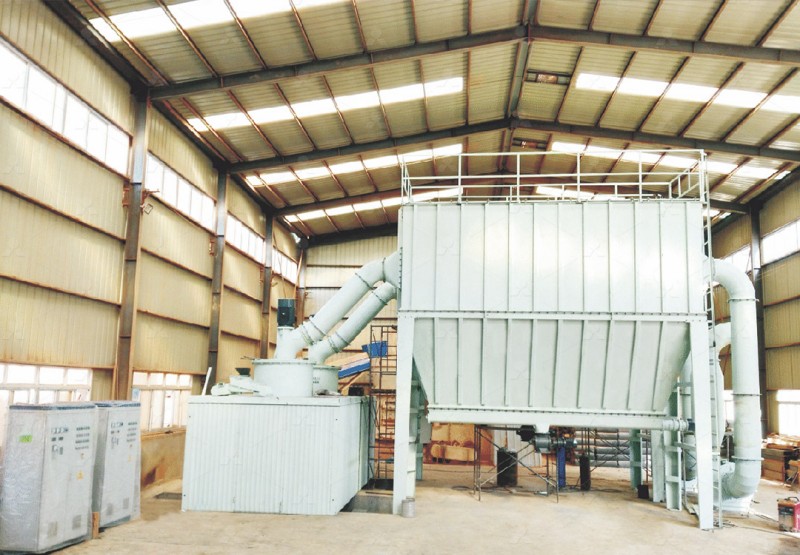
Selecting the appropriate roller mill depends on the material’s properties (hardness, moisture, abrasiveness) and the desired product fineness and capacity. For operations requiring ultra-fine powders between 325 and 2500 meshes, our MW Ultrafine Grinding Mill is an exceptional choice. It is specifically designed for customers who need to make ultra-fine powder from materials like limestone, calcite, dolomite, and talc. With an input size of 0-20 mm and a capacity range of 0.5-25 tph, it delivers higher yielding at lower energy consumption. A significant design feature is the absence of rolling bearings and screws in the grinding chamber, which eliminates common failure points and allows for external lubrication without shutdown, enabling continuous 24/7 production.
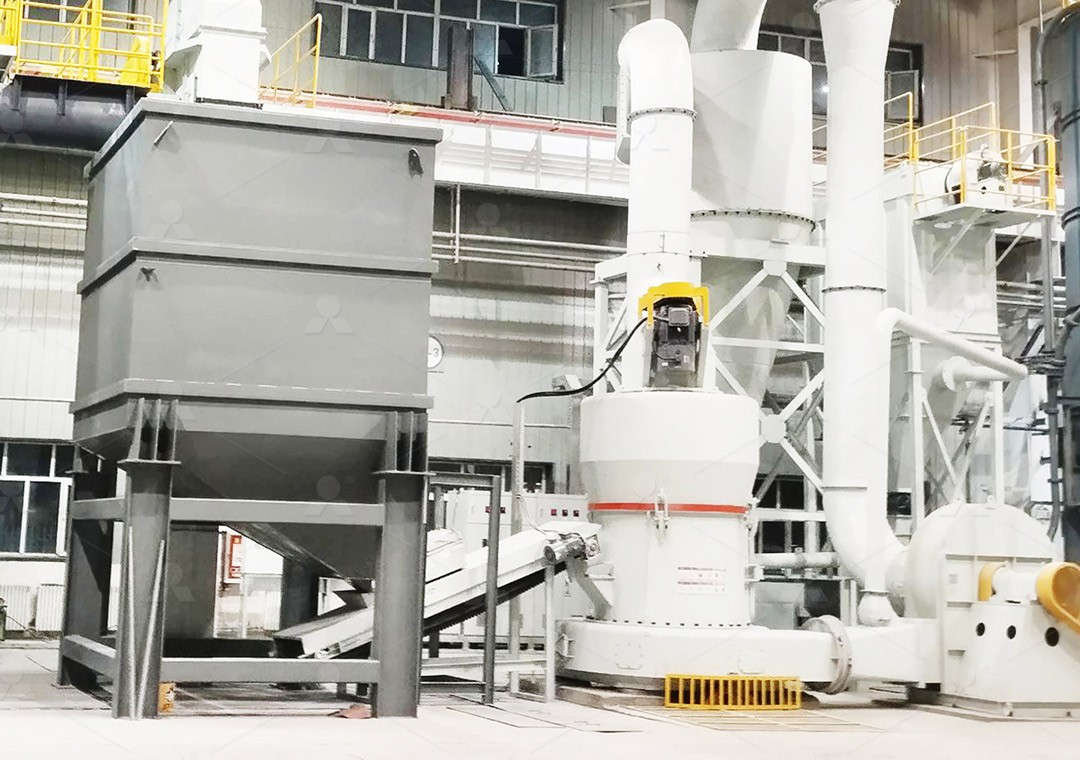
For another robust solution, consider the LUM Ultrafine Vertical Grinding Mill. It integrates ultrafine powder grinding, grading, and transporting into a single, efficient unit. With an input size of 0-10 mm and a capacity of 5-18 tph, it excels in producing superfine dry powder of non-metal ores. Its unique roller shell and lining plate grinding curve make it easier to generate a stable material layer, resulting in a high rate of finished products in a single pass and improving the whiteness and cleanliness of the output.
Frequently Asked Questions (FAQ)
What is the main difference between a roller mill and a ball mill?
Roller mills use compression and shear forces between rollers and a track, while ball mills use impact and attrition as tumbling balls collide with the material. Roller mills are generally more energy-efficient for fine grinding.
Can roller mills handle abrasive materials?
Yes, but it’s crucial to select a mill with wear-resistant components. Our mills often feature rollers and rings made from high-performance wear-resistant alloys to extend service life when processing abrasive substances.
How is the fineness of the powder controlled?
Fineness is primarily controlled by the speed of the integrated powder separator. Increasing the separator speed allows only finer particles to pass, while decreasing it results in a coarser product. Grinding pressure can also be adjusted for further control.
What maintenance is required for a roller mill?
Regular maintenance includes checking and replacing wear parts like grinding rollers and rings, inspecting lubrication systems, and ensuring the proper function of the dust collector. Our models are designed with features like external lubrication and reversible structures to simplify and reduce maintenance downtime.