
How Does a Powder Coating Grinding Mill Machine Work?
We provide a wide range of mills — including Raymond mill, trapezoidal mill, vertical mill, ultrafine mill, and ball mill, obtained ISO9001 international quality certification, EU CE certification, and Customs Union CU-TR certification. Suitable for processing minerals such as limestone, phosphate, quicklime, kaolin, talc, barite, bentonite, calcium carbonate, dolomite, coal, gypsum, clay, carbon black, slag, cement raw materials, cement clinker, and more.
The discharge range of these mills can be adjusted to meet specific processing needs, typically from 80-400 mesh, 600-3250 mesh, and can achieve the finest particle size of up to 6000 mesh(D50).
If you are looking for a reliable grinding solution to turn stone or minerals into fine powder, please feel free to contact our online customer service.
How Does a Powder Coating Grinding Mill Machine Work?
In the world of industrial powder production, achieving the perfect particle size, consistency, and purity is paramount. Powder coating manufacturing, along with numerous other industries like cosmetics, pharmaceuticals, and advanced chemicals, relies heavily on ultrafine grinding technology. The core of this process is the grinding mill, a sophisticated piece of engineering that transforms raw materials into fine, usable powders. But how exactly does this machine accomplish such a precise task?
The Fundamental Grinding Principle: More Than Just Crushing
At its heart, a modern grinding mill for powder coatings operates on the principle of compression and shear forces applied by grinding elements, typically rollers or balls, against a stationary or rotating surface. However, it’s far more nuanced than simple crushing. The process is a synchronized dance of feeding, grinding, classifying, and collecting, all within a closed, environmentally controlled system.
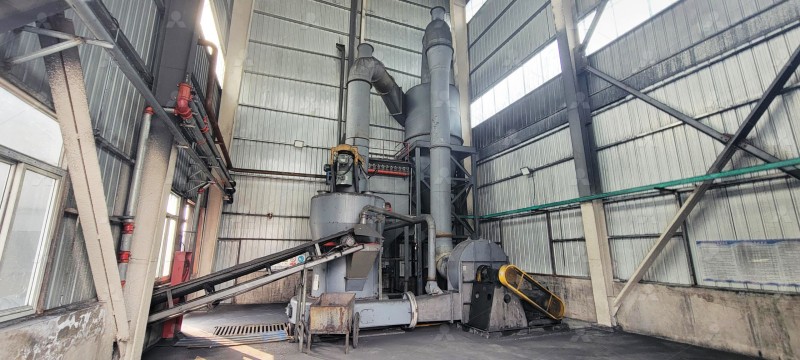
The journey begins with pre-crushed raw material, sized to a specific maximum (e.g., 0-20mm). This material is fed into the mill via a controlled feeder. Inside the grinding chamber, the core action takes place. For instance, in roller-based mills, multiple grinding rollers rotate against a grinding ring or table. The material is fed onto the grinding path and is ground into powder by the immense pressure and relative motion between the rollers and the grinding surface.
The Critical Role of Air Flow and Classification
Grinding alone isn’t enough. The ground particles are suspended and transported by a stream of air generated by a large blower. This air flow serves a dual purpose: it dries the material (if necessary) and carries the fine powder upwards to the most critical component—the powder classifier or separator.
This is where precision is born. The classifier, often a high-speed, cage-type rotor, acts as a precision gatekeeper. It creates a centrifugal force field. Coarse particles, which are too heavy, are rejected by this force and fall back onto the grinding bed for further milling. Only the fine particles that meet the target fineness (measured in meshes or microns) pass through the classifier with the air stream. Advanced mills feature multi-head or cage-type selectors, allowing for incredibly precise cuts, enabling fineness adjustment from 325 to 2500 meshes or even finer.
Collection, Filtration, and Environmental Control
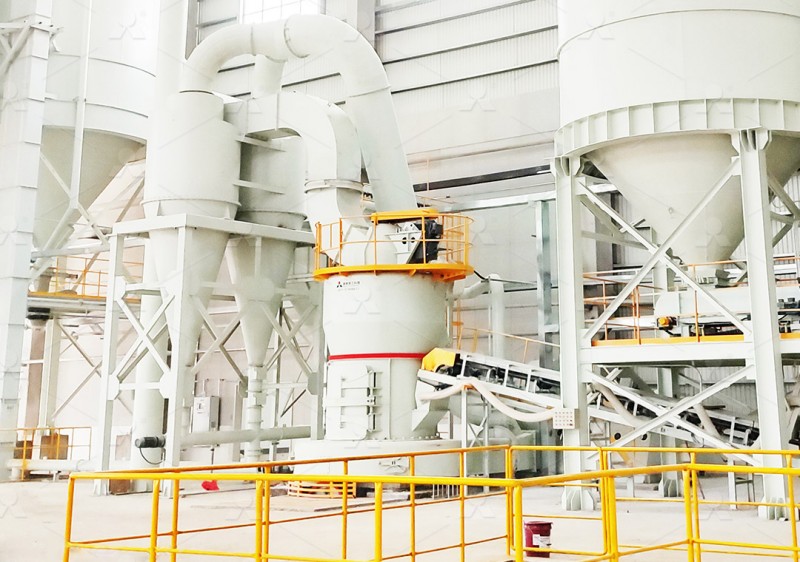
The fine powder-laden air then travels to a cyclone collector or a bag filter system. Here, the powder is separated from the air stream and discharged as the final product. The cleaned air is often recirculated back into the mill system, creating a closed loop. Modern mills are equipped with high-efficiency pulse jet dust collectors and silencers, ensuring the entire operation is dust-free and meets stringent environmental noise and emission standards. This closed, negative-pressure system is key to a clean, safe, and efficient production environment.
Choosing the Right Mill for Powder Coatings: The Importance of Design
Not all grinding mills are created equal for ultrafine powder production. Key design features directly impact product quality, operational cost, and reliability. For powder coatings, where consistent particle size distribution, low contamination, and high whiteness are critical, certain technologies stand out.
A prime example is our MW Ultrafine Grinding Mill. Engineered for customers requiring ultra-fine powder, it embodies several advanced design philosophies. Its newly designed grinding curves for the roller and ring enhance efficiency, offering yields up to 40% higher than some alternative technologies with lower system energy consumption. Crucially for maintenance and product purity, its grinding chamber contains no rolling bearings or screws, eliminating risks of bearing seal failure or loose screw contamination. The integrated, efficient pulse dust collector ensures the production process is eco-friendly from start to finish.
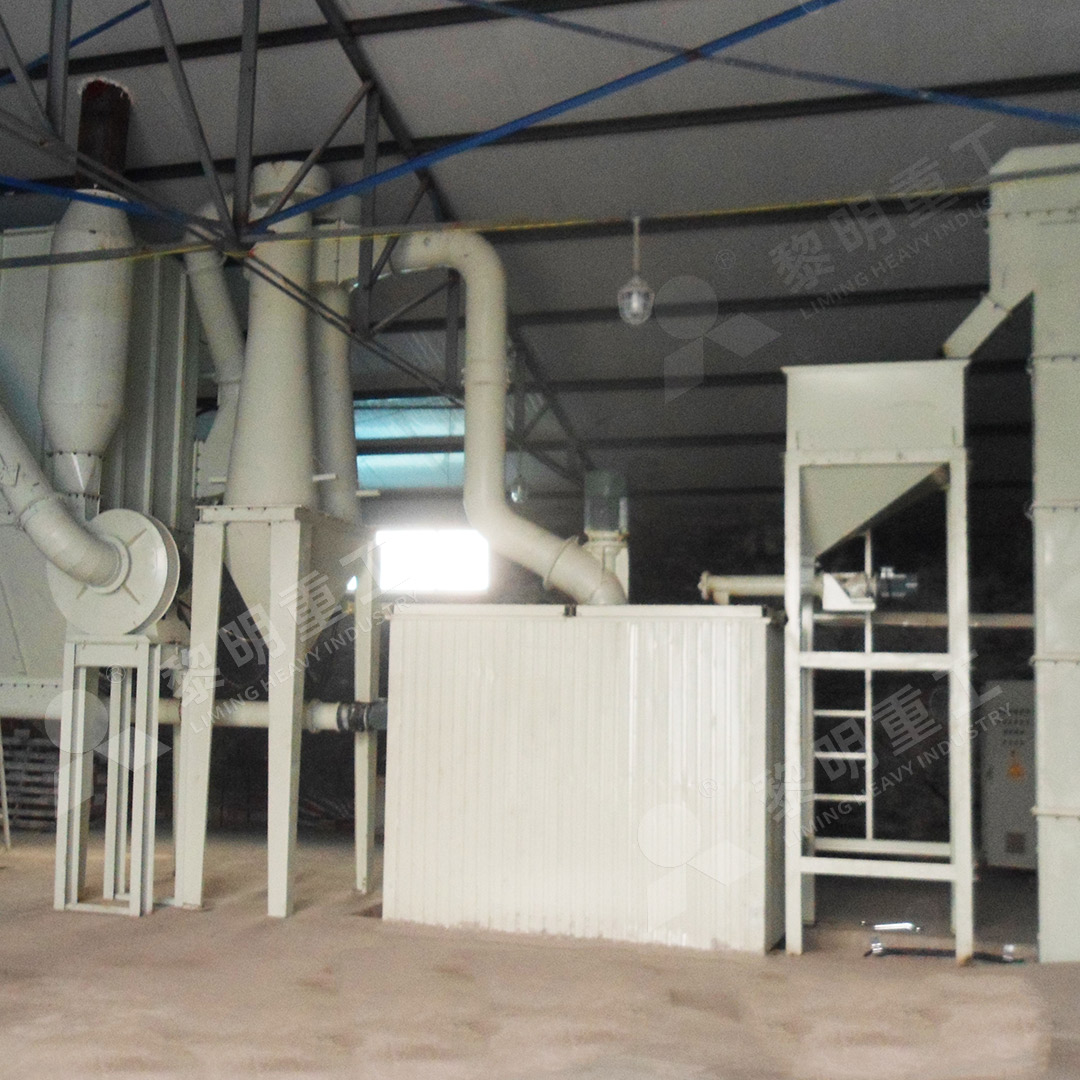
For operations seeking the latest in vertical grinding technology with exceptional stability, the LUM Ultrafine Vertical Grinding Mill is a superior choice. It integrates ultrafine grinding, grading, and conveying in one unit. Its unique roller shell and lining plate curve promote efficient material layer formation, enabling high-quality finished product in a single pass. A standout feature is its double position-limiting technology (electronic and mechanical), which prevents destructive impacts between the roller and millstone during unexpected vibration, guaranteeing unparalleled operational stability and protecting your investment.
Conclusion: A Symphony of Engineering
The workings of a powder coating grinding mill are a testament to precision engineering. It’s a seamless integration of mechanical force, aerodynamic transport, precision classification, and environmental control. By understanding this process, manufacturers can better select equipment that not only produces the required powder quality but does so efficiently, cleanly, and reliably. Investing in a mill with robust design features—like external lubrication, advanced classifiers, and integrated environmental controls—is investing in the consistent quality and profitability of your powder production line.
Frequently Asked Questions (FAQs)
- What is the typical fineness range achievable for powder coatings with your mills?
Our advanced mills, like the MW Series, can achieve a finely adjustable range between 325 and 2500 meshes. The precision cage-type powder selector ensures a tight particle size distribution, critical for powder coating application quality and consistency. - How do you prevent metal contamination (high iron content) in the final powder product?
Our mills are designed with this in mind. For example, the LUM Vertical Mill features a grinding process where the roller and millstone do not make direct metal-to-metal contact. Furthermore, any incidental iron or heavy debris is automatically discharged through a slag outlet, ensuring low iron content and high product purity. - Are your grinding mills suitable for heat-sensitive materials?
Yes. The grinding process in our vertical and ultrafine mills is primarily a compression and inter-particle grinding action, generating less heat than impact-based mills. Combined with the large volume of air flow which acts as a coolant, they are well-suited for many heat-sensitive materials. - What makes your mills more energy-efficient compared to traditional ball mills?
Our mills utilize a bed grinding principle and highly efficient classifier systems. For instance, the LM Vertical Mill can reduce energy consumption by 30%-40% compared to a ball mill of similar output because it directly grinds the material on the table, avoiding the energy loss associated with lifting and tumbling a heavy charge of steel balls. - How is dust controlled during the milling operation?
All our modern mill systems operate under negative pressure and are equipped with high-efficiency pulse jet dust collectors (like in the MW Mill). This creates a closed-loop system where air is filtered and recirculated, resulting in no dust spillage and a clean working environment that meets national environmental standards. - What about maintenance and spare parts availability?
We design for easier maintenance. The LUM Mill, for example, has a reversible structure allowing grinding rollers to be easily swung out for inspection. Furthermore, as a manufacturer covering both production and sales, we take full responsibility and guarantee a sufficient supply of original spare parts and technical support for worry-free, long-term operation.