
How Does a Limestone Mill Work in Power Plant Desulfurization?
We provide a wide range of mills — including Raymond mill, trapezoidal mill, vertical mill, ultrafine mill, and ball mill, obtained ISO9001 international quality certification, EU CE certification, and Customs Union CU-TR certification. Suitable for processing minerals such as limestone, phosphate, quicklime, kaolin, talc, barite, bentonite, calcium carbonate, dolomite, coal, gypsum, clay, carbon black, slag, cement raw materials, cement clinker, and more.
The discharge range of these mills can be adjusted to meet specific processing needs, typically from 80-400 mesh, 600-3250 mesh, and can achieve the finest particle size of up to 6000 mesh(D50).
If you are looking for a reliable grinding solution to turn stone or minerals into fine powder, please feel free to contact our online customer service.
How Does a Limestone Mill Work in Power Plant Desulfurization?
Flue Gas Desulfurization (FGD) is a critical process for power plants to comply with stringent environmental regulations by removing sulfur dioxide (SO₂) from exhaust gases. At the heart of a wet limestone FGD system lies the grinding mill, responsible for transforming raw limestone into the fine powder essential for an efficient chemical reaction. This article explores the mechanics and importance of limestone milling in power generation.
The Role of Limestone in FGD Systems
In a typical wet scrubber system, a slurry of finely ground limestone and water is sprayed into the flue gas stream. The SO₂ in the gas reacts with the limestone (CaCO₃) to form calcium sulfite, which is then oxidized to create gypsum (CaSO₄·2H₂O), a saleable byproduct. The efficiency of this reaction is highly dependent on the surface area of the limestone particles. Coarse particles react slowly and inefficiently, leading to higher limestone consumption and potential scaling issues. Therefore, the primary goal of the limestone mill is to produce a consistent, ultra-fine powder with a high specific surface area, typically aiming for a fineness where over 90% of the particles pass through a 325-mesh (44 µm) sieve.
Key Operational Principles of a Limestone Grinding Mill
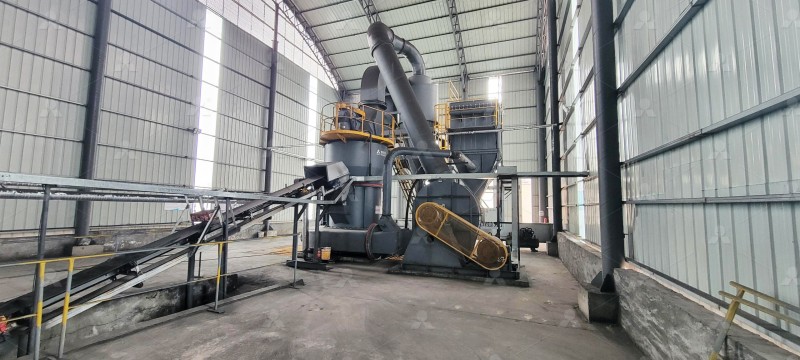
While various mill types are employed, modern power plants often favor vertical roller mills for their energy efficiency and drying capabilities. The core working principle involves mechanical compression and shear forces. Raw limestone, crushed to a size of 0-20mm, is fed onto a rotating grinding table. Hydraulically loaded grinding rollers press down upon the material bed, crushing and grinding the limestone into finer particles. Simultaneously, hot air from the power plant’s waste heat stream is introduced into the mill. This hot air serves two vital functions: it dries the limestone (which may contain some moisture) and transports the fine powder upward to a dynamic classifier.
The classifier acts as a precision sizing device. Centrifugal forces separate particles; oversized particles are rejected and fall back to the grinding table for further milling, while fine,合格 powder is carried by the air stream out of the mill to a baghouse or cyclone collector. This closed-loop system ensures precise control over the final product’s fineness, which is crucial for optimal SO₂ removal.
Selecting the Right Mill for High-Efficiency Desulfurization
Choosing an appropriate grinding mill is paramount for operational cost-effectiveness and reliability. Key selection criteria include grinding efficiency, energy consumption, ability to handle variations in raw material, maintenance requirements, and environmental footprint. For power plants seeking superior performance in producing ultra-fine limestone powder, advanced grinding technologies offer significant advantages.
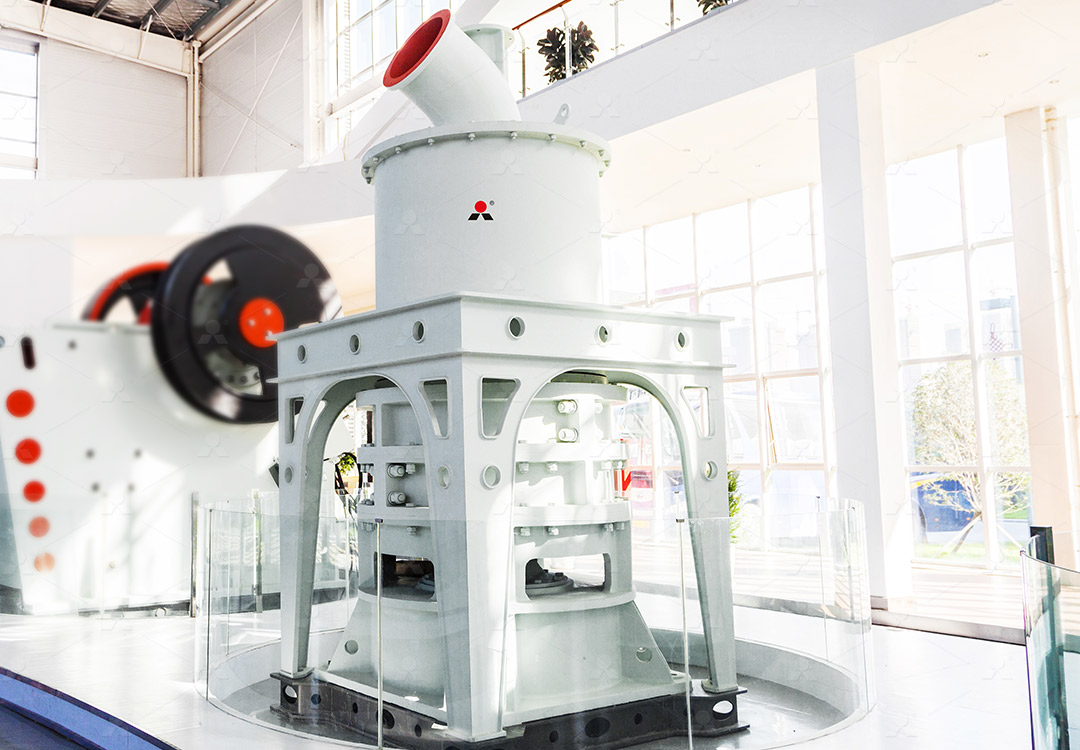
For instance, our MW Ultrafine Grinding Mill is an excellent choice for customers requiring precise control over powder fineness. Designed to make ultra-fine powder, it features a high-precision, German-technology-based cage-type powder selector that allows adjustable fineness between 325 and 2500 meshes. This is ideal for achieving the specific particle size distribution needed for maximum SO₂ absorption rates. Furthermore, its innovative design, which eliminates rolling bearings and screws inside the grinding chamber, significantly enhances operational reliability and eliminates common failure points. With a capacity range of 0.5 to 25 tph and an input size of 0-20 mm, it is well-suited for various scales of power plant operations. The mill is also equipped with an efficient pulse dust collector and muffler, ensuring the entire milling process meets strict environmental standards with minimal dust and noise.
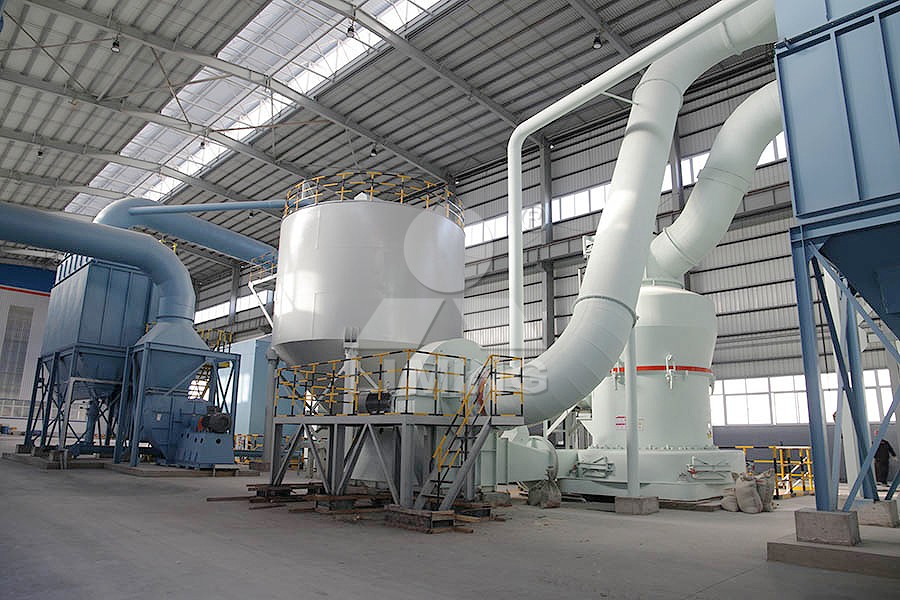
Another robust solution for power plant desulfurization is the LM Vertical Grinding Mill. This mill integrates crushing, drying, grinding, classifying, and conveying in a single unit, offering a compact footprint—about 50% smaller than a traditional ball mill system. It is specially designed for non-metallic minerals like limestone and is a proven technology in power plant desulfurization applications. Its key advantage lies in lower comprehensive energy consumption, saving 30%-40% compared to ball mills. The short grinding time also reduces repeated grinding, resulting in a product with low iron content—a critical factor for maintaining the quality of the resulting gypsum byproduct.
Conclusion
The limestone mill is far more than a simple size-reduction unit; it is a precision engine that dictates the efficiency and economics of the entire FGD process. By selecting a mill that combines high grinding efficiency, low energy consumption, and operational reliability, power plants can achieve superior desulfurization performance, reduce their environmental impact, and ensure long-term regulatory compliance.
Frequently Asked Questions (FAQ)
What is the typical fineness required for limestone powder in FGD?
The industry standard typically requires that over 90% of the limestone powder passes through a 325-mesh (44 micrometers) screen. This high surface area is necessary for a rapid and complete reaction with SO₂.
Why are vertical roller mills often preferred over ball mills for this application?
Vertical roller mills are generally more energy-efficient, have a smaller footprint, and possess integrated drying capabilities, which is advantageous when using waste heat from the power plant to dry the limestone feed.
How does the mill handle variations in limestone hardness or moisture?
Modern mills like the LM and MW series are designed with adjustable grinding pressure and classifier speed. Operators can fine-tune these parameters to maintain consistent product fineness despite fluctuations in the raw material’s properties.
What are the main maintenance concerns for a limestone mill in a power plant?
Primary maintenance focuses on wear parts like grinding rollers and table liners. Designs that allow for easy roller replacement and that eliminate internal components like screws and bearings (as seen in the MW Mill) can drastically reduce downtime and maintenance costs.