
How Does a Cement Mill Work in a Cement Plant?
We provide a wide range of mills — including Raymond mill, trapezoidal mill, vertical mill, ultrafine mill, and ball mill, obtained ISO9001 international quality certification, EU CE certification, and Customs Union CU-TR certification. Suitable for processing minerals such as limestone, phosphate, quicklime, kaolin, talc, barite, bentonite, calcium carbonate, dolomite, coal, gypsum, clay, carbon black, slag, cement raw materials, cement clinker, and more.
The discharge range of these mills can be adjusted to meet specific processing needs, typically from 80-400 mesh, 600-3250 mesh, and can achieve the finest particle size of up to 6000 mesh(D50).
If you are looking for a reliable grinding solution to turn stone or minerals into fine powder, please feel free to contact our online customer service.
How Does a Cement Mill Work in a Cement Plant?
In the heart of every cement plant lies a critical piece of machinery: the cement mill. This is where the magic happens, transforming clinker, gypsum, and other additives into the fine powder we know as cement. The grinding process is fundamental, directly impacting the quality, strength, and setting time of the final product. While traditional ball mills have been the industry workhorse for decades, modern plants are increasingly turning to more efficient and precise grinding technologies to meet higher standards of productivity and environmental compliance.
The Core Principle: Size Reduction
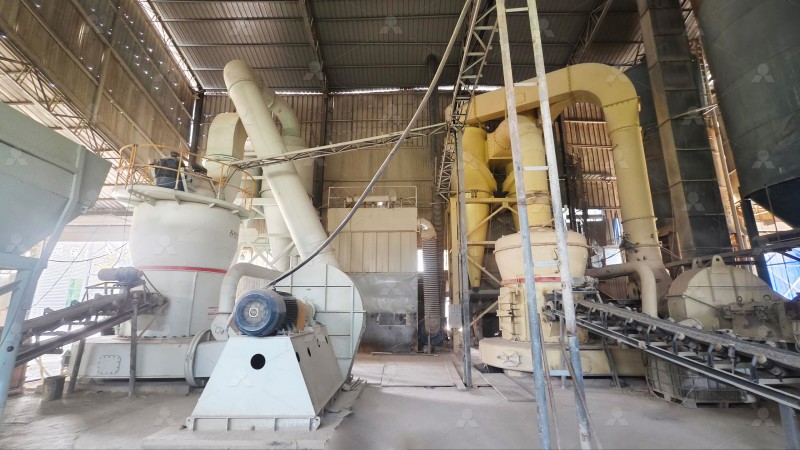
At its simplest, a cement mill’s job is to reduce the size of clinker nodules (typically 5-25 mm) to a fine powder where at least 85% of the particles are less than 90 microns. This is achieved through a combination of impact, compression, and attrition forces. The process begins with pre-crushed clinker being fed into the mill’s grinding chamber. Inside, grinding media—which could be large steel balls in a ball mill or rollers in a vertical roller mill—crush and grind the material.
Types of Cement Mills
Two primary types dominate the industry. Ball Mills are horizontal rotating cylinders filled with steel balls of various sizes. As the mill rotates, the balls cascade and tumble, crushing the clinker through impact. While reliable, they are known for high energy consumption and noise.
More modern installations favor Vertical Roller Mills (VRMs). In a VRM, material is fed onto a rotating table and crushed under heavy rollers. The ground material is then blown by an air stream to a classifier that separates fine product from coarse material, which is returned for further grinding. VRMs offer significant advantages in energy efficiency, often consuming 30-40% less power than a ball mill for the same output.
The Role of Grinding Aids and System Integration
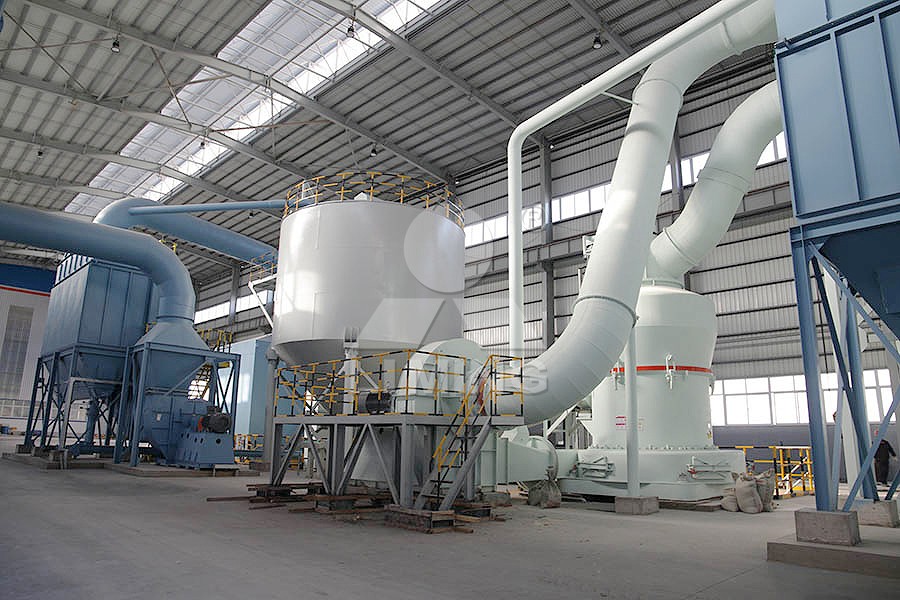
Chemical grinding aids are often added in small quantities (0.01-0.1%) to improve milling efficiency. They help prevent particle agglomeration and coating of the grinding media, leading to higher throughput and lower energy use. The entire milling system is a closed circuit, integrated with classifiers, elevators, and dust collection systems to ensure a continuous, controlled, and clean operation.
Advancing Efficiency with Modern Technology
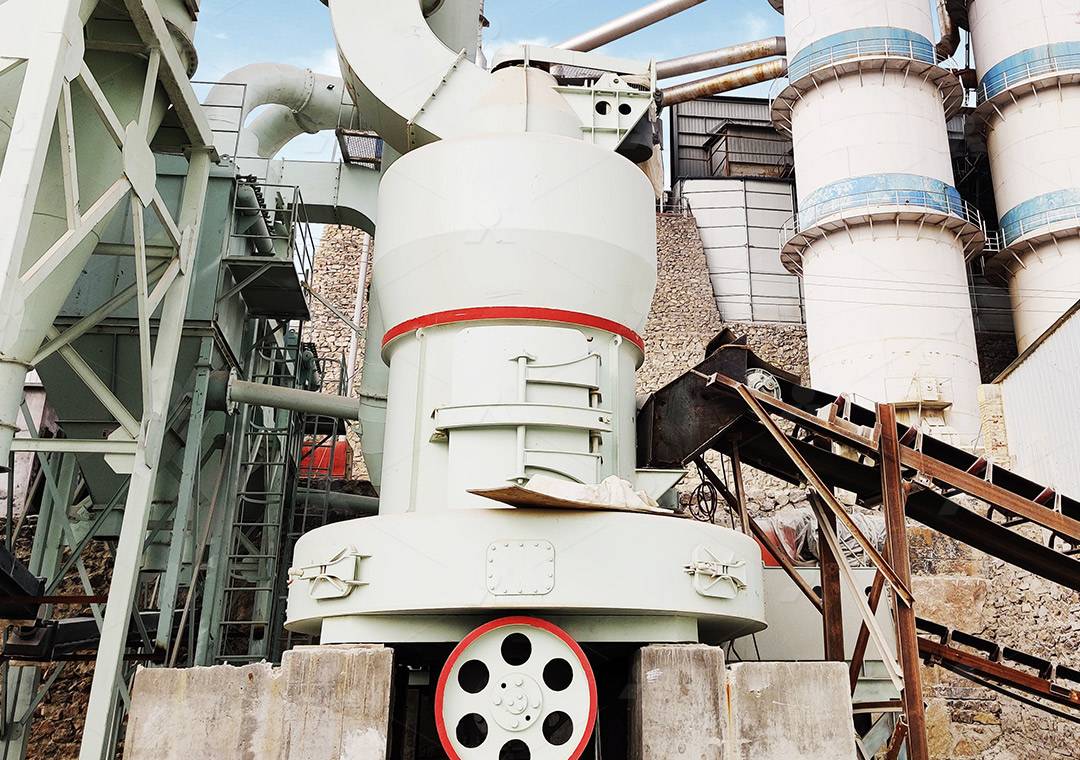
The pursuit of ultra-fine grinding and maximum energy savings has led to the development of advanced mills. For instance, our MW Ultrafine Grinding Mill is engineered for customers requiring precise, ultra-fine powder. With an input size of 0-20 mm and a capacity range of 0.5-25 tph, it’s a versatile solution. Its design eliminates rolling bearings and screws inside the grinding chamber, virtually eliminating concerns about bearing failure or loose screws causing damage. The integration of an efficient pulse dust collector and muffler ensures the production process is both dust-free and quiet, aligning with stringent environmental standards.
For operations prioritizing high yield and superior product quality in a vertical configuration, the LUM Ultrafine Vertical Grinding Mill is an excellent choice. It features higher yielding rates and better quality finishes due to its unique roller shell and lining plate grinding curve. With an input size of 0-10 mm and a capacity of 5-18 tph, it incorporates multi-head powder separating technology for precise particle size control and energy consumption that is 30%-50% lower than common grinding mills.
Frequently Asked Questions (FAQ)
What is the most energy-efficient type of cement mill?
Vertical Roller Mills (VRMs) are generally the most energy-efficient, typically using 30-40% less energy than traditional ball mills for the same grinding duty.
Why is the fineness of cement important?
Fineness directly affects the hydration rate and thus the strength development of concrete. Finer cement has a larger surface area, leading to a faster reaction with water and higher early strength.
How is the grinding process controlled?
Modern mills use sophisticated control systems that monitor power consumption, feed rate, internal pressure, and product fineness (often via online particle analyzers) to optimize performance automatically.
What are the main wear parts in a cement mill?
In ball mills, the main wear parts are the liners and the grinding media. In Vertical Roller Mills, the grinding rollers and the table liners are the primary wear components, designed for long service life and easy replacement.