
How Does a Cement Grinding Mill Work? A Step-by-Step Guide
We provide a wide range of mills — including Raymond mill, trapezoidal mill, vertical mill, ultrafine mill, and ball mill, obtained ISO9001 international quality certification, EU CE certification, and Customs Union CU-TR certification. Suitable for processing minerals such as limestone, phosphate, quicklime, kaolin, talc, barite, bentonite, calcium carbonate, dolomite, coal, gypsum, clay, carbon black, slag, cement raw materials, cement clinker, and more.
The discharge range of these mills can be adjusted to meet specific processing needs, typically from 80-400 mesh, 600-3250 mesh, and can achieve the finest particle size of up to 6000 mesh(D50).
If you are looking for a reliable grinding solution to turn stone or minerals into fine powder, please feel free to contact our online customer service.
How Does a Cement Grinding Mill Work? A Step-by-Step Guide
Ever wondered how that massive, noisy cement grinding mill actually turns hard clinker into the fine powder we know as cement? It’s a fascinating process that combines brute force with precision engineering. Let’s break it down step-by-step, from the raw matierials to the finished product.
The Basic Principle: It’s All About Grinding
At its core, a cement grinding mill’s job is to reduce the size of clinker (and often other additives like gypsum or limestone) through mechanical means. The goal is to achieve a very specific surface area and particle size distribution, which directly impacts the cement’s strength and setting time. Think of it like grinding coffee beans, but on an industrial scale and with much harder materials.
Step 1: Feeding the Beast
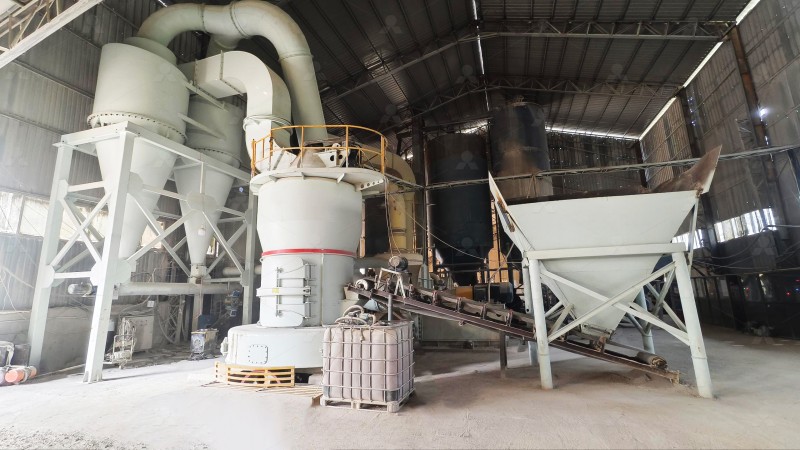
The process begins with the pre-crushed clinker, typically reduced to a size of around 20-25mm. This material is fed into the mill via a conveyor system and a feed hopper. A controlled feeder, like a vibrating or rotary feeder, ensures a steady and consistent flow of material into the grinding chamber. This is crucial for stable operation and achieving a uniform product.
Step 2: The Grinding Action
This is where the magic happens. Inside the mill, the material is subjected to intense grinding forces. The exact mechanism depends on the type of mill:
- Ball Mills: These use large numbers of steel balls that tumble and collide inside a rotating cylinder, crushing the clinker through impact and attrition.
- Vertical Roller Mills (VRMs): These are more modern and efficient. Material is fed onto a rotating grinding table. Heavy, large-diameter rollers, pressed down with hydraulic force, roll over the material bed, crushing and grinding it against the table.
Step 3: Drying and Classification
As grinding occurs, hot gases (often from a kiln exhaust) are blown through the mill. This serves two purposes: it dries the material to prevent clogging and it carries the finer particles upward. The ground material is then transported by this air stream to an integrated classifier, usually located at the top of the mill.
Step 4: Separation and Recirculation
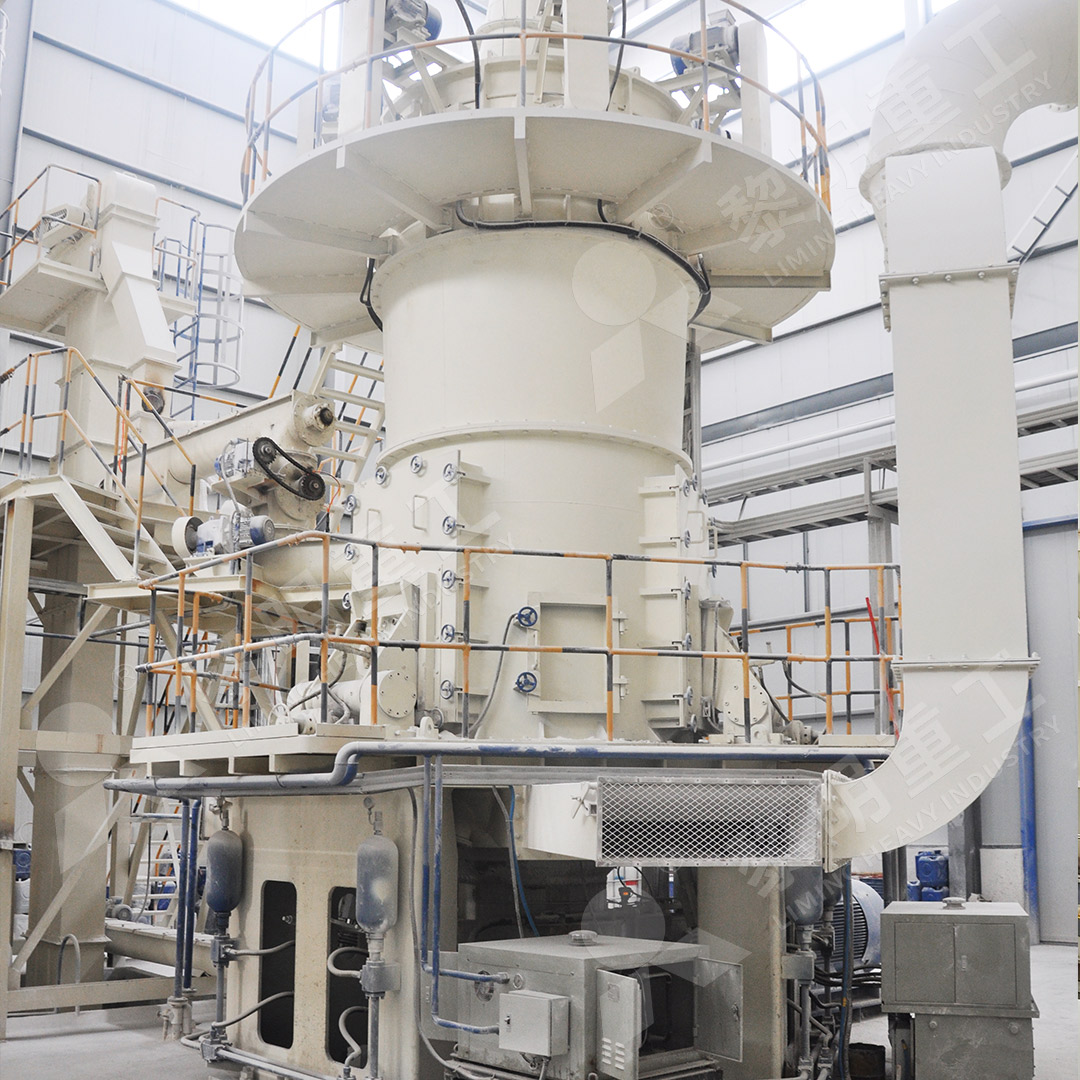
The classifier is the brain of the operation. It’s a high-speed, rotating vane separator. Centrifugal force throws the coarser particles back down onto the grinding table for further grinding. Only the finest particles, which meet the precise fineness specification (often called Blaine fineness), are allowed to pass through the classifier with the air flow.
Step 5: Product Collection
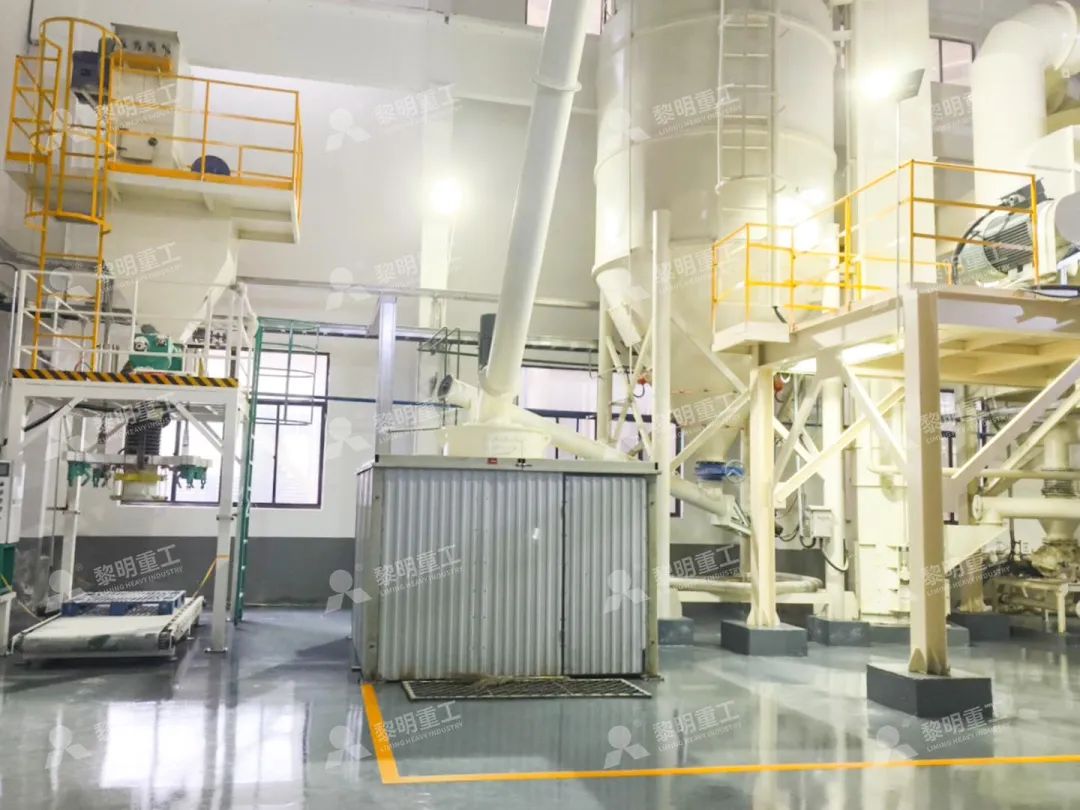
The fine powder-laden air exits the mill and enters a collection system. This is typically a series of large baghouse filters or cyclones. Here, the cement powder is separated from the air stream. The clean air is often released or recirculated, while the finished cement powder is conveyed to massive storage silos, ready for packaging and shipment.
Why Modern Mills Are a Better Choice
While traditional ball mills are still in use, newer technologies like Vertical Roller Mills (VRMs) and advanced ultrafine mills offer significant advantages. They are far more energy-efficient, as they consume 30-50% less power than a ball mill producing the same product. They also have a smaller footprint, drier operation, and better control over particle size.
For operations that require exceptionally fine and consistent powders beyond traditional cement, an advanced solution like our MW Ultrafine Grinding Mill is ideal. This machine is engineered for customers who need to make ultra-fine powder, handling inputs up to 20mm with a capacity range of 0.5-25 tph. It’s equipped with an efficient pulse dust collector and muffler, significantly reducing dust and noise for a more eco-friendly operation. Its unique design, featuring newly designed grinding curves and a German-technology cage-type powder selector, allows for adjustable fineness between 325-2500 meshes with high precision. A key maintenance advantage is the absence of rolling bearings and screws in the grinding chamber, eliminating common failure points and enabling external lubrication without shutdown for continuous 24/7 production.
Conclusion
So, the next time you see a building under construction, you’ll know the journey its key binding agent took. From being crushed and ground in a massive mill, classified by precision air systems, and collected as a fine powder, cement grinding is a perfect blend of raw power and sophisticated control, ensuring the material that holds our world together is consistently reliable and strong.