
How Does a Ball Mill Machine Work for Grinding Gold Ore?
We provide a wide range of mills — including Raymond mill, trapezoidal mill, vertical mill, ultrafine mill, and ball mill, obtained ISO9001 international quality certification, EU CE certification, and Customs Union CU-TR certification. Suitable for processing minerals such as limestone, phosphate, quicklime, kaolin, talc, barite, bentonite, calcium carbonate, dolomite, coal, gypsum, clay, carbon black, slag, cement raw materials, cement clinker, and more.
The discharge range of these mills can be adjusted to meet specific processing needs, typically from 80-400 mesh, 600-3250 mesh, and can achieve the finest particle size of up to 6000 mesh(D50).
If you are looking for a reliable grinding solution to turn stone or minerals into fine powder, please feel free to contact our online customer service.
How Does a Ball Mill Machine Work for Grinding Gold Ore?
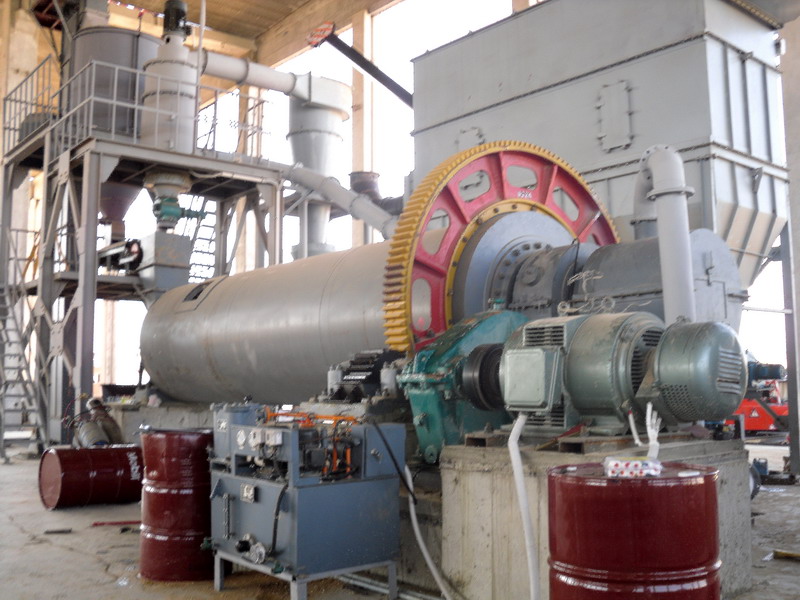
Ball mills are a fundamental piece of equipment in the mining industry, particularly for grinding gold ore into fine powder. Understanding how they work is key to optimizing recovery rates and operational efficiency. At its core, a ball mill is a cylindrical device that rotates around its horizontal axis. It is partially filled with the material to be ground—in this case, crushed gold ore—and the grinding medium, which are typically steel balls.
The Basic Grinding Process
The process begins when crushed gold ore, typically reduced to less than 25mm in size, is fed into the mill’s hollow cylinder through a quill shaft. As the mill rotates, the balls are lifted up the side of the cylinder until they reach a certain height, after which they cascade down onto the ore, impacting and crushing it through a combination of impact and abrasion. The centrifugal force generated by the rotation is what creates this cascading motion. The continuous tumbling and collision of the balls against the ore and the mill’s internal lining (often made of manganese steel or rubber) gradually reduces the ore to a fine powder. The fineness of the final product is determined by the duration of grinding and the size and density of the grinding balls.
Key Components and Their Roles
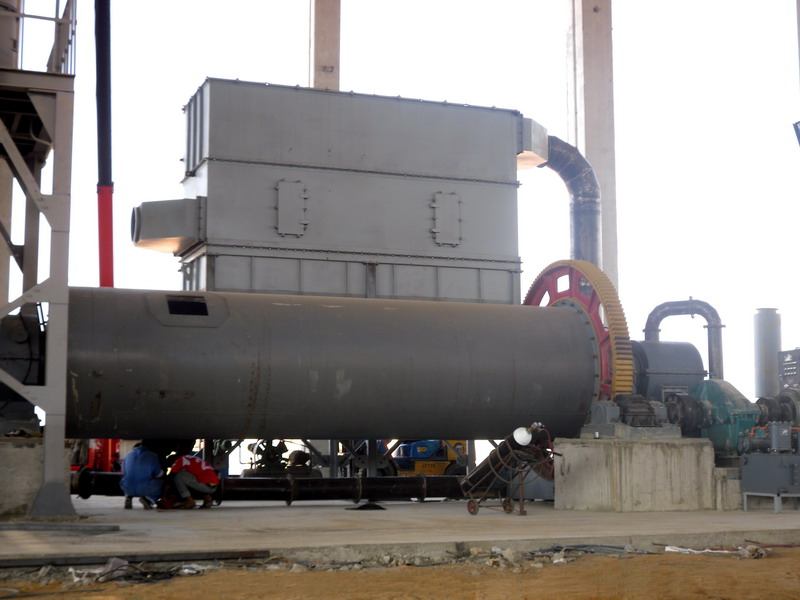
A standard ball mill system consists of the mill itself, a feed mechanism, a discharge system, and often a classifier. The mill’s shell provides the structure, while the liners protect it from wear and help lift the grinding media. The grinding media, the balls, are the active components that do the actual breaking of the ore particles. Discharge grates at the end of the mill allow the ground powder to exit once it has reached a sufficiently small size, while retaining the larger grinding balls inside.
Limitations and Modern Alternatives
While ball mills are reliable and have lower initial investment costs, they are not always the most efficient option, especially for achieving very fine or ultra-fine grinds required for certain gold liberation processes. They can be energy-intensive, have a larger footprint, and generate significant noise and vibration.
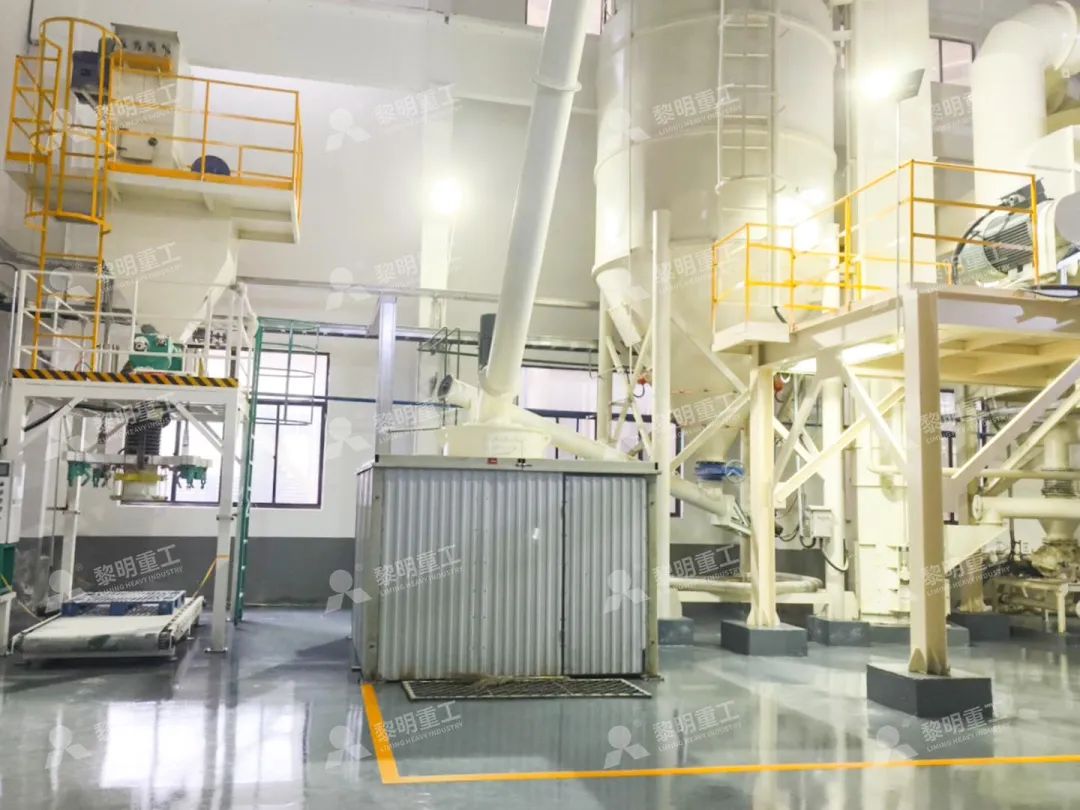
For operations requiring higher efficiency and finer output, modern grinding technologies offer superior performance. For instance, our MW Ultrafine Grinding Mill is an excellent alternative. Designed for customers who need to make ultra-fine powder, this machine boasts higher yielding and lower energy consumption. With a capacity of 0.5-25 tph and handling an input size of 0-20 mm, it can produce powder with a fineness adjustable between 325-2500 meshes. Its innovative design, including a German-technology cage-type powder selector and the absence of rolling bearings in the grinding chamber, ensures precision, reliability, and minimal maintenance. It’s particularly effective for processing minerals like gold ore to unlock maximum value.
Conclusion
In summary, the traditional ball mill operates on a simple principle of impact and attrition using tumbling steel balls. It remains a workhorse in gold processing plants. However, for operations looking to enhance efficiency, reduce energy costs, and achieve a much finer and more consistent grind, advanced solutions like our MW Ultrafine Grinding Mill present a compelling, modern alternative that can significantly improve downstream recovery processes.