
High-Quality Limestone European Version Grinding Mill for Sale
We provide a wide range of mills — including Raymond mill, trapezoidal mill, vertical mill, ultrafine mill, and ball mill, obtained ISO9001 international quality certification, EU CE certification, and Customs Union CU-TR certification. Suitable for processing minerals such as limestone, phosphate, quicklime, kaolin, talc, barite, bentonite, calcium carbonate, dolomite, coal, gypsum, clay, carbon black, slag, cement raw materials, cement clinker, and more.
The discharge range of these mills can be adjusted to meet specific processing needs, typically from 80-400 mesh, 600-3250 mesh, and can achieve the finest particle size of up to 6000 mesh(D50).
If you are looking for a reliable grinding solution to turn stone or minerals into fine powder, please feel free to contact our online customer service.
High-Quality Limestone European Version Grinding Mill for Sale
The demand for finely ground limestone powder spans a vast array of industries, from construction materials and paints to plastics, pharmaceuticals, and agriculture. Achieving the precise particle size distribution, high whiteness, and consistent quality required by these applications demands more than just a standard grinder; it requires advanced milling technology engineered for efficiency, reliability, and environmental stewardship. European-designed grinding mills have long set the benchmark in this field, combining robust construction with intelligent engineering to deliver superior performance. For operations seeking to enhance their limestone processing capabilities, investing in a high-quality European version grinding mill is a strategic move toward greater productivity and product excellence.
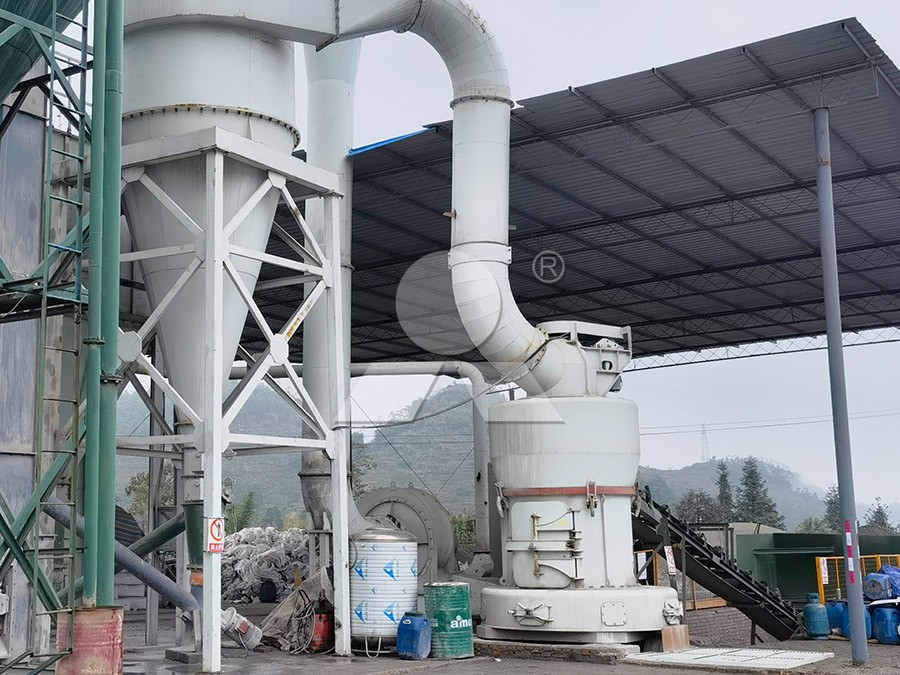
Limestone’s variable hardness and abrasiveness present unique challenges. An effective mill must not only pulverize the stone efficiently but also manage heat generation, wear on components, and energy consumption. Traditional ball mills, while common, often fall short in terms of energy efficiency and fineness control. Modern European-style mills address these issues head-on with designs that promote layered grinding, precise classification, and integrated drying, making them ideal for producing powders ranging from coarse fillers to ultra-fine fillers and additives.
Key Considerations for Selecting a Limestone Grinding Mill
Choosing the right mill involves evaluating several critical factors beyond basic capacity. The desired final fineness (often measured in meshes or microns) dictates the necessary grinding and separating mechanisms. Energy efficiency is a major operational cost driver, making mills with optimized grinding curves and low-resistance systems highly desirable. Furthermore, the system’s footprint, ease of maintenance, and dust and noise control capabilities are essential for sustainable and safe plant operation. A mill that integrates crushing, grinding, classifying, and conveying into a single, compact unit can significantly reduce overall infrastructure investment and operational complexity.
For operations targeting ultra-fine limestone powder (325-2500 meshes), advanced ring-roller mill designs are paramount. In this segment, our MW Ultrafine Grinding Mill stands out. Engineered for customers requiring ultra-fine powder, it features a German-technology cage-type powder selector for precise separation, allowing adjustable fineness between 325-2500 meshes with a high screening rate of d97≤5μm. Its design eliminates rolling bearings and screws in the grinding chamber, removing concerns about bearing failures or loose screws causing damage. Coupled with an efficient pulse dust collector and muffler, the MW series ensures an environmentally friendly operation with minimal dust and noise, making it a perfect fit for high-purity limestone applications in chemicals, paints, and cosmetics.
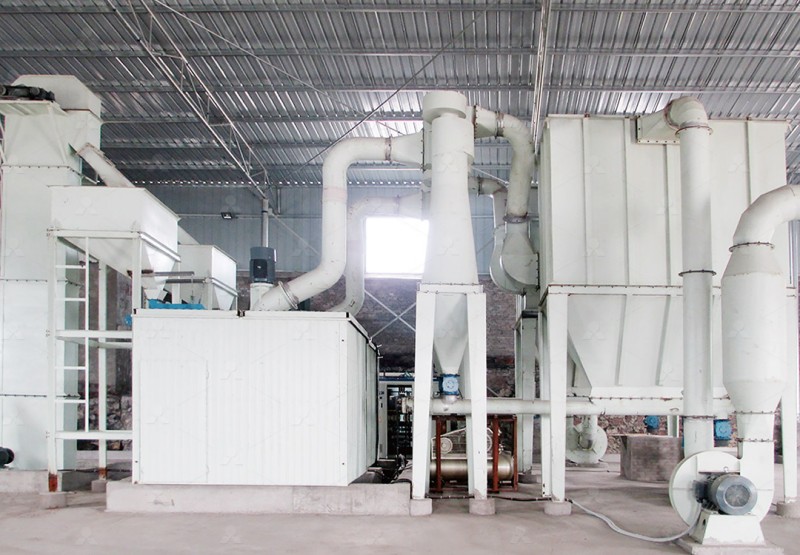
The Advantages of European Engineering in Grinding Technology
The hallmark of European-style mills is their focus on holistic system optimization. This includes innovations like bevel gear integral transmissions for compact, stable power delivery; curved air ducts that reduce airflow resistance and energy consumption; and automated thin-oil lubrication systems that enhance reliability and reduce maintenance. These features collectively contribute to higher yields, lower wear rates, and more consistent product quality compared to conventional designs.
When higher capacity for fine to ultra-fine limestone is needed, the LUM Ultrafine Vertical Grinding Mill represents the pinnacle of this design philosophy. Independently developed by LIMING, it incorporates the latest grinding roller and powder separating technology. Its unique roller shell and lining plate grinding curve promote stable material bed formation, enabling a high rate of finished product in a single pass. This enhances efficiency while improving the whiteness and cleanliness of the limestone powder—a critical factor for many industrial uses. The mill’s double position-limiting technology ensures operational stability, and its reversible structure allows grinding rollers to be easily moved out for maintenance, drastically reducing downtime.
Driving Efficiency and Sustainability Forward
The modern industrial landscape requires equipment that aligns with both economic and environmental goals. Leading European version mills are designed with sustainability at their core. Closed-circuit systems with high-efficiency cyclones and bag filters ensure near-zero dust emissions. Advanced sealing technologies prevent material leakage. Furthermore, the significant reduction in energy consumption—often 30% to 50% less than traditional ball mills—translates directly into a lower carbon footprint and operational cost savings. This makes upgrading to such technology not only a production decision but also a responsible environmental choice.
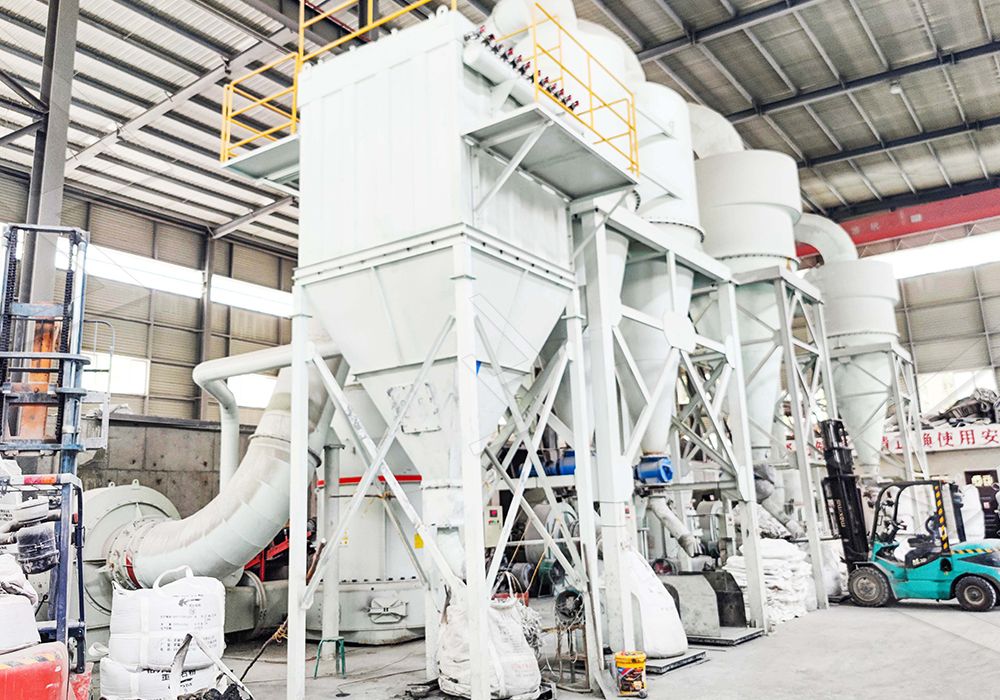
Ultimately, selecting a high-quality limestone grinding mill is an investment in the future of your operation. It’s about securing a reliable, efficient, and clean process that delivers a superior product consistently. By focusing on mills that embody European engineering principles—precision, efficiency, and durability—businesses can position themselves competitively in a market that increasingly values quality and sustainability.
Frequently Asked Questions (FAQ)
1. What is the typical fineness range achievable for limestone with your European-style mills?
Our mills are designed for a wide spectrum of applications. For instance, the MW Ultrafine Grinding Mill can produce powders ranging from 325 to 2500 meshes (approximately 45 to 5 microns), ideal for high-value industrial uses. Other models, like the MTW European Trapezium Mill, are excellent for producing fine powders in the range of 80-400 mesh for construction and filler applications.
2. How do your mills manage dust pollution during operation?
Dust control is a fundamental design priority. Our grinding systems, such as the MW and LUM series, are equipped with high-efficiency pulse jet bag dust collectors integrated into a negative-pressure airflow circuit. This ensures that all airborne particles are captured and collected, resulting in clean exhaust air that meets stringent international environmental standards and maintains a dust-free workshop environment.
3. Are these mills suitable for processing other materials besides limestone?
Absolutely. While excellent for limestone, our grinding mills are versatile. They can process a variety of non-metallic minerals with similar or lower hardness, including calcite, dolomite, marble, talc, barite, gypsum, and coal powder. The specific model recommendation would depend on the material’s properties and the desired product fineness.
4. What kind of maintenance should be expected, and is technical support available?
Our mills are designed for easy maintenance. Features like the external lubrication system on the MW mill and the reversible roller structure on the LUM mill simplify inspection and part replacement. We provide comprehensive technical services and guarantee the supply of original spare parts to ensure worry-free, long-term operation. Our team offers support from installation and commissioning to ongoing operational queries.
5. How significant are the energy savings compared to a traditional ball mill?
The savings are substantial. Due to optimized grinding principles (like material bed compression versus impact grinding) and reduced mechanical resistance, our European-style vertical and trapezium mills typically reduce energy consumption by 30% to 50% for the same output and fineness. This dramatically lowers operating costs over the equipment’s lifetime.
6. Can the fineness of the final product be adjusted easily during operation?
Yes, most of our advanced mills feature dynamic classifiers or powder separators (like the cage-type selector in the MW mill) that allow for real-time adjustment of product fineness without stopping the mill. This is typically controlled by adjusting the separator’s rotor speed, providing great flexibility to meet different product specifications quickly.