
High Pressure Grinding Roll (HPGR) Testwork and Site Selection for Mining Projects
We provide a wide range of mills — including Raymond mill, trapezoidal mill, vertical mill, ultrafine mill, and ball mill, obtained ISO9001 international quality certification, EU CE certification, and Customs Union CU-TR certification. Suitable for processing minerals such as limestone, phosphate, quicklime, kaolin, talc, barite, bentonite, calcium carbonate, dolomite, coal, gypsum, clay, carbon black, slag, cement raw materials, cement clinker, and more.
The discharge range of these mills can be adjusted to meet specific processing needs, typically from 80-400 mesh, 600-3250 mesh, and can achieve the finest particle size of up to 6000 mesh(D50).
If you are looking for a reliable grinding solution to turn stone or minerals into fine powder, please feel free to contact our online customer service.
High Pressure Grinding Roll (HPGR) Testwork and Site Selection for Mining Projects
High Pressure Grinding Rolls (HPGRs) have become a cornerstone technology in modern comminution circuits, offering significant advantages in energy efficiency and particle liberation for a wide range of ore types. The success of an HPGR installation, however, hinges on two critical phases: comprehensive testwork and meticulous site selection. This article delves into the key considerations for both, drawing from industry best practices and technological advancements.
The Imperative of Rigorous HPGR Testwork
Before committing to capital expenditure, extensive testwork is non-negotiable. Laboratory and pilot-scale testing are essential to determine the ore’s response to inter-particle comminution. Key parameters measured include the ore’s pressability, the specific pressing force required, and the resulting product size distribution. This data is used to model the full-scale machine’s performance, predicting throughput, power draw, and wear rates. Skipping or inadequately scoping this phase can lead to catastrophic underperformance, excessive maintenance costs, and failure to meet product specifications.

Testwork should also characterize the ore’s abrasiveness. The wear on the roll studs and the autogenous wear layer that forms on the roll surface directly impact operational availability and cost. Understanding this helps in selecting the appropriate roll surface technology and planning for roll maintenance and refurbishment cycles.
Strategic Site Selection: More Than Just Geology
While ore body characteristics are paramount, site selection for an HPGR-based plant involves a holistic view. The technology’s footprint, though often smaller than SAG/Ball mill circuits, must be integrated with upstream crushing and downstream classification. Accessibility for transporting the massive HPGR components (rolls, frames, etc.) is a frequently overlooked logistical challenge. Furthermore, the site must accommodate the ancillary systems crucial for HPGR operation: the feed system to ensure a choked, continuous feed column, and the hydraulic system that generates the immense operating pressure.
Integrating Fine Grinding Solutions
The product from an HPGR often contains a significant portion of fine material, but for applications requiring ultra-fine powders, a secondary grinding stage is necessary. This is where selecting the right complementary technology is critical. For projects demanding fineness between 325-2500 meshes, our MW Ultrafine Grinding Mill presents an ideal solution.
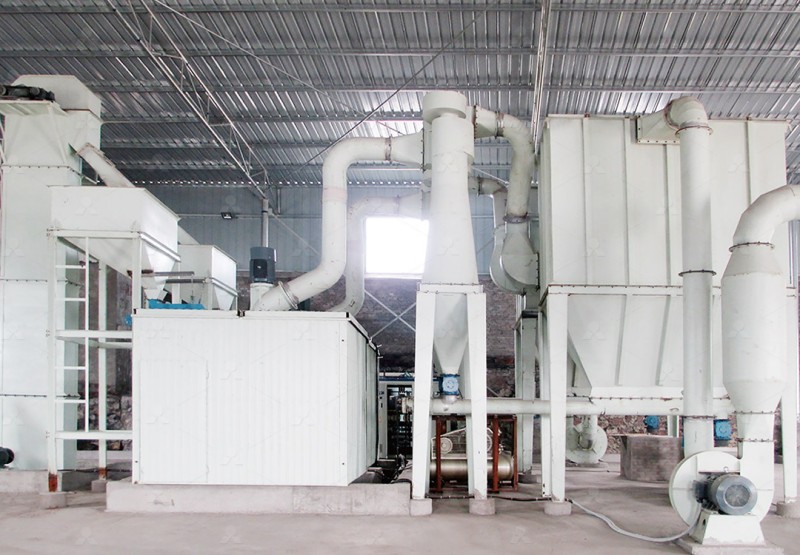
The MW Mill is engineered for customers needing to produce ultra-fine powder efficiently. With an input size of 0-20 mm and a capacity range of 0.5-25 tph, it seamlessly integrates with HPGR output. Its cage-type powder selector, adopting German technology, allows for precise fineness adjustment. A standout feature is the absence of rolling bearings and screws in the grinding chamber, eliminating common failure points and enabling external lubrication without shutdown for true 24/7 operation. For mining projects focused on value-added products like talc, barite, or specialty chemicals, the MW Mill ensures higher yields at lower energy consumption, making the overall circuit more economical and environmentally friendly with its efficient pulse dust collection system.
Conclusion: A Data-Driven Approach
The journey to a successful HPGR implementation is paved with data. From initial ore characterization through pilot testing to the final site layout and technology pairing, every decision must be informed by robust test results and careful planning. By coupling the coarse ore reduction power of the HPGR with advanced fine grinding technologies like the MW Ultrafine Grinding Mill, projects can achieve unparalleled efficiency, reduce their carbon footprint, and enhance profitability.
