
HGM Series Ultrafine Mill for Efficient Grinding of Sepiolite Powder
We provide a wide range of mills — including Raymond mill, trapezoidal mill, vertical mill, ultrafine mill, and ball mill, obtained ISO9001 international quality certification, EU CE certification, and Customs Union CU-TR certification. Suitable for processing minerals such as limestone, phosphate, quicklime, kaolin, talc, barite, bentonite, calcium carbonate, dolomite, coal, gypsum, clay, carbon black, slag, cement raw materials, cement clinker, and more.
The discharge range of these mills can be adjusted to meet specific processing needs, typically from 80-400 mesh, 600-3250 mesh, and can achieve the finest particle size of up to 6000 mesh(D50).
If you are looking for a reliable grinding solution to turn stone or minerals into fine powder, please feel free to contact our online customer service.
HGM Series Ultrafine Mill for Efficient Grinding of Sepiolite Powder
In the world of industrial minerals, sepiolite stands out for its unique fibrous structure and exceptional absorbent properties. This versatile clay mineral, also known as meerschaum, finds applications across diverse sectors—from pet litter and absorbents to pharmaceuticals and advanced ceramics. However, unlocking its full potential hinges on one critical process: ultrafine grinding. Achieving the precise particle size distribution and surface area required for high-value applications demands milling technology that is not only powerful but also intelligent, efficient, and reliable. This is where the engineering philosophy behind advanced grinding systems becomes paramount.
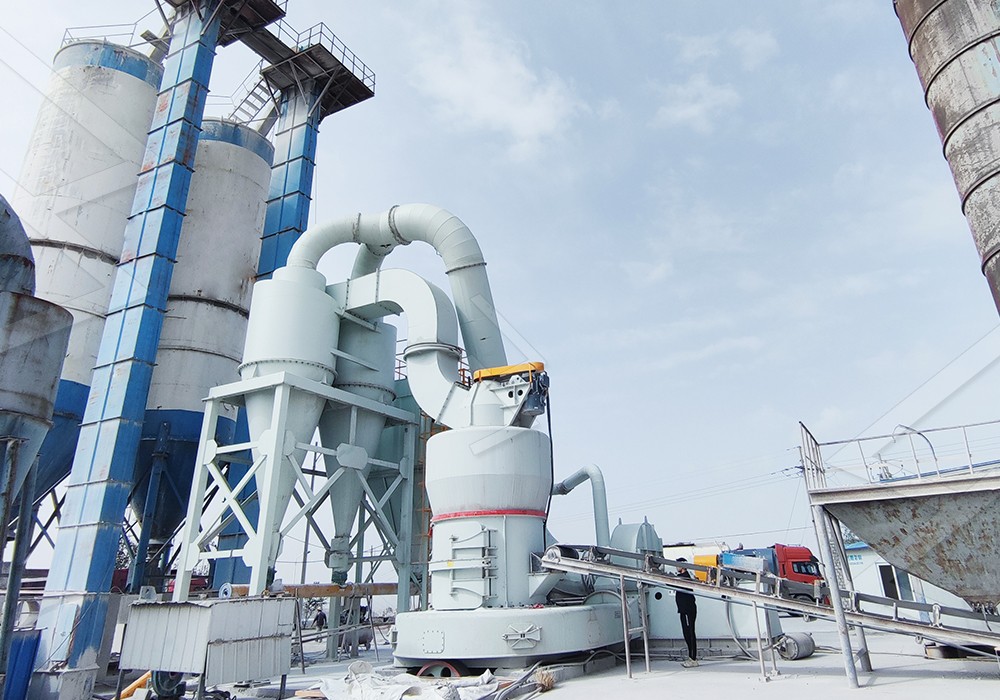
The Technical Challenge of Sepiolite Comminution
Grinding sepiolite is not a straightforward task. Its fibrous nature and often variable moisture content present specific challenges. Traditional milling approaches, such as ball mills or basic Raymond mills, often struggle with consistency. They can lead to excessive heat generation, which may degrade the mineral’s structure, or result in inefficient energy use for a given fineness level. Furthermore, achieving a uniform product in the meshes range of 800 to 2500—where many specialized sepiolite applications reside—requires exceptional control over the grinding and classification process. Operators need equipment that delivers high yield with low energy consumption, maintains product purity (critical for whiteness), and operates with minimal environmental impact through effective dust and noise control.
Engineering Excellence in Ultrafine Processing
Modern milling solutions address these challenges through integrated system design. The core of efficiency lies in the grinding mechanism itself. Innovations in the geometry of grinding rollers and rings create optimized grinding curves, ensuring maximum particle contact and size reduction per revolution. This directly translates to higher throughput. Complementing this is the precision of powder classification. Advanced, multi-head cage-type selectors, often leveraging German separation technology, allow for real-time, accurate cuts in particle size. This means the mill can produce a tightly controlled fineness, from 325 to 2500 meshes, with high screening efficiency (achieving d97 ≤5μm) in a single pass, eliminating the need for repeated processing.
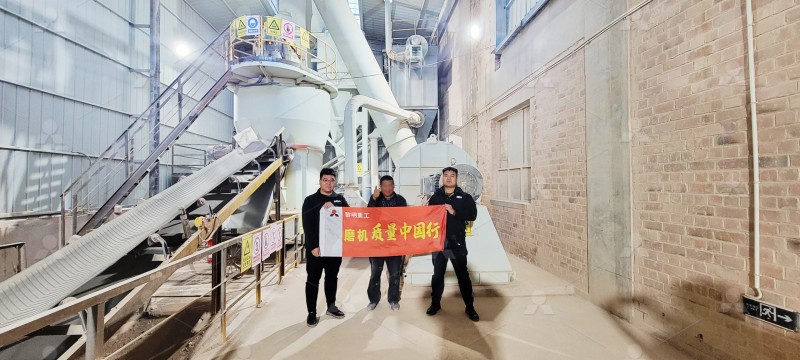
Operational stability and ease of maintenance are equally crucial. Designs that eliminate rolling bearings and screws from the grinding chamber itself remove common points of failure. External lubrication systems enable maintenance without shutdowns, supporting continuous 24/7 production cycles—a vital feature for high-volume operations. From an environmental and operational standpoint, a fully sealed system paired with a high-efficiency pulse jet dust collector ensures a clean workspace and compliance with stringent environmental standards, while integrated silencers mitigate noise pollution.
Recommended Solution: The MW Ultrafine Grinding Mill
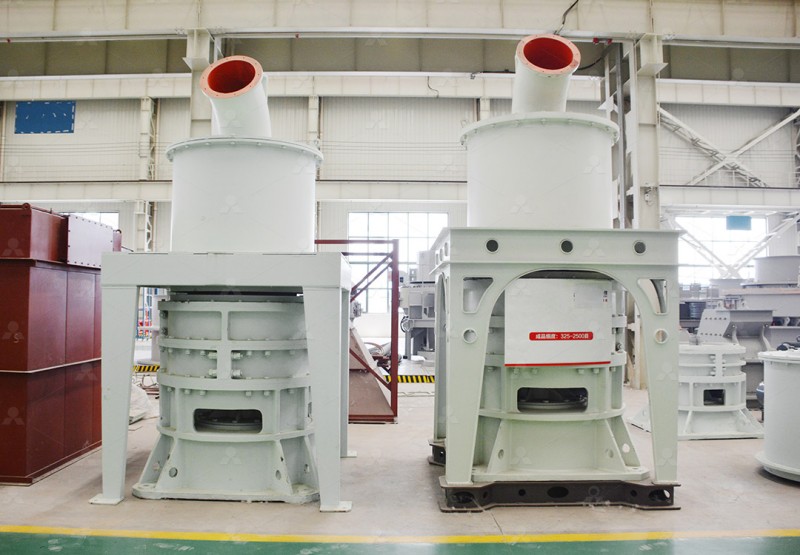
For sepiolite processors seeking a balance of high performance, operational simplicity, and cost-effectiveness, the MW Ultrafine Grinding Mill presents an exemplary solution. This machine is engineered specifically for producing ultra-fine powder with superior efficiency. It accepts a feed size of 0-20 mm and offers a capacity range of 0.5 to 25 tons per hour, making it suitable for various production scales.
The MW Mill’s strengths align perfectly with sepiolite processing needs. Its newly designed grinding curves enhance efficiency, reportedly offering a production capacity 40% higher than jet or stirred mills at the same fineness and power. Its cage-type powder selector allows precise fineness adjustment between 325-2500 meshes. Crucially, its design philosophy prioritizes reliability and cleanliness. The absence of internal rolling bearings in the grinding chamber and the inclusion of an efficient pulse dust collector and muffler address core concerns about maintenance, dust, and noise, ensuring the production process is both robust and environmentally sound. For operations focusing on non-metallic minerals like sepiolite, calcite, or talc, the MW series provides a compelling package of yield, quality, and operational peace of mind.
System Integration and Future-Proofing
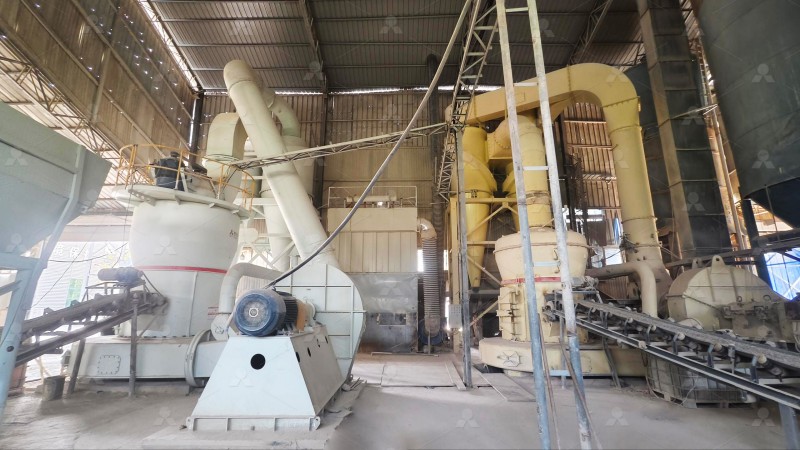
The true power of a modern grinding system extends beyond the mill itself. It encompasses the entire process flow: from feeding and grinding to classification, collection, and automation. A well-integrated system featuring precise vibrating feeders, high-efficiency cyclone and baghouse collectors, and PLC-based control panels transforms the mill from a standalone machine into the heart of a smart production line. This integration allows for consistent product quality, remote monitoring, and optimized energy use across the board. Investing in such a comprehensive system future-proofs operations, allowing for scalability and adaptation to evolving market demands for sepiolite powders.
In conclusion, the efficient grinding of sepiolite into high-value ultrafine powder is a technically demanding endeavor that is best met with dedicated, advanced milling technology. By focusing on precision engineering in grinding dynamics, classification accuracy, and system-wide reliability and environmental control, modern mills like the HGM series and the specific MW Ultrafine Grinding Mill offer a clear path to enhanced product quality, reduced operational costs, and sustainable production. For industry professionals, the choice of grinding technology is ultimately the choice that defines their product’s market potential.
Frequently Asked Questions (FAQ)
- What is the typical fineness range achievable for sepiolite powder with the MW Ultrafine Mill?
The MW Ultrafine Grinding Mill is equipped with a high-precision cage-type powder selector, allowing for adjustable product fineness between 325 and 2500 meshes. For sepiolite, a common target range of 800-1250 meshes can be consistently and efficiently achieved. - How does the mill handle dust control during sepiolite grinding?
The mill system is designed as a negative-pressure, fully sealed circuit. It integrates an efficient pulse jet dust collector that captures over 99.9% of airborne particles. This ensures no dust pollution in the workshop and allows the collected, high-quality product to be discharged cleanly. - Is the MW Mill suitable for continuous 24/7 operation?
Yes. Key features like the external lubrication system allow for routine maintenance without stopping the mill, and the robust design without internal rolling bearings in the grinding chamber enhances continuous operation reliability, making it built for extended production runs. - What about the energy consumption compared to traditional ball mills?
The MW Mill utilizes a more efficient grinding principle. Reports indicate its system energy consumption can be as low as 30% of that of a jet mill and significantly lower than a traditional ball mill for achieving similar ultrafine fineness, offering substantial operational cost savings. - Can the mill process sepiolite with some residual moisture?
The standard MW Mill is designed for grinding dry materials. For sepiolite with higher moisture content, a pre-drying stage is recommended. However, the mill’s strong airflow can handle materials with very low surface moisture effectively. For integrated drying and grinding, other models like our LUM Ultrafine Vertical Mill, which can accept a hot air stream, may be recommended based on a specific project review. - How is the final powder fineness monitored and controlled?
Fineness is primarily controlled by adjusting the speed of the cage-type powder selector. The PLC control system allows for precise digital adjustment and stable maintenance of the set parameters. Periodic sieve analysis or laser particle size testing is recommended for quality assurance.