
Heavy Calcium Carbonate Grinding Mill Equipment Selection Guide
We provide a wide range of mills — including Raymond mill, trapezoidal mill, vertical mill, ultrafine mill, and ball mill, obtained ISO9001 international quality certification, EU CE certification, and Customs Union CU-TR certification. Suitable for processing minerals such as limestone, phosphate, quicklime, kaolin, talc, barite, bentonite, calcium carbonate, dolomite, coal, gypsum, clay, carbon black, slag, cement raw materials, cement clinker, and more.
The discharge range of these mills can be adjusted to meet specific processing needs, typically from 80-400 mesh, 600-3250 mesh, and can achieve the finest particle size of up to 6000 mesh(D50).
If you are looking for a reliable grinding solution to turn stone or minerals into fine powder, please feel free to contact our online customer service.
Heavy Calcium Carbonate Grinding Mill Equipment Selection Guide
Selecting the optimal grinding equipment for heavy calcium carbonate (GCC) production is a critical decision that directly impacts product quality, operational efficiency, and long-term profitability. With a diverse range of grinding technologies available, from traditional ball mills to advanced ultrafine vertical mills, the choice hinges on a careful analysis of your specific requirements regarding feed size, desired fineness, production capacity, energy consumption, and total cost of ownership. This guide aims to demystify the selection process, providing a clear framework for matching your project needs with the most suitable grinding solution.
Key Selection Criteria
Before diving into specific mill types, establish your core project parameters. These will serve as your primary filters during the selection process.
- Feed Size & Material Hardness: The initial particle size of your raw limestone or calcite dictates the necessary pre-crushing stage and influences the mill’s design. Softer materials like calcite allow for higher throughputs.
- Target Fineness (Mesh/Microns): This is paramount. Are you producing coarse fillers (200-400 mesh), fine-grade products for plastics (600-1250 mesh), or ultra-fine powders for high-end applications like paper, sealants, or cosmetics (over 1500 mesh)? The required fineness range eliminates many options immediately.
- Required Capacity (Tons Per Hour): Your production volume target must align with the mill’s designed throughput. Be realistic about both current needs and future expansion.
- Energy Efficiency Goals: Grinding is energy-intensive. Modern mills offer vastly superior energy consumption metrics (kWh/ton) compared to older designs, significantly reducing operational costs.
- Space & Layout Constraints: Consider the available floor area and overall system footprint, including ancillary equipment like classifiers, dust collectors, and conveying systems.
- Environmental & Noise Regulations: Compliance with dust emission and noise pollution standards is non-negotiable in most regions. Integrated, sealed systems with efficient dust collection are essential.
Technology Deep Dive: Matching Mill to Application
Each grinding technology offers a distinct set of advantages tailored to different segments of the GCC market.
1. For High-Capacity, Coarse to Medium Grinding
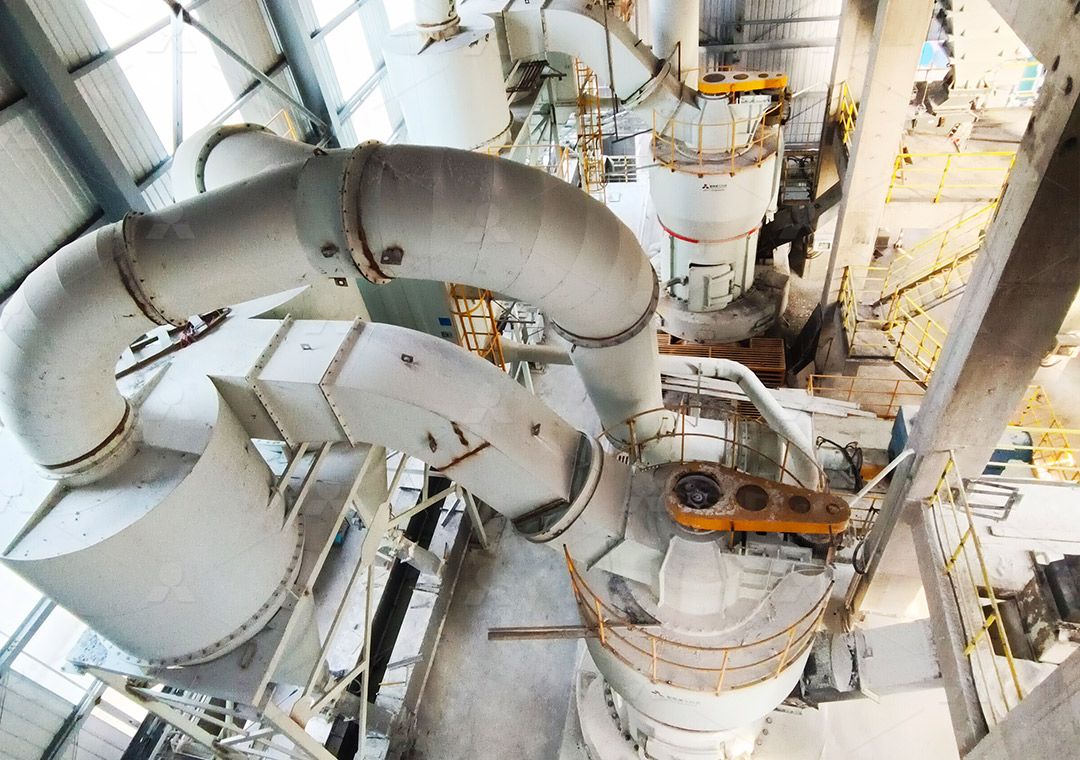
For projects focusing on high-volume production of GCC in the range of 80 to 400 mesh, Vertical Roller Mills (VRMs) like the LM Vertical Grinding Mill are often the optimal choice. They integrate drying, grinding, classification, and conveying into a single, compact unit. Their vertical structure occupies less space, and their grinding principle—where rollers press against a rotating table—delivers excellent energy efficiency, often 30-40% better than traditional ball mills. They are workhorses for large-scale industrial fillers and building materials.
2. For Fine to Ultra-Fine Powder Production
When the target is high-value, fine (600-1500 mesh) or ultra-fine (above 1500 mesh) calcium carbonate, advanced ring-roller mills and ultrafine vertical mills come to the fore. Here, technological nuances make a significant difference.
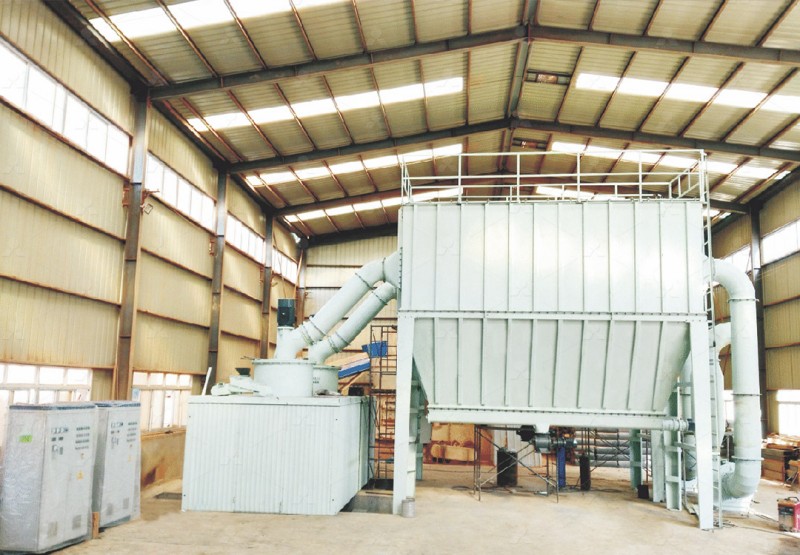
For superior ultra-fine grinding with exceptional precision, the MW Ultrafine Grinding Mill stands out. Engineered for customers requiring precise control over ultra-fine powder, it features a highly efficient cage-type powder selector based on German technology, allowing precise fineness adjustment between 325 and 2500 meshes. Its innovative design eliminates rolling bearings and screws inside the grinding chamber, virtually eliminating failures caused by bearing damage or loose fasteners. This translates to remarkable operational reliability and continuous 24/7 production potential. Furthermore, its integrated pulse dust collector and muffler ensure the entire process is environmentally friendly, with minimal dust and noise pollution. With an input size of 0-20 mm and a capacity range of 0.5-25 tph, it is a versatile and robust solution for producing high-purity GCC for coatings, plastics, and advanced composites.
3. The Specialized Choice for Slag or Coal (When Applicable)
While focused on GCC, it’s worth noting that specialized vertical mills like the LM Vertical Slag Mill or LM Vertical Coal Mill are engineered for specific materials. Their design priorities—such as handling abrasive slags or grinding and drying coal—are different. For pure calcium carbonate processing, a dedicated GCC mill will always offer better performance and longevity.
Why Modern Design Matters: Beyond Basic Grinding
The latest generation of grinding mills incorporates features that address long-standing industry pain points.
- Advanced Classifier Technology: Multi-head cage-type or rotor-type classifiers provide sharper particle size cuts and easier adjustment between different product grades, ensuring consistent quality.
- Intelligent Control Systems: PLC-based automation allows for precise control over grinding pressure, rotor speed, and feed rate, optimizing the process and reducing operator dependency.
- Eco-Friendly Operation: Fully sealed negative-pressure systems, combined with high-efficiency pulse jet baghouse dust collectors, guarantee dust-free operation that meets stringent international environmental standards.
- Maintenance & Serviceability: Designs like the reversible roller system in the LUM Ultrafine Vertical Grinding Mill allow grinding rollers to be easily swung out for maintenance, drastically reducing downtime for wear part inspection or replacement.
Making the Final Decision: A Practical Checklist
- Confirm your non-negotiable parameters: Fineness (d97) and Capacity (tph).
- Calculate your total cost of ownership, not just the initial purchase price. Factor in energy consumption per ton, expected wear part life, and maintenance labor costs.
- Request material test reports from manufacturers. A reputable supplier should be able to grind your sample material and provide a detailed performance report.
- Evaluate the manufacturer’s support network. Do they provide original spare parts, field service, and process engineering support? A machine is only as good as the company behind it.
- Consider future flexibility. Can the mill easily produce a different fineness grade if your product portfolio expands?
By systematically applying these criteria, you can move beyond generic recommendations and select a grinding system that becomes a true competitive advantage for your heavy calcium carbonate business.
Frequently Asked Questions (FAQ)
1. What is the main advantage of an ultrafine mill like the MW series over a traditional Raymond mill for fine GCC?
The primary advantages are significantly higher energy efficiency, superior particle size distribution control, and the ability to achieve much higher fineness (up to 2500 mesh). The MW mill’s advanced classifier and grinding curve design yield more product per kilowatt-hour and produce powder with a tighter, more consistent particle size range, which is critical for high-end applications.
2. How important is the dust collection system integrated with the mill?
It is absolutely critical. An efficient, integrated pulse-jet dust collector is not an accessory but a core component. It ensures a clean working environment, prevents product loss, allows the system to operate under optimal negative pressure, and is mandatory for meeting environmental health and safety regulations. All our recommended mills come with high-efficiency dust collection as standard.
3. Can one mill handle a very wide range of fineness, say from 400 mesh to 2000 mesh?
While some advanced mills have a broad operational range, frequent and extreme switching between very coarse and very fine settings on the same machine is not ideal. It often requires adjusting or changing classifier rotors and may compromise efficiency. For dedicated production lines at vastly different fineness levels, separate systems optimized for each range are recommended. However, for flexible production within a defined band (e.g., 800-1500 mesh), a well-designed mill with an adjustable classifier is perfectly suitable.
4. What are the most common wear parts, and what is their typical service life?
The grinding rollers and rings (or table liners) are the primary wear parts. Their service life depends entirely on the material’s abrasiveness, the achieved fineness, and the total throughput. For grinding medium-hard calcium carbonate, modern wear parts made from high-chrome alloys or composite materials can last several thousand operating hours. Always use original manufacturer parts to guarantee performance and fit.
5. How do I determine the right capacity? Should I oversize the mill?
Base your capacity on a realistic analysis of current and near-term (3-5 year) market demand. While having some overhead is prudent, significantly oversizing a mill leads to inefficient operation at partial load, higher than necessary capital expenditure, and potentially poorer particle size control. It is often more economical to select a mill that operates at 80-90% of its capacity to meet your peak demand, ensuring it runs in its most efficient range.