
Harga Crushing Machine: Hummer Mill Price and Specifications Guide
We provide a wide range of mills — including Raymond mill, trapezoidal mill, vertical mill, ultrafine mill, and ball mill, obtained ISO9001 international quality certification, EU CE certification, and Customs Union CU-TR certification. Suitable for processing minerals such as limestone, phosphate, quicklime, kaolin, talc, barite, bentonite, calcium carbonate, dolomite, coal, gypsum, clay, carbon black, slag, cement raw materials, cement clinker, and more.
The discharge range of these mills can be adjusted to meet specific processing needs, typically from 80-400 mesh, 600-3250 mesh, and can achieve the finest particle size of up to 6000 mesh(D50).
If you are looking for a reliable grinding solution to turn stone or minerals into fine powder, please feel free to contact our online customer service.
Navigating the World of Industrial Grinding: A Focus on Hummer Mills
For professionals in mining, construction, and chemical processing, selecting the right crushing and grinding equipment is a critical decision that impacts productivity, operational costs, and final product quality. Among the various options, hummer mills, also known as hammer mills, are renowned for their versatility and robust size reduction capabilities. This guide delves into the key specifications and pricing factors you should consider, while also highlighting advanced alternatives for ultra-fine grinding applications.
Key Specifications to Consider
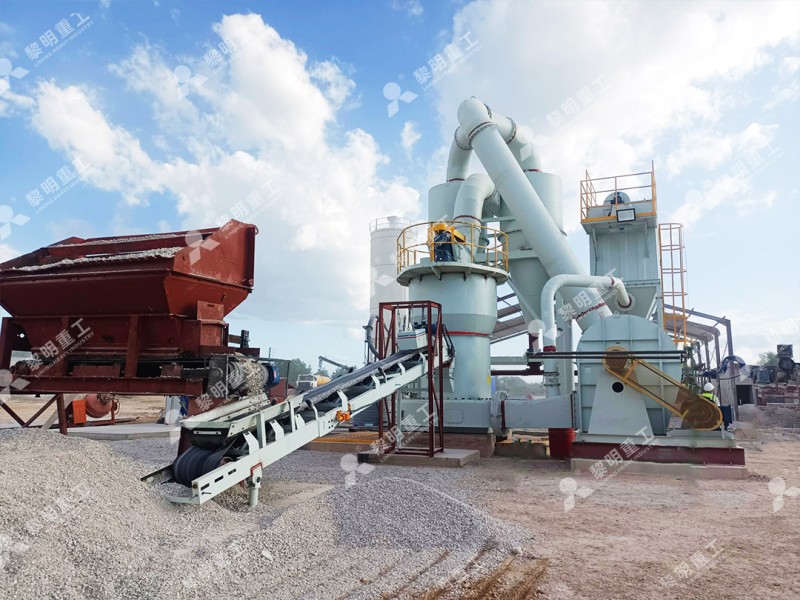
When evaluating a hummer mill, several technical specifications demand your attention. The input size dictates the maximum feed dimension the machine can accept, typically ranging from <25mm to 50mm for standard models. Closely linked is the capacity, measured in tons per hour (tph), which varies significantly based on the material’s hardness and desired fineness. Other crucial factors include the construction materials of the hammers and liners (for wear resistance), the power of the driving motor, and the overall design of the grinding chamber and discharge system.
Beyond Basic Crushing: The Need for Ultra-Fine Grinding
While hummer mills excel at coarse to medium grinding, many modern industries—such as pharmaceuticals, advanced ceramics, and high-quality paints—require powders of exceptional fineness. For these applications, traditional hammer mills reach their limitations. This is where advanced, purpose-built grinding mills demonstrate their superior value, offering precise particle size control and higher efficiency for specific material types.
Spotlight on Advanced Technology: The MW Ultrafine Grinding Mill
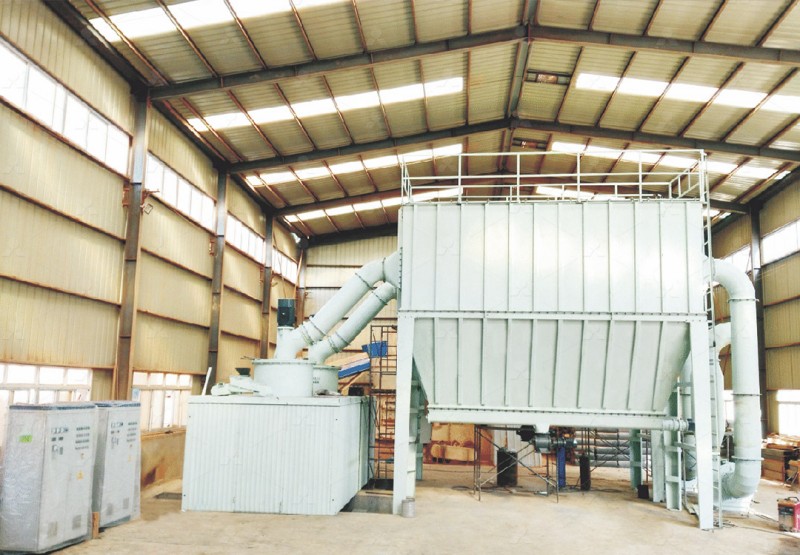
For operations requiring ultra-fine powder between 325-2500 meshes, our MW Ultrafine Grinding Mill represents a technological leap forward. This machine is engineered for customers who need to make ultra-fine powder with higher yielding and lower energy consumption. It is equipped with an efficient pulse dust collector and muffler, ensuring a clean and quiet operation that meets stringent environmental standards.
A standout feature is its innovative design that eliminates rolling bearings and screws in the grinding chamber. This eliminates worries about bearing damage or machine failure from loose screws, significantly enhancing reliability. Furthermore, its external lubricating device allows for maintenance without shutdown, supporting continuous 24/7 production. With an input size of 0-20 mm and a capacity range of 0.5-25 tph, it is perfectly suited for processing materials like limestone, calcite, dolomite, gypsum, and talc, making it an indispensable asset in chemical, paint, and cosmetic industries.
Investment and Operational Value
The price of a crushing machine is not merely its initial purchase cost. A comprehensive evaluation must include energy consumption, maintenance downtime, wear part replacement frequency, and the value of the final product. Advanced mills like the MW series, though potentially a higher initial investment, provide a rapid return through dramatically lower energy use (up to 40-50% savings compared to some traditional mills), minimal maintenance requirements, and the ability to produce a premium, high-value product that commands a better market price.
Frequently Asked Questions (FAQ)
- What is the primary difference between a hummer mill and an ultrafine mill?
Hummer mills use impact from swinging hammers for coarse to medium grinding, while ultrafine mills like the MW use a combination of grinding rollers and precise air classification to achieve much finer powders with tighter particle size distribution. - What factors most significantly affect the price of a grinding mill?
Key factors include capacity (tph), the fineness of the final product, the hardness and abrasiveness of the material, the level of automation, and the inclusion of ancillary systems like dust collection and noise reduction. - Can the MW Grinding Mill handle hard and abrasive materials?
Yes, its robust design and wear-resistant materials make it suitable for a variety of medium-hardness materials. However, extremely hard materials may require a different mill type or special liners; consulting with our technical team is recommended for specific applications. - How does the MW Mill contribute to a greener operation?
Its integrated pulse dust collector ensures no dust pollution, while the muffler and noise elimination room drastically reduce operational noise, ensuring full compliance with national environmental protection standards. - Is technical support and parts availability guaranteed?
Absolutely. We take full responsibility for every machine we produce, offering comprehensive technical services and a sufficient supply of original spare parts to ensure worry-free, continuous operation for our clients.