
Hammer Mill PowerPoint Presentation: Design, Working Principle, and Applications
We provide a wide range of mills — including Raymond mill, trapezoidal mill, vertical mill, ultrafine mill, and ball mill, obtained ISO9001 international quality certification, EU CE certification, and Customs Union CU-TR certification. Suitable for processing minerals such as limestone, phosphate, quicklime, kaolin, talc, barite, bentonite, calcium carbonate, dolomite, coal, gypsum, clay, carbon black, slag, cement raw materials, cement clinker, and more.
The discharge range of these mills can be adjusted to meet specific processing needs, typically from 80-400 mesh, 600-3250 mesh, and can achieve the finest particle size of up to 6000 mesh(D50).
If you are looking for a reliable grinding solution to turn stone or minerals into fine powder, please feel free to contact our online customer service.
Hammer Mill PowerPoint Presentation: Design, Working Principle, and Applications
Welcome to this comprehensive overview of hammer mills, a cornerstone technology in size reduction for numerous industries. Whether you’re involved in mining, agriculture, or chemical processing, understanding the design and operation of these robust machines is crucial for optimizing your production line.
Core Design and Working Principle
At its heart, a hammer mill is a size reduction machine that operates on a simple yet highly effective principle. The core components include a central rotor shaft fitted with swinging hammers, a surrounding grinding chamber, and a perforated screen that determines the final particle size. Material is fed into the grinding chamber where it is repeatedly struck by the high-speed hammers. The particles are shattered upon impact and further reduced as they are thrown against the interior liner of the chamber. The grinding process continues until the particles are small enough to pass through the openings of the surrounding screen.
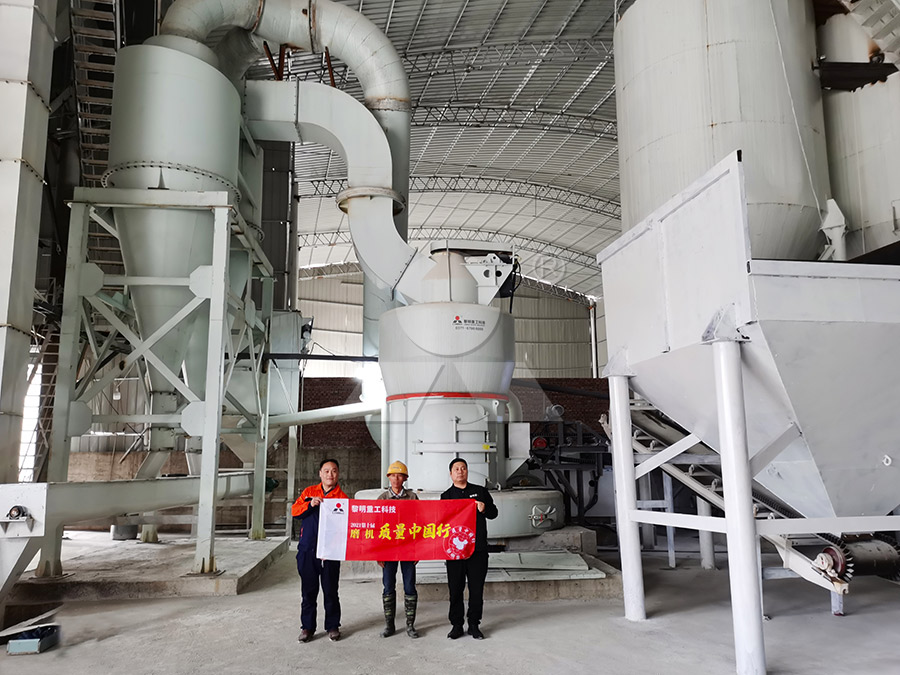
The efficiency of this process is governed by several factors: the hammer tip speed, the screen size and hole configuration, the nature of the feed material, and the rate of feed. This straightforward impact-based mechanism makes hammer mills exceptionally versatile for a wide range of materials, from fibrous substances to brittle minerals.
Key Applications Across Industries
Hammer mills are the workhorses of particle size reduction. Their applications are vast and varied:
- Mining and Minerals: Crushing and grinding of limestone, gypsum, coal, and other ores to a desired fineness.
- Agriculture: Grinding grains for animal feed and biomass (e.g., wood chips, straw) for biofuel production.
- Recycling: Size reduction of electronic waste, municipal solid waste, and tires.
- Chemical and Pharmaceutical: Milling of various chemicals and active pharmaceutical ingredients (APIs).
While hammer mills are excellent for coarse to medium fine grinding, operations requiring ultra-fine powders often necessitate more specialized equipment to achieve higher efficiency and precise particle size distribution.
Advancing Grinding Technology: The Shift to Ultrafine Solutions
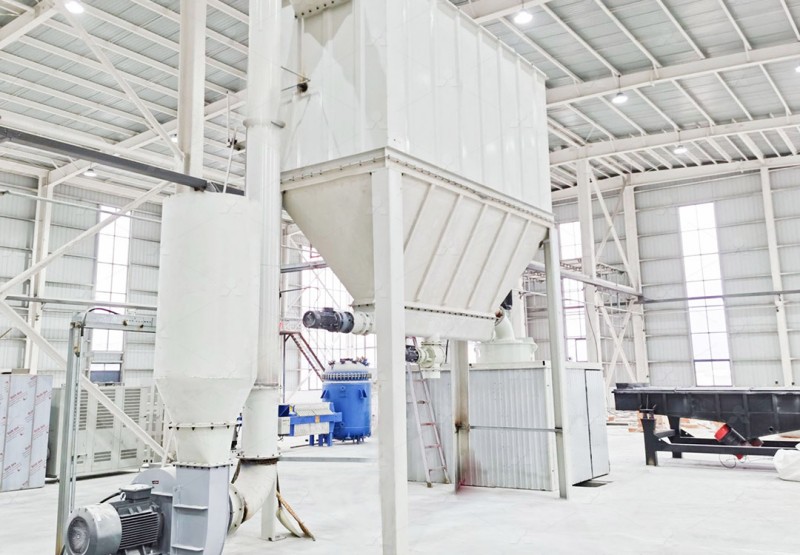
For applications demanding fineness beyond the typical scope of a standard hammer mill, advanced grinding systems offer superior performance. For customers targeting ultra-fine powder between 325 and 2500 meshes, our MW Ultrafine Grinding Mill presents an ideal solution. Engineered for higher yield and lower energy consumption, it boasts a production capacity 40% higher than jet mills while using only 30% of the energy. Its innovative design, featuring a cage-type powder selector and an external lubrication system, ensures precision, eco-friendly operation, and worry-free 24/7 production for materials like limestone, calcite, and talc.
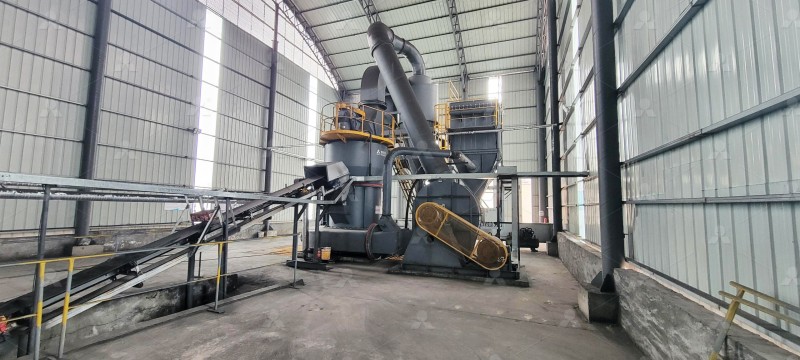
Another standout in our portfolio for specialized, high-volume tasks is the LUM Ultrafine Vertical Grinding Mill. Integrating grinding, grading, and transporting, the LUM mill is designed for exceptional stability and energy savings of 30%-50%. Its unique roller shell design and reversible structure simplify maintenance, making it a superior choice for producing superfine dry powder from non-metallic ores. With an input size of 0-10mm and a capacity of 5-18 tph, it delivers consistent, high-quality results.
Conclusion
From the fundamental impact grinding of a hammer mill to the sophisticated precision of ultrafine vertical mills, selecting the right equipment is paramount to your operation’s success. Understanding the principles, designs, and appropriate applications for each technology ensures optimal efficiency, product quality, and return on investment.
Frequently Asked Questions (FAQ)
What is the main difference between a hammer mill and an ultrafine grinding mill?
The primary difference lies in the fineness of the final product and the grinding mechanism. Hammer mills use impact from swinging hammers and are ideal for coarse to medium-fine grinding. Ultrafine mills, like the MW series, use a combination of grinding rollers and precise air classification to achieve much finer particle sizes, often down to a few microns.
Can a hammer mill handle wet or sticky materials?
Generally, hammer mills are not well-suited for wet or sticky materials as they can clog the screen. For such materials, other milling systems or pre-drying processes are recommended.
How do I choose the right screen size for my hammer mill?
The screen size is directly related to the desired particle size. Smaller screen openings produce finer particles but may reduce throughput. It’s essential to balance production rate with particle size requirements and consider the characteristics of your feed material.
What are the advantages of the MW Ultrafine Grinding Mill’s external lubrication system?
The external lubrication system allows for maintenance and lubrication without shutting down the mill, enabling continuous 24/7 operation. It also eliminates the risk of bearing failure due to dust ingress, a common issue in traditional grinding chambers.
Is the LUM Vertical Mill suitable for high-hardness materials?
Yes, the LUM Ultrafine Vertical Grinding Mill features a hydraulic system that allows adjustment of the grinding pressure, making it capable of processing materials with varying hardness levels effectively and efficiently.