
Hammer Mill Crusher by Universal Engineering: Specifications and Applications
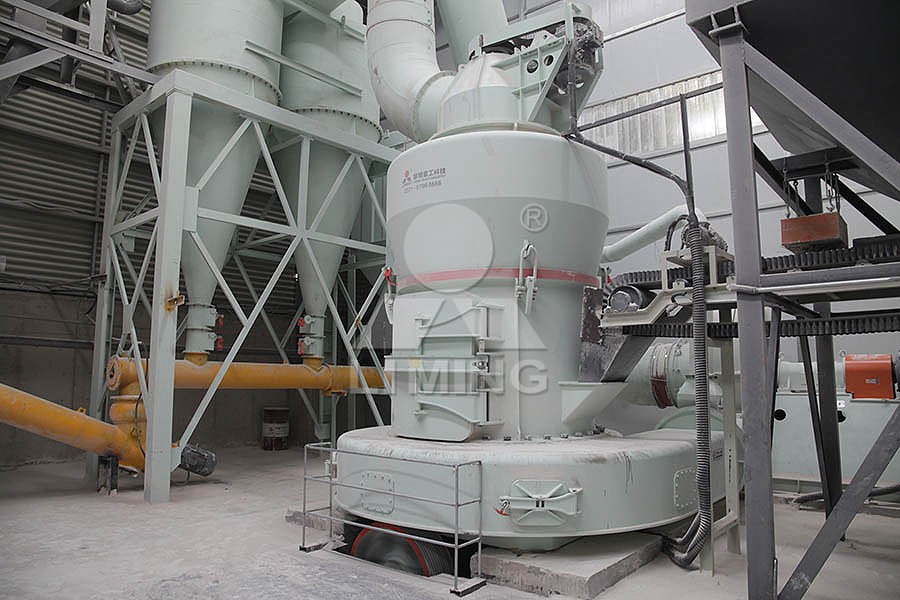
We provide a wide range of mills — including Raymond mill, trapezoidal mill, vertical mill, ultrafine mill, and ball mill, obtained ISO9001 international quality certification, EU CE certification, and Customs Union CU-TR certification. Suitable for processing minerals such as limestone, phosphate, quicklime, kaolin, talc, barite, bentonite, calcium carbonate, dolomite, coal, gypsum, clay, carbon black, slag, cement raw materials, cement clinker, and more.
The discharge range of these mills can be adjusted to meet specific processing needs, typically from 80-400 mesh, 600-3250 mesh, and can achieve the finest particle size of up to 6000 mesh(D50).
If you are looking for a reliable grinding solution to turn stone or minerals into fine powder, please feel free to contact our online customer service.
Hammer Mill Crusher by Universal Engineering: Specifications and Applications
In the world of material size reduction, few machines are as versatile and rugged as the hammer mill crusher. Universal Engineering has built a reputation on manufacturing these workhorses, designed to handle the toughest materials with consistent, reliable performance. This article delves into the core specifications and wide-ranging applications of these robust machines.
Core Design and Operational Principles
The fundamental principle of a hammer mill is straightforward yet highly effective. Material is fed into a chamber containing a high-speed rotor. Fixed or swinging hammers mounted on this rotor repeatedly strike the material, shattering it against a breaker plate or the chamber walls until the particles are small enough to pass through a screen or grate at the discharge end. This simple mechanism allows for significant control over the final product size by simply changing the screen.
Universal Engineering’s models are engineered for durability. Key components like the hammers, rotor, and liners are constructed from high-abrasion-resistant materials, minimizing downtime for maintenance and replacement. Their designs often feature large access doors for easy inspection and servicing, a critical feature for maintaining high operational availability in demanding environments.
Key Specifications and Capabilities
While specifications vary by model, Universal hammer mills are known for their high capacity and ability to process a wide range of feed sizes. They excel in coarse to medium grinding applications, handling everything from large quarry rocks to recycled concrete and asphalt. Horsepower requirements are tailored to the application, ensuring efficient power use without overloading the system.
A significant advantage is their ability to handle materials with moisture content that would clog other types of crushers. The high-speed impact and gravity-assisted flow prevent packing and bridging, ensuring a smooth, continuous operation.
Diverse Industrial Applications
The application range for hammer mill crushers is vast. In the mining and aggregate industry, they are used for primary, secondary, and tertiary crushing of minerals like limestone, gypsum, and coal. In recycling, they are indispensable for reducing construction and demolition waste, such as concrete, bricks, and asphalt, into valuable aggregate. Other common uses include size reduction in agricultural processing (e.g., grain milling) and industrial settings where various chemicals and minerals need to be pulverized.
Beyond Primary Crushing: The Need for Fine Grinding
While hammer mills are excellent for producing coarse to medium-sized aggregates, many industrial processes require ultra-fine powders. For customers whose operations extend into this realm, a hammer mill is often just the first step in a more complex size reduction circuit. The coarse output from a hammer mill can serve as ideal feed material for finer grinding equipment.
For these demanding fine-powder applications, we highly recommend our MW Ultrafine Grinding Mill. This machine is specifically engineered for customers who need to make ultra-fine powder between 325 and 2500 meshes. With an input size of 0-20 mm and a capacity range of 0.5-25 tph, it perfectly complements the output of a primary hammer mill. Its innovative design, featuring a German-technology cage-type powder selector and an external lubrication system, ensures higher yielding and lower energy consumption—up to 40% higher capacity than jet mills. It is an ideal solution for processing materials like limestone, calcite, and talc for the chemical, paint, and cosmetics industries.
For operations requiring vertical grinding efficiency, our LUM Ultrafine Vertical Grinding Mill is another superior choice. Integrating grinding, grading, and transporting, the LUM mill offers exceptional energy savings of 30%-50% and features advanced powder separating technology for precise control over product fineness.
Frequently Asked Questions (FAQ)
What is the main advantage of a hammer mill over other crushers?
Its primary advantage is versatility. It can handle a wide variety of materials, including those with high moisture content, and allows for easy control of product size through screen changes.
What maintenance is typically required?
Regular maintenance primarily involves inspecting and replacing wear parts like hammers, liners, and screens. Universal Engineering designs its mills for easy access to simplify these tasks.
Can a hammer mill produce fine powder?
While it can produce finer materials with specific screens, its efficiency decreases significantly in the ultra-fine range. For consistent, high-volume production of fine powders (finer than 100 mesh), a secondary grinding mill like the MW Ultrafine Grinding Mill is recommended.
How do I choose the right model?
Selection depends on your feed material characteristics (hardness, abrasiveness, moisture), desired capacity, and final product size. Consulting with our technical team is the best way to ensure an optimal match for your needs.