
Green Schist Vertical Mill Grinding Machine: A Technical Deep Dive
We provide a wide range of mills — including Raymond mill, trapezoidal mill, vertical mill, ultrafine mill, and ball mill, obtained ISO9001 international quality certification, EU CE certification, and Customs Union CU-TR certification. Suitable for processing minerals such as limestone, phosphate, quicklime, kaolin, talc, barite, bentonite, calcium carbonate, dolomite, coal, gypsum, clay, carbon black, slag, cement raw materials, cement clinker, and more.
The discharge range of these mills can be adjusted to meet specific processing needs, typically from 80-400 mesh, 600-3250 mesh, and can achieve the finest particle size of up to 6000 mesh(D50).
If you are looking for a reliable grinding solution to turn stone or minerals into fine powder, please feel free to contact our online customer service.
Green Schist Vertical Mill Grinding Machine
Green schist, a foliated metamorphic rock rich in chlorite, epidote, and actinolite, presents unique challenges and opportunities in mineral processing. Its moderate hardness, combined with a need for specific particle size distributions for applications in construction, agriculture, and as a filler material, demands grinding technology that is both precise and efficient. The vertical roller mill (VRM) has emerged as the premier technology for this task, offering significant advantages over traditional ball mills or horizontal grinding systems.
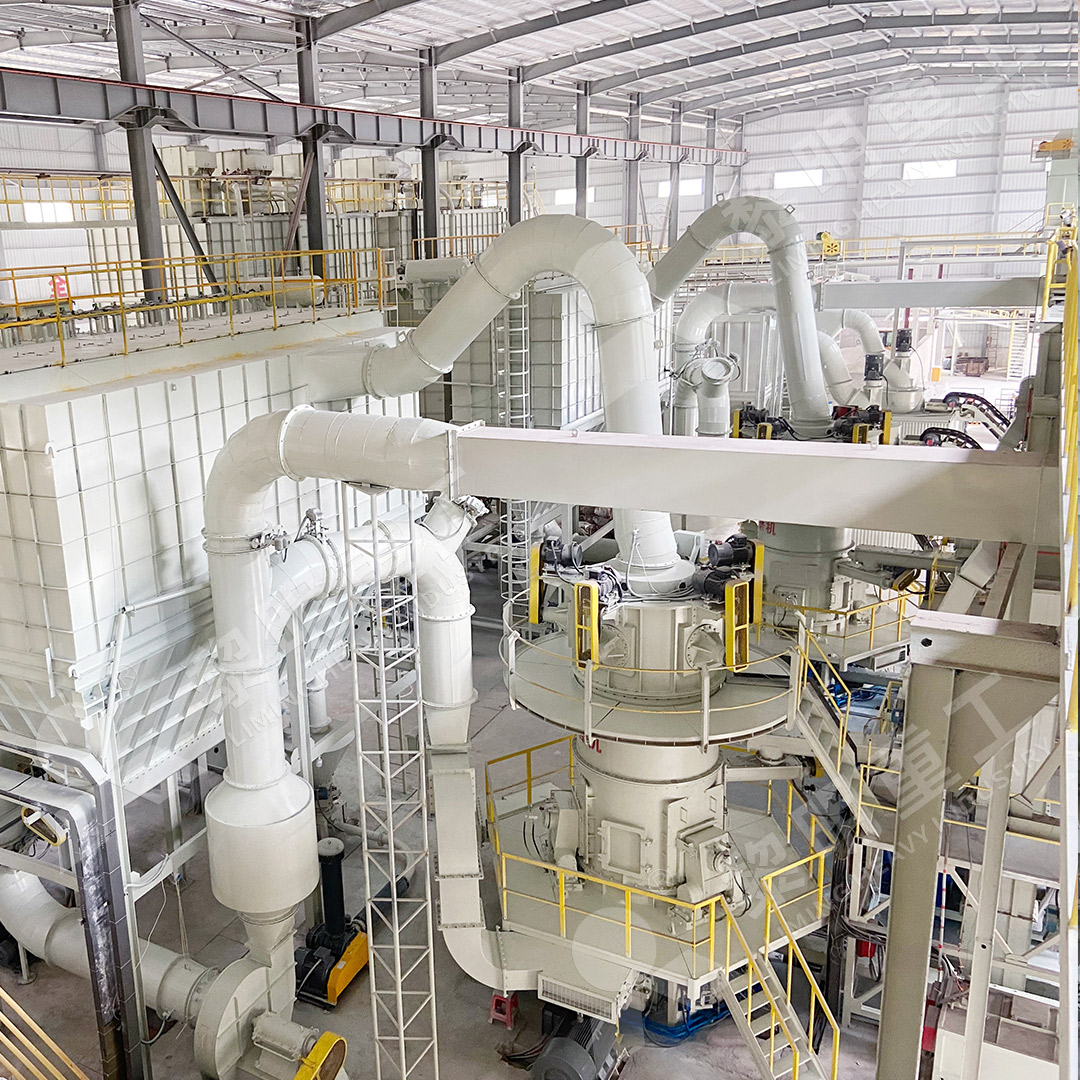
The core principle of a vertical mill for green schist involves a bed of material being ground between horizontally rotating rollers and a stationary grinding table. This method, known as interparticle comminution, is inherently more energy-efficient than the impact and attrition forces dominant in ball mills. For green schist, this translates to lower power consumption per ton of product and a reduced thermal load, which is crucial for preserving the mineralogical properties of the material.
Key Advantages for Green Schist Processing
Vertical mills excel in several areas critical to green schist processing. Firstly, their integrated drying capability is a major benefit. Green schist feedstock often contains residual moisture. A VRM can utilize hot gas introduced through the grinding table to simultaneously dry and grind the material, streamlining the process and eliminating the need for a separate dryer. Secondly, the particle size distribution (PSD) control is superior. The integrated dynamic classifier allows for real-time adjustment of product fineness, typically ranging from coarse granules to fine powders exceeding 200 mesh, all within a single machine.
Furthermore, the footprint of a vertical mill system is significantly smaller than a ball mill circuit of equivalent capacity. This compact design reduces civil construction costs and is easier to house. Environmental performance is another strong suit. The fully enclosed system operates under negative pressure, preventing dust emissions. Combined with high-efficiency baghouse filters, a modern VRM installation can meet the strictest environmental regulations.
Introducing the LIMING LM Vertical Grinding Mill
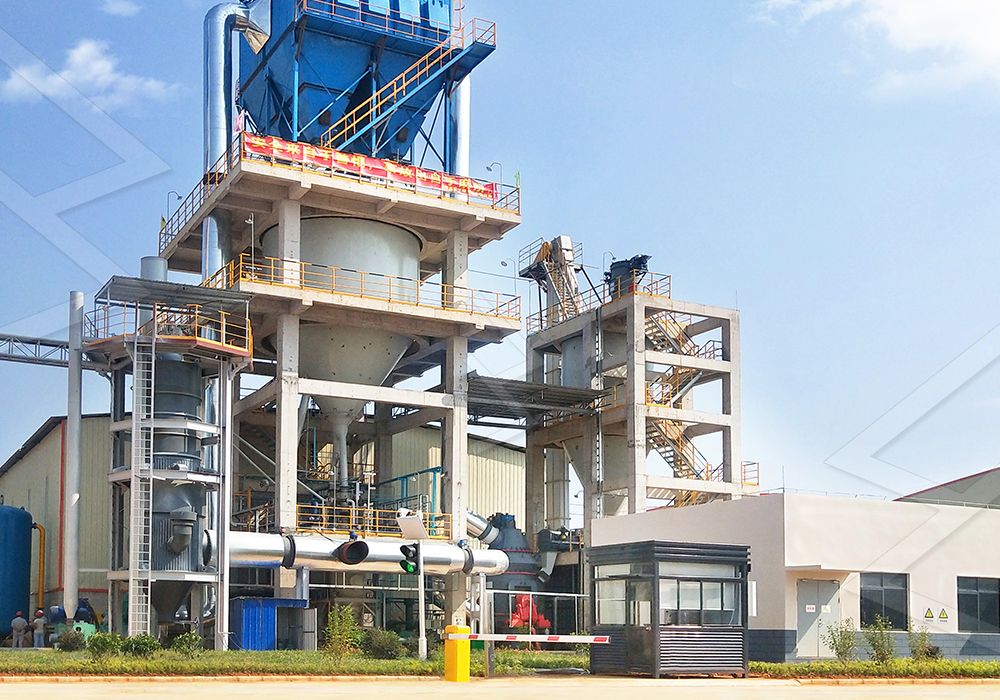
For operators seeking a robust and proven solution for green schist and similar non-metallic minerals, the LM Vertical Grinding Mill from LIMING Heavy Industry stands out. This mill is engineered to integrate crushing, drying, grinding, classifying, and conveying into one coherent system. Its occupational area is about 50% smaller than a traditional ball mill system, and it achieves energy savings of 30%-40%.
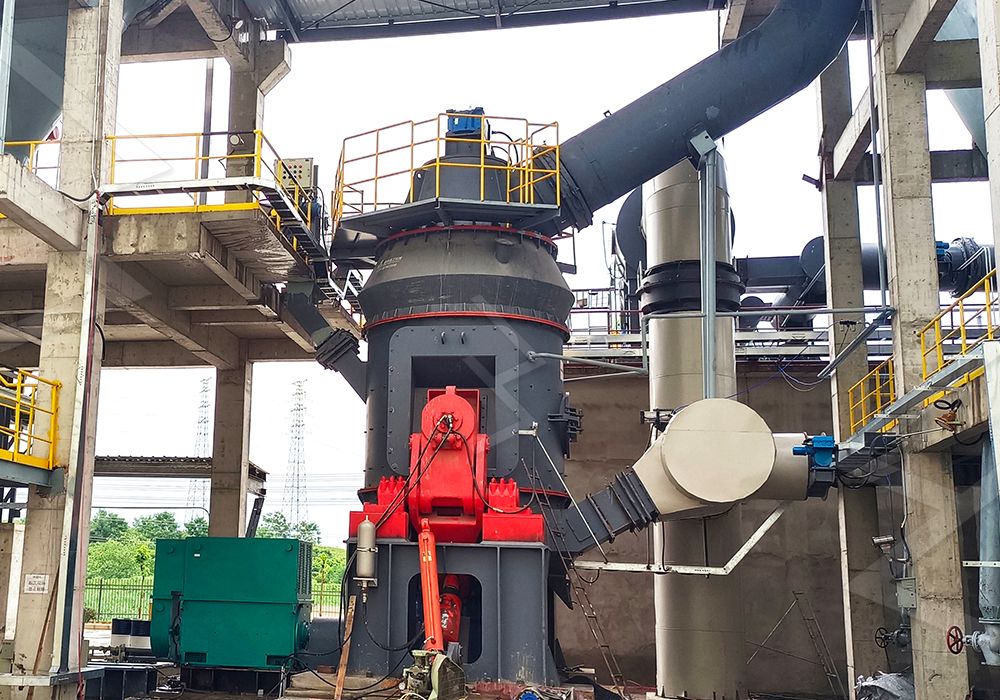
The LM mill’s design directly addresses the needs of green schist processing. Its grinding rollers and table liner are designed with special curves to form a stable material bed, ensuring efficient grinding with minimal metal-to-metal contact. This not only reduces wear but also keeps the iron contamination of the final product exceptionally low—a critical factor for applications where product whiteness and purity are valued. The short material retention time within the mill minimizes over-grinding, allowing for precise control over the final grain size and chemical consistency.
Pushing the Fineness Frontier: The LUM Ultrafine Vertical Mill
When the application demands ultra-fine powders of green schist for high-value uses in polymers, coatings, or advanced ceramics, a specialized grinder is required. For these scenarios, LIMING’s LUM Ultrafine Vertical Grinding Mill is the optimal choice. Independently designed with advanced grinding roller and powder separating technology, it represents the cutting edge in ultrafine powder production.
The LUM mill’s standout feature is its multi-head powder separating technology, driven by a PLC control system. This solves the twin challenges of achieving high-precision particle size cuts and quickly switching between different product specifications. For green schist, this means operators can accurately produce powders with fineness adjustable within a wide range, achieving consistent results at d97 ≤ 5μm. The mill’s unique reversible roller structure, facilitated by a hydraulic system, allows grinding rollers to be easily swung out for maintenance, drastically reducing downtime for wear part inspection or replacement.
Both the LM and LUM mills benefit from LIMING’s commitment to digitalized precision manufacturing. Core components are machined using CNC technology, ensuring high dimensional accuracy and reliable assembly. This manufacturing rigor, backed by a direct supply of original spare parts and technical support, forms the foundation for worry-free, long-term operation.
Conclusion
The selection of a vertical mill for green schist processing is a strategic decision that impacts productivity, product quality, and operational costs. The technology’s inherent advantages in energy efficiency, drying-grinding integration, and precise classification make it the modern standard. Within this field, solutions like the LIMING LM Vertical Grinding Mill for general production and the LUM Ultrafine Vertical Mill for specialized, high-finesse applications provide reliable, high-performance pathways to maximizing the value of green schist resources. Investing in such technology is not merely an equipment purchase but a commitment to efficient, sustainable, and competitive mineral processing.
Frequently Asked Questions (FAQ)
1. What is the typical feed size for green schist in a vertical mill like the LM series?
The LM Vertical Grinding Mill can accept feed sizes up to 70mm, depending on the specific model and system configuration. For optimal performance, a preliminary crushing stage is recommended to ensure a consistent and manageable feed size for the mill.
2. How does a vertical mill handle the varying moisture content sometimes found in green schist?
Vertical mills like the LM and LUM series are equipped with integrated hot gas generators or can be connected to an external heat source. Hot air is introduced through the grinding table, simultaneously drying and transporting the material. The system’s airflow and temperature are automatically controlled to handle fluctuations in feed moisture effectively.
3. What is the main wear part in a vertical mill processing abrasive rock like green schist, and what is its typical service life?
The primary wear parts are the grinding rollers and the grinding table liner. Their service life depends heavily on the abrasiveness of the specific schist and the production tonnage. LIMING mills use wear-resistant alloy materials developed in-house, offering service life 1.7-2.5 times longer than traditional high manganese steel. Life can range from several thousand to over ten thousand operating hours.
4. Can the same vertical mill produce different fineness grades of green schist powder?
Yes, absolutely. This is one of the key strengths of vertical mills. By adjusting the speed of the integrated dynamic classifier (or powder separator), the fineness of the final product can be precisely controlled without stopping the mill. This allows for flexible production to meet different customer specifications from a single machine.
5. How does the energy consumption of a vertical mill compare to a traditional ball mill for green schist?
Vertical mills are significantly more energy-efficient. The LM Vertical Grinding Mill, for example, typically reduces energy consumption by 30% to 40% compared to a ball mill system producing the same quantity and fineness of green schist powder. This is due to the more efficient bed-grinding principle and integrated design.
6. Is dust control a challenge with vertical milling systems?
No, it is a key advantage. The entire grinding system is sealed and operates under negative pressure, meaning air is drawn into the mill rather than allowing dust to escape. This air, laden with fine powder, is then cleaned by high-efficiency pulse baghouse dust collectors before being released, ensuring a clean working environment and compliance with environmental standards.