Fully Automatic Kaolin Grinding Production Line: Cost, Process & Supplier Guide
We provide a wide range of mills — including Raymond mill, trapezoidal mill, vertical mill, ultrafine mill, and ball mill, obtained ISO9001 international quality certification, EU CE certification, and Customs Union CU-TR certification. Suitable for processing minerals such as limestone, phosphate, quicklime, kaolin, talc, barite, bentonite, calcium carbonate, dolomite, coal, gypsum, clay, carbon black, slag, cement raw materials, cement clinker, and more.
The discharge range of these mills can be adjusted to meet specific processing needs, typically from 80-400 mesh, 600-3250 mesh, and can achieve the finest particle size of up to 6000 mesh(D50).
If you are looking for a reliable grinding solution to turn stone or minerals into fine powder, please feel free to contact our online customer service.
Fully Automatic Kaolin Grinding Production Line: Cost, Process & Supplier Guide
Hey there, industry professionals! If you’re in the market for a fully automatic kaolin grinding setup, you know it’s a major capital decision. Getting it right means balancing throughput, fineness, energy bills, and of course, the total investment. Let’s break down the essentials, from process flow to equipment selection, and yeah, we’ll talk about some serious machinery that can make or break your operation.
The Kaolin Grinding Process: From Lump to Premium Powder
Kaolin, or china clay, demands a gentle touch and precise grinding to preserve its plate-like structure and whiteness. A typical fully automatic line involves several key stages:
- Primary Crushing: Raw kaolin lumps (0-300mm) are reduced to a smaller, more manageable size (around 0-20mm) using a jaw crusher.
- Drying: Moisture is a killer for grinding efficiency. A rotary dryer brings the material’s moisture content down to an optimal 1-2%.
- Grinding: This is the heart of the operation. The dried kaolin is fed into a grinding mill to achieve the desired fineness, often between 325 to 2500 meshes for high-value applications.
- Classification: An integrated or separate powder classifier ensures only particles of the correct size proceed, sending oversize material back for further grinding.
- Packing: The final, premium-grade powder is automatically weighed and packed into bags or bulk containers.
The entire process is managed by a central PLC control system, allowing for 24/7 operation with minimal human intervention. Dust collection systems are absolutely critical here to maintain a clean plant and protect the product quality.

Key Equipment Selection: It’s All About The Mill
You can have the best feeders and dryers, but if your mill isn’t up to scratch, you’re wasting money. For ultra-fine kaolin powder, you need a mill designed for high efficiency, low iron contamination, and precise particle size control.
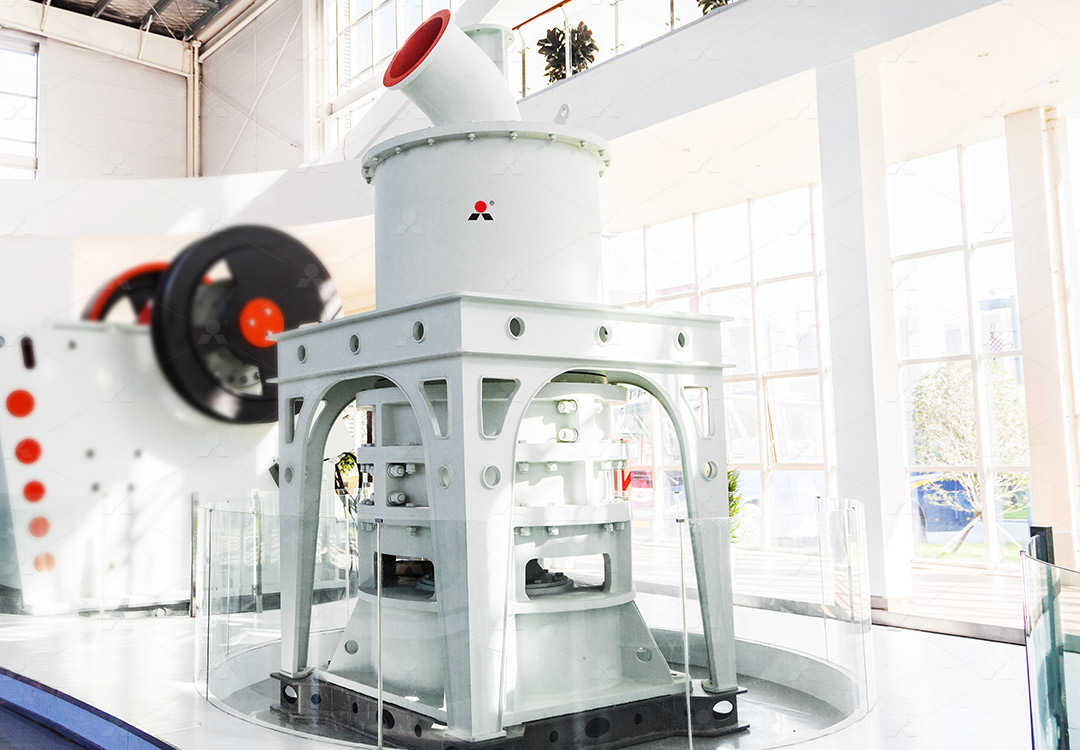
This is where our MW Ultrafine Grinding Mill really shines. It’s a beast built for customers who need to make consistent ultra-fine powder. Here’s why it’s a top contender for your kaolin line:
- Input Size: 0-20 mm | Capacity: 0.5-25 tph – perfect for handling the output from your primary crusher.
- Higher Yielding, Lower Energy Consumption: Its newly designed grinding curves can boost production capacity by 40% compared to jet mills, while slashing energy use by up to 30%. That directly translates to a lower cost per ton.
- Adjustable Fineness (325-2500 meshes): Its German-tech cage-type powder selector lets you dial in the exact fineness your market demands, achieving a superb d97≤5μm in a single pass.
- Built for Uptime: No rolling bearings or screws in the grinding chamber means no worries about those parts failing. External lubrication allows for maintenance without shutdowns. That’s 24/7 production, folks.
- Eco-Friendly Operation: Comes with an efficient pulse dust collector and silencer, keeping your plant clean and your noise levels down to meet strict环保 (environmental) standards.

Cost Considerations & Choosing a Supplier
The total cost isn’t just the sticker price of the equipment. You gotta think about:
- Capital Expenditure (CAPEX): The cost of the main mill, crusher, dryer, classifier, and conveying/packing systems.
- Operational Expenditure (OPEX): Power consumption is the big one. A more efficient mill like the MW series pays for itself over time. Don’t forget wear parts; look for mills with long-life grinding rollers and rings.
- Footprint: A compact, vertically designed system can save a fortune on building costs.
When choosing a supplier, look for one that handles both production and sales. Why? Because you want direct technical support and a guaranteed supply of genuine spare parts. You don’t want your multi-million dollar line sitting idle waiting for a proprietary bearing to ship from who-knows-where. A company that stands behind its own equipment, like ours, takes full responsibility for the machine’s performance and your worry-free operation.
Conclusion
Investing in a fully automatic kaolin grinding line is a significant step. Focusing on a process-efficient, energy-saving mill like the MW Ultrafine Grinding Mill is the smartest way to ensure profitability and product quality from day one. Do your homework, prioritize total cost of ownership over initial price, and partner with a supplier that offers full lifecycle support.