
Fluorite Ore Grinding Mill Production Line Cost and Price Analysis
We provide a wide range of mills — including Raymond mill, trapezoidal mill, vertical mill, ultrafine mill, and ball mill, obtained ISO9001 international quality certification, EU CE certification, and Customs Union CU-TR certification. Suitable for processing minerals such as limestone, phosphate, quicklime, kaolin, talc, barite, bentonite, calcium carbonate, dolomite, coal, gypsum, clay, carbon black, slag, cement raw materials, cement clinker, and more.
The discharge range of these mills can be adjusted to meet specific processing needs, typically from 80-400 mesh, 600-3250 mesh, and can achieve the finest particle size of up to 6000 mesh(D50).
If you are looking for a reliable grinding solution to turn stone or minerals into fine powder, please feel free to contact our online customer service.
Fluorite Ore Grinding Mill Production Line Cost and Price Analysis
For mineral processing operations targeting fluorite, selecting the optimal grinding mill is a critical decision that directly impacts both capital expenditure (CAPEX) and long-term operational costs. A thorough cost and price analysis must consider not just the initial equipment purchase, but also energy consumption, maintenance requirements, yield efficiency, and environmental compliance. This article delves into the key factors influencing the total cost of ownership for a fluorite grinding production line.
1. Core Cost Drivers in Fluorite Grinding
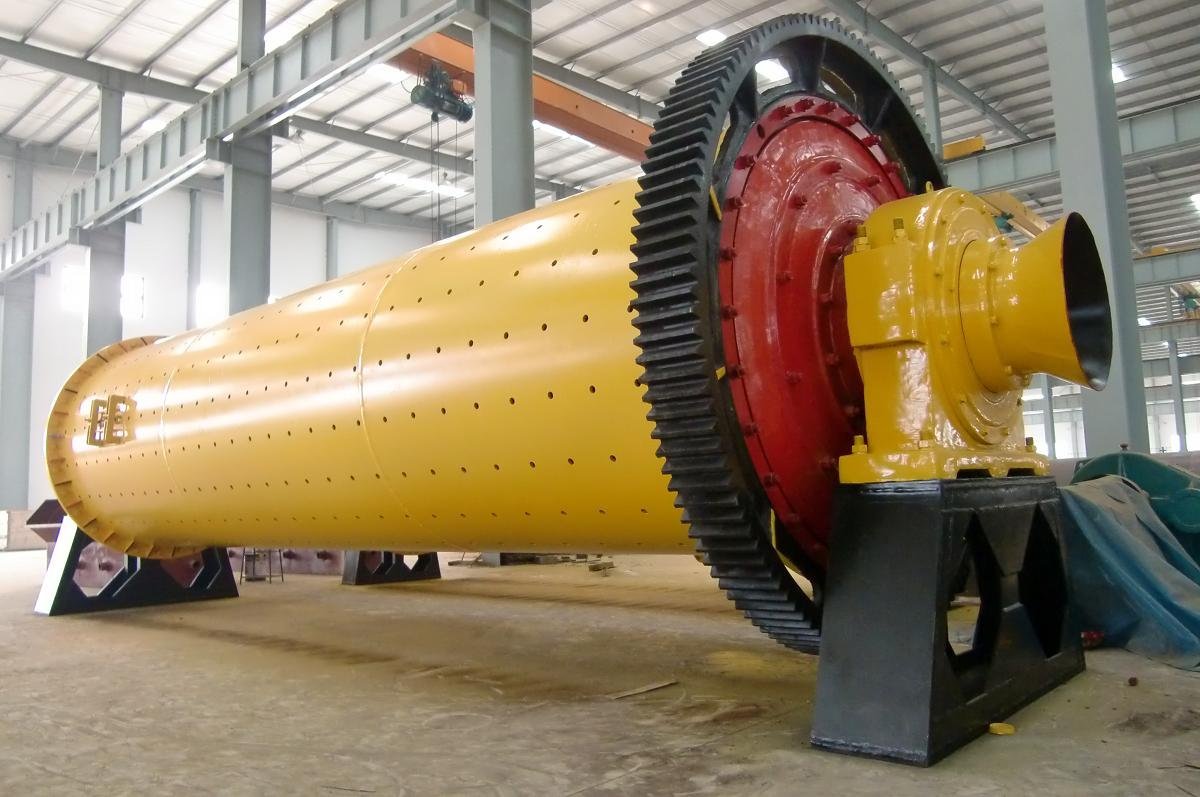
The financial viability of a fluorite processing plant hinges on several interconnected factors. First and foremost is energy consumption, which typically constitutes 40-60% of the total operating cost. Traditional ball mills, while having a lower upfront cost, are notoriously energy-intensive. Modern vertical roller mills and advanced trapezium mills offer significant savings by utilizing efficient grinding principles and integrated drying capabilities, especially important if the raw fluorite ore carries moisture.
Secondly, wear part consumption and maintenance downtime are substantial cost centers. The abrasiveness of fluorite demands robust grinding elements. Mills with easily replaceable roller shells and liners, accessible maintenance points, and durable alloy materials drastically reduce lifecycle costs and production losses.
Finally, yield and product quality directly affect revenue. Achieving the target fineness (often between 325-2500 meshes for various fluorite applications) in a single pass with high classification efficiency maximizes throughput and ensures a consistent, high-value product. Systems that require re-circulation of coarse material waste energy and capacity.
2. Equipment Selection: Balancing Performance and Investment
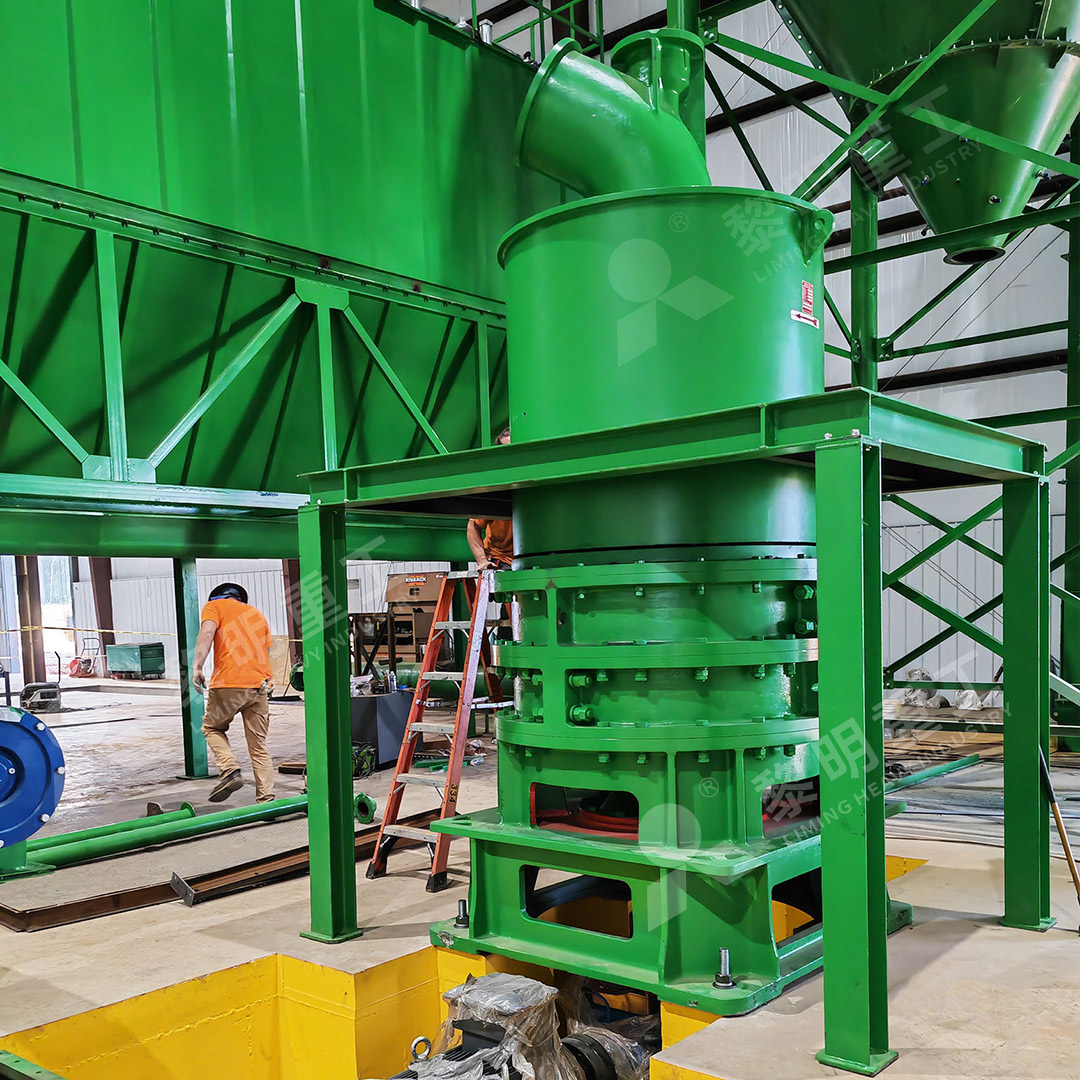
The heart of the production line is the grinding mill. For high-value, ultra-fine fluorite powders used in the chemical and ceramic industries, advanced milling technology is non-negotiable. Here, the MW Ultrafine Grinding Mill presents a compelling solution. Engineered for ultra-fine powder production, it addresses the core cost drivers head-on. Its design incorporates a German-technology cage-type powder selector, allowing precise fineness adjustment between 325-2500 meshes with a high screening rate of d97≤5μm in a single pass. This eliminates inefficient multi-stage grinding. Furthermore, its innovative chamber design eliminates rolling bearings and screws in the grinding zone, virtually eradicating costly failures from bearing seizures or loose components. The external lubrication system permits 24/7 operation without shutdowns for maintenance, a key factor in maximizing uptime.
For operations requiring large-scale processing of fluorite for metallurgical or construction uses, the LM Vertical Grinding Mill offers a robust, high-capacity alternative. Its integrated crushing, drying, grinding, and classifying system reduces the footprint by 50% compared to ball mill circuits, lowering civil construction costs. It delivers energy savings of 30-40% and features a short material retention time, which minimizes over-grinding and reduces iron contamination—crucial for maintaining product whiteness.
3. Beyond the Mill: Ancillary Systems and Total Line Cost
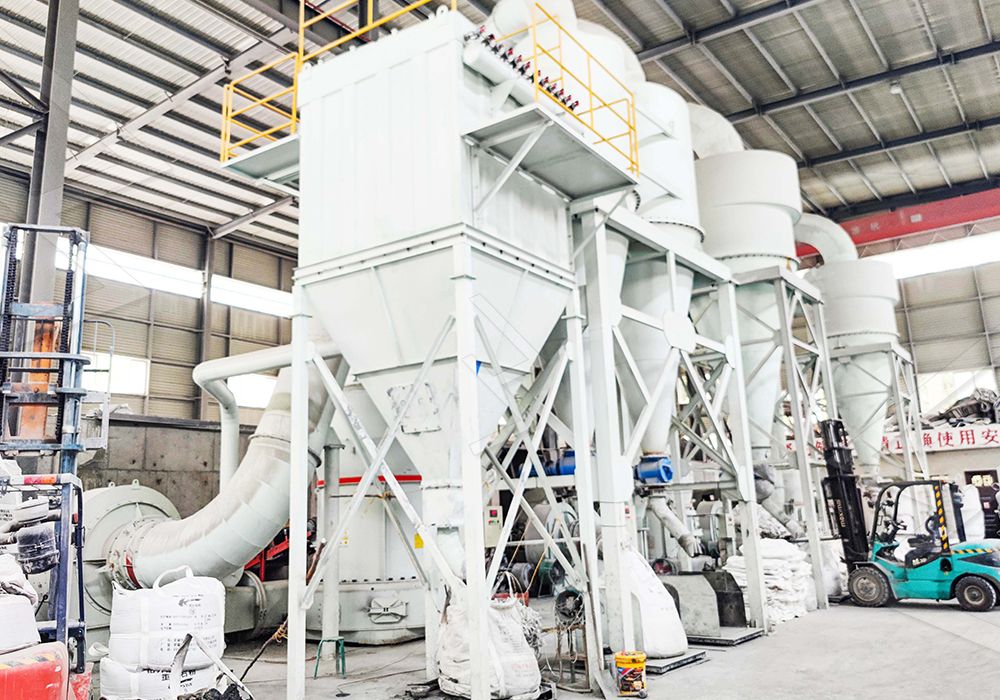
A holistic price analysis must include the entire production line: crushers, feeders, elevators, classifiers, dust collectors, and electrical controls. Modern mills like the MW series are designed as cohesive systems. They come equipped with high-efficiency pulse jet dust collectors and mufflers, ensuring the entire process meets stringent environmental standards without additional, costly retrofitting. This integrated approach to dust and noise control not only keeps permitting costs low but also protects worker health and minimizes material loss.
Operational stability is another hidden cost saver. Features like the double position-limiting technology in our LUM Ultrafine Vertical Mill or the elastic volute damping structure in the MTW-Z European Trapezium Mill prevent destructive vibrations and mechanical impacts. This stability translates to less unplanned downtime, lower repair costs, and longer equipment lifespan.
4. The Long-Term Value Proposition: Quality and Support
The lowest sticker price does not equate to the lowest cost. Investing in a mill with digitalized CNC processing for core parts ensures higher precision, better balance, and smoother operation from day one, reducing vibrational wear. A reliable supply of original spare parts and direct manufacturer technical support, as we provide for all our equipment, is invaluable. It prevents prolonged shutdowns waiting for components and ensures maintenance is performed correctly, protecting your investment’s longevity.
In conclusion, a savvy fluorite producer’s cost analysis should prioritize total cost of ownership over initial price. By selecting a technologically advanced mill that excels in energy efficiency, maintenance simplicity, product quality, and environmental compliance, operators secure a decisive competitive edge. The higher initial investment in a system like the MW Ultrafine Grinding Mill is rapidly amortized through drastically lower operating expenses, higher product value, and unparalleled production reliability.
Frequently Asked Questions (FAQ)
- What is the primary advantage of the MW Ultrafine Grinding Mill for fluorite processing?
Its primary advantage is the ability to produce ultra-fine powder (325-2500 mesh) with high precision and a high single-pass yield, combined with a maintenance-friendly design that eliminates internal bearings and allows external lubrication for 24/7 operation. - How much energy savings can I expect compared to a traditional ball mill?
Depending on the model and application, modern vertical mills and advanced ultrafine mills can reduce energy consumption by 30% to 50% compared to conventional ball milling systems, making energy costs the most significant area of operational savings. - Is the fineness of the final product adjustable?
Yes. Mills like the MW series feature advanced cage-type powder selectors (classifiers) that allow operators to accurately and easily adjust the product fineness within a wide range to meet different market specifications. - How does the equipment handle environmental regulations regarding dust and noise?
Our grinding systems are designed as closed-circuit, negative-pressure systems. They are integrally equipped with high-efficiency pulse jet dust collectors and silencers, ensuring dust emissions and noise levels comply with strict international environmental protection standards. - What is the typical lead time for acquiring spare parts?
As a manufacturer covering both production and sales, we maintain a sufficient inventory of original spare parts for all our machines. Lead times are minimized through our global logistics network, and we provide dedicated technical support to ensure worry-free operation.