
Fluorite European Version Grinding Mill: Key Features and Applications
We provide a wide range of mills — including Raymond mill, trapezoidal mill, vertical mill, ultrafine mill, and ball mill, obtained ISO9001 international quality certification, EU CE certification, and Customs Union CU-TR certification. Suitable for processing minerals such as limestone, phosphate, quicklime, kaolin, talc, barite, bentonite, calcium carbonate, dolomite, coal, gypsum, clay, carbon black, slag, cement raw materials, cement clinker, and more.
The discharge range of these mills can be adjusted to meet specific processing needs, typically from 80-400 mesh, 600-3250 mesh, and can achieve the finest particle size of up to 6000 mesh(D50).
If you are looking for a reliable grinding solution to turn stone or minerals into fine powder, please feel free to contact our online customer service.
Fluorite European Version Grinding Mill: Key Features and Applications
In the demanding world of mineral processing, achieving consistent, high-purity fine powders is paramount. For materials like fluorite, prized in industries from metallurgy to optics, the choice of grinding technology directly impacts product quality, operational efficiency, and environmental compliance. European-version grinding mills, characterized by their advanced engineering and robust design principles, have emerged as a superior solution for such precision applications.
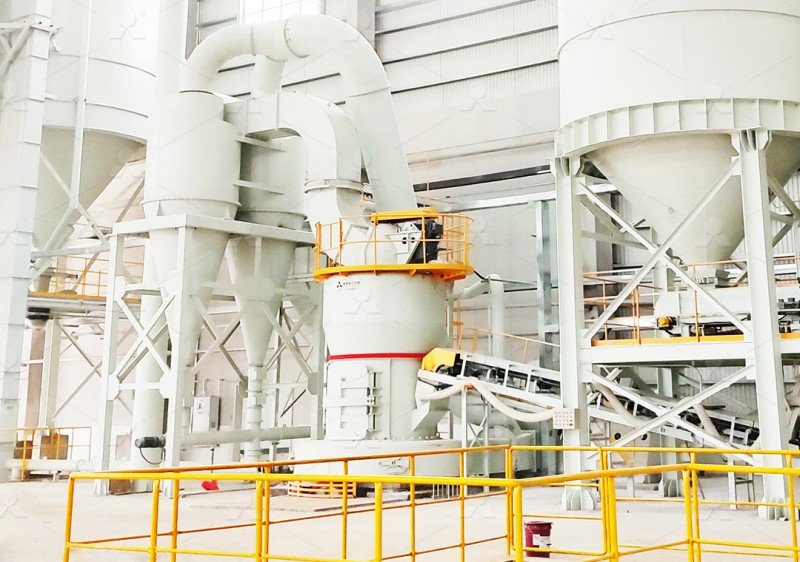
Core Engineering Principles and Design Advantages
European-version mills, such as the advanced trapezium mill designs, are built upon a foundation of efficiency and durability. A key differentiator is the integration of a bevel gear overall drive system. This design eliminates the need for a traditional reducer and coupling, resulting in a more compact structure, significantly lower vibration, and notably quieter operation. The transmission efficiency is higher, directly translating to reduced energy consumption for the same output.
Another hallmark is the internal automatic thin-oil lubricating system. This system provides precise, continuous lubrication to critical components like the grinding roller bearings. Unlike manual grease lubrication, it ensures optimal operating temperatures, drastically extends bearing life, and removes the risk of human error, enabling truly worry-free, continuous 24/7 operation—a critical factor for large-scale production.
Optimized for Fine and Ultra-Fine Powder Production
The grinding mechanism itself is meticulously engineered. These mills often feature curved air ducts that allow airflow to enter the grinding chamber tangentially, creating a smooth, low-resistance path. This design minimizes energy loss and prevents material accumulation. Paired with advanced, multi-head cage-type powder separators, the mills achieve exceptional classification precision. Operators can accurately control product fineness across a wide range, often from 325 to 2500 meshes, with high screening efficiency to ensure a consistent particle size distribution (e.g., d97 ≤ 5μm).
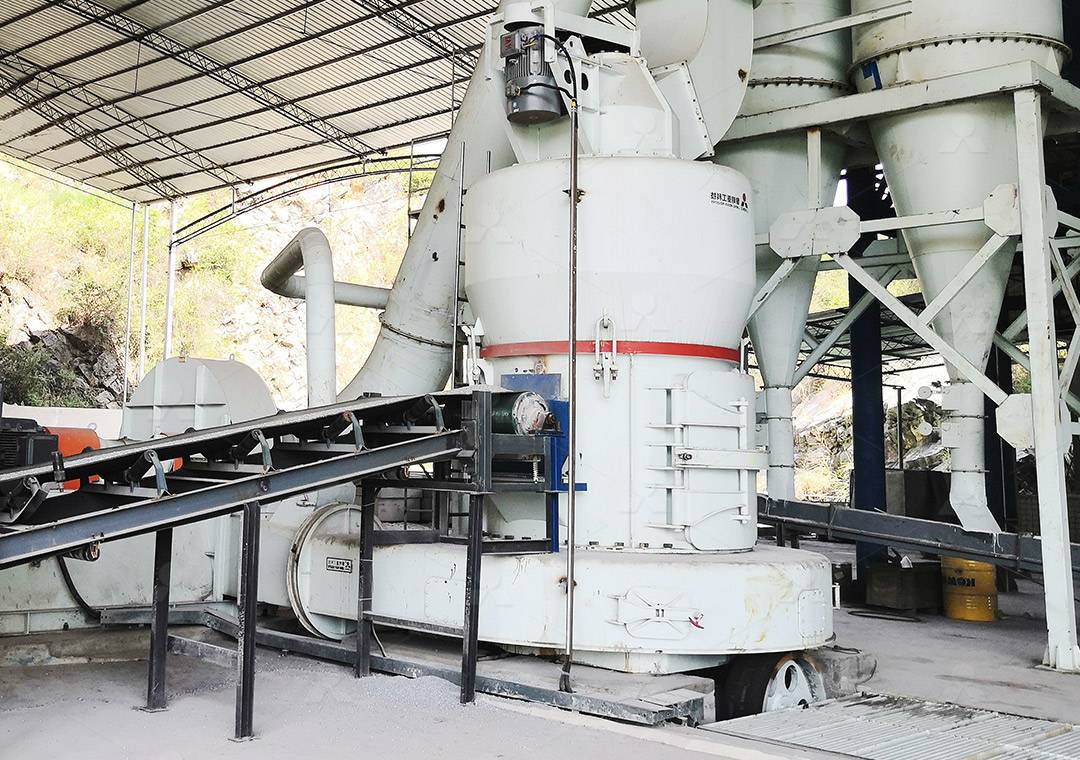
For applications demanding the ultimate in fineness, such as high-grade fluorite for chemical or optical uses, our MW Ultrafine Grinding Mill represents the pinnacle of technology. It is specifically designed for customers who need to make ultra-fine powder. With an input size of 0-20 mm and a capacity ranging from 0.5 to 25 tph, it integrates an efficient pulse dust collector and muffler to minimize environmental impact. Its innovative design features higher yielding and lower energy consumption—production capacity can be 40% higher than jet mills with system energy consumption only 30% of such alternatives. The absence of rolling bearings and screws in the grinding chamber eliminates common failure points, ensuring remarkable operational reliability.
Diverse Industrial Applications
The versatility of European-version grinding mills extends far beyond fluorite. Their precise and efficient grinding action makes them ideal for a vast array of non-metallic minerals and industrial materials. Common applications include:
- Metallurgy & Chemicals: Processing fluorite, barite, and petroleum coke for use as fluxes or raw materials.
- Construction & Ceramics: Grinding limestone, calcite, and clay to precise specifications for cement, paints, and coatings.
- Advanced Materials: Producing fine powders of talc, marble, and dolomite for plastics, paper, and food additives.
- Energy: Pulverizing coal for clean combustion in power generation.
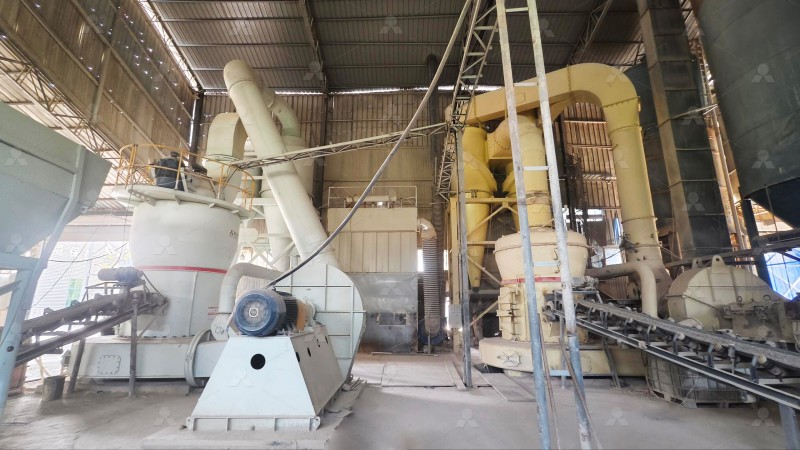
For projects requiring integrated drying and grinding of medium-hardness materials at high capacities, the LM Vertical Grinding Mill is an exemplary choice. It integrates crushing, drying, grinding, classifying, and conveying in a single unit. With an input size of 0-70 mm and a massive capacity range of 3-340 tph, it covers area 50% smaller than a ball mill system while saving 30%-40% in energy consumption. Its stable, sealed operation under negative pressure guarantees a dust-free and eco-friendly workspace.
Commitment to Sustainable and Smart Operation
Modern European-version mills are designed with sustainability at their core. Standard equipment includes high-efficiency pulse-jet baghouse dust collectors that capture over 99.9% of particulate matter, ensuring emissions meet stringent international standards. Integrated silencers and soundproofing materials effectively control noise pollution. Furthermore, these mills are increasingly compatible with digital control systems, allowing for remote monitoring, automated adjustment of operational parameters, and predictive maintenance, paving the way for smarter, more sustainable plant management.
Conclusion
Selecting a Fluorite European Version Grinding Mill is an investment in precision, reliability, and operational economy. By combining proven mechanical innovations with a focus on energy efficiency and environmental stewardship, this class of equipment provides a future-proof solution for producing high-value fine powders. Whether the goal is to enhance product quality, reduce total operating costs, or minimize the environmental footprint of mineral processing operations, these advanced grinding systems deliver measurable, long-term benefits.
Frequently Asked Questions (FAQ)
- What is the typical fineness range achievable with a European-version grinding mill for fluorite?
These mills are highly versatile. Standard models can reliably produce powder from 325 meshes (about 45 microns) up to 2500 meshes (approximately 5 microns). Fineness is precisely adjustable via the integrated powder separator system. - How does the energy consumption compare to traditional Raymond or ball mills?
Due to design efficiencies like the bevel gear drive, curved air duct, and optimized grinding curve, European-version mills typically consume 30%-50% less energy than traditional Raymond mills and can be up to twice as efficient as ball mills for the same fineness and output. - Are these mills suitable for processing moist materials?
While the standard trapezium mills handle materials with low moisture, our LM Vertical Grinding Mill series is specifically designed to integrate hot air drying. It can simultaneously dry and grind materials with significant moisture content, making it ideal for a wider range of feed conditions. - What makes the lubrication system “maintenance-free”?
The automatic thin-oil lubrication system continuously filters and circulates oil to key bearings. It maintains optimal oil pressure and temperature, and features alarms for abnormal conditions. This eliminates manual greasing intervals and prevents bearing failures due to improper lubrication. - How is dust control managed during operation?
The entire milling system is a closed-circuit, negative-pressure design. Airflow is recycled internally, and any vented air passes through a high-efficiency pulse-jet baghouse dust collector before release, ensuring no dust pollution and compliance with strict environmental standards. - What is the expected lifespan of the grinding rollers and rings?
Critical wear parts like rollers and rings are made from high-performance wear-resistant alloy materials, developed through extensive R&D. Their service life is typically 1.7 to 2.5 times longer than components made from traditional high manganese steel, reducing downtime and spare part costs.