
Flowsheet of a Copper Mill Flotation Plant: A Detailed Overview
We provide a wide range of mills — including Raymond mill, trapezoidal mill, vertical mill, ultrafine mill, and ball mill, obtained ISO9001 international quality certification, EU CE certification, and Customs Union CU-TR certification. Suitable for processing minerals such as limestone, phosphate, quicklime, kaolin, talc, barite, bentonite, calcium carbonate, dolomite, coal, gypsum, clay, carbon black, slag, cement raw materials, cement clinker, and more.
The discharge range of these mills can be adjusted to meet specific processing needs, typically from 80-400 mesh, 600-3250 mesh, and can achieve the finest particle size of up to 6000 mesh(D50).
If you are looking for a reliable grinding solution to turn stone or minerals into fine powder, please feel free to contact our online customer service.
Flowsheet of a Copper Mill Flotation Plant: A Detailed Overview
In the complex world of mineral processing, the copper flotation plant stands as a testament to engineering precision. The journey from raw, mined ore to a market-ready copper concentrate is a meticulously orchestrated sequence of crushing, grinding, and separation. Understanding this flowsheet is crucial for optimizing recovery, minimizing costs, and ensuring operational efficiency.
1. Communition: The Foundation of Liberation
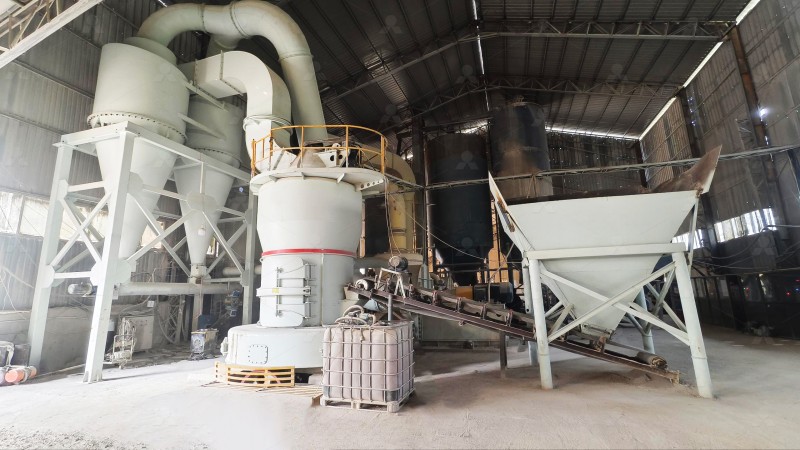
The process begins with communition—the progressive reduction of run-of-mine ore to a fine powder. Primary and secondary crushers break down large boulders into smaller, manageable fragments. The critical stage, however, is fine grinding. Here, the goal is to liberate the valuable copper sulfide minerals (like chalcopyrite) from the worthless gangue rock. This is typically achieved using ball mills or advanced grinding systems. The fineness of the grind is paramount; insufficient liberation leads to poor recovery, while over-grinding consumes excessive energy and can create slimes that hinder the subsequent flotation process.
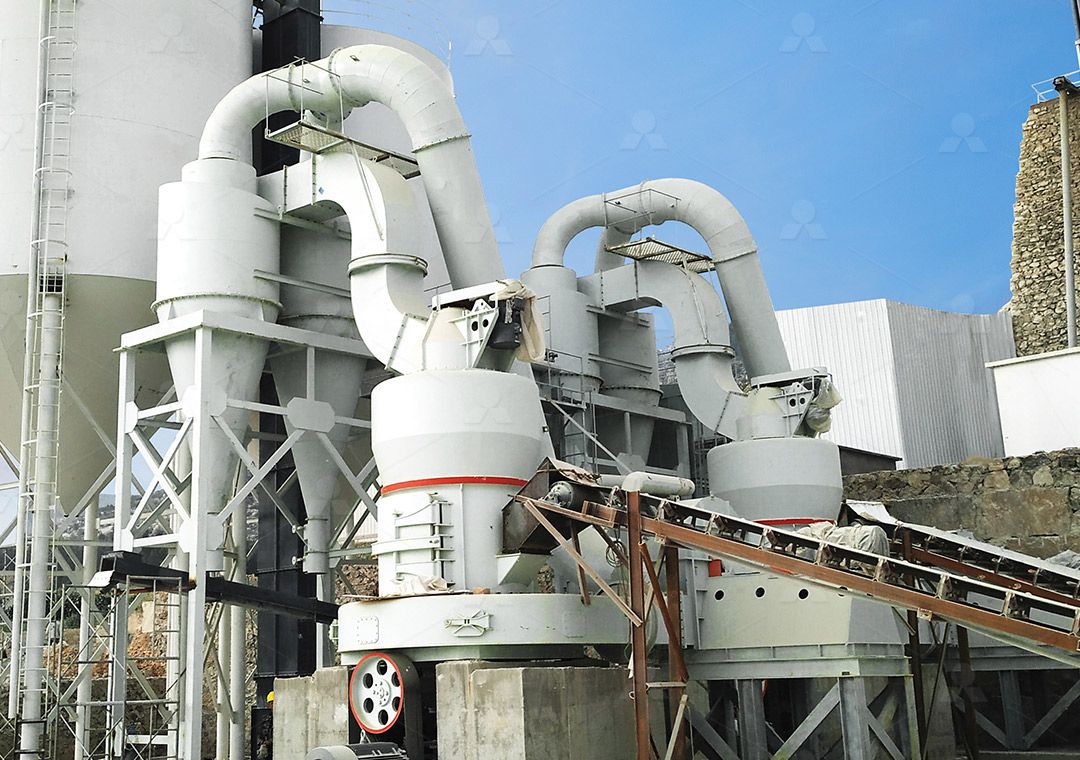
For operations requiring ultra-fine grinding to maximize mineral liberation, advanced technology is key. Our MW Ultrafine Grinding Mill is engineered for such demanding applications. With an input size of 0-20 mm and a capacity range of 0.5-25 tph, it delivers a precise fineness adjustable between 325-2500 meshes. Its higher yielding and lower energy consumption—up to 40% higher capacity than jet mills—make it an ideal choice for achieving the optimal particle size for efficient flotation, all while operating with minimal dust and noise.
2. The Flotation Circuit: The Heart of Concentration
Once the ore is suitably ground and mixed with water to form a slurry, it is conditioned with specific reagents. These chemicals include collectors, which selectively coat the copper minerals, making them hydrophobic (water-repellent), and frothers, which stabilize the air bubbles introduced into the flotation cells.
In the flotation cells, air is agitated through the slurry. The hydrophobic copper particles attach to the air bubbles and rise to the surface, forming a froth layer. This froth, rich in copper concentrate, is skimmed off. The hydrophilic gangue particles remain in the slurry and are discharged as tailings. A typical flowsheet employs a rougher-scavenger-cleaner configuration. The rougher stage produces an initial concentrate, the scavenger cells recover any remaining copper from the rougher tailings, and the cleaner stages repeatedly re-clean the rougher concentrate to increase its grade to the required specification.
3. Dewatering: Producing a Handleable Product
The final froth product is a slurry containing 20-40% solids. This must be dewatered for efficient transport and smelting. Thickeners are used first to increase the solids content by settling. The underflow from the thickener is then fed to filters, such as vacuum drum filters or pressure filters, which produce a filter cake with a moisture content typically between 8-12%. This cake is the final copper concentrate, ready for shipment. The water recovered from the thickeners and filters is often recycled back into the mill process, promoting water conservation.
Another excellent solution for the initial size reduction ahead of the final grinding stage is the LUM Ultrafine Vertical Grinding Mill. Its unique roller shell and lining plate grinding curve facilitate material layer generation for high-rate finished products in a single pass. With features like double position-limiting technology for stable operation and a reversible structure for easier maintenance, the LUM mill integrates grinding, grading, and transporting with an energy consumption 30%-50% lower than common grinding mills.
Frequently Asked Questions (FAQ)
What is the typical recovery rate for copper in a flotation plant?
Recovery rates vary significantly based on ore mineralogy and plant efficiency, but modern plants typically achieve copper recoveries between 85% and 92%.
Why is grinding fineness so critical in copper flotation?
Grinding fineness determines the degree of liberation between copper minerals and gangue. Inadequate liberation means copper particles are still locked with waste rock and won’t float, reducing recovery. Over-grinding creates fine particles that are difficult to manage and can increase reagent consumption.
What are the main reagents used in copper flotation?
Common reagents include xanthates (collectors), MIBC (Methyl Isobutyl Carbinol, a frother), and lime (pH modifier to depress iron sulfide minerals like pyrite).
How is water managed in a copper flotation plant?
Water is a key resource, and most plants operate with a high degree of water recirculation from the tailings storage facility and dewatering circuits to minimize fresh water intake and environmental impact.