
Feldspar Sand Medium Speed Grinding Mill: Key Features and Applications
We provide a wide range of mills — including Raymond mill, trapezoidal mill, vertical mill, ultrafine mill, and ball mill, obtained ISO9001 international quality certification, EU CE certification, and Customs Union CU-TR certification. Suitable for processing minerals such as limestone, phosphate, quicklime, kaolin, talc, barite, bentonite, calcium carbonate, dolomite, coal, gypsum, clay, carbon black, slag, cement raw materials, cement clinker, and more.
The discharge range of these mills can be adjusted to meet specific processing needs, typically from 80-400 mesh, 600-3250 mesh, and can achieve the finest particle size of up to 6000 mesh(D50).
If you are looking for a reliable grinding solution to turn stone or minerals into fine powder, please feel free to contact our online customer service.
Feldspar Sand Medium Speed Grinding Mill: Key Features and Applications
In the realm of industrial mineral processing, the efficient and precise grinding of materials like feldspar sand presents unique challenges. Achieving the desired particle size distribution, maintaining product purity, and controlling operational costs are paramount for producers. Medium-speed grinding mills have emerged as a superior solution for such applications, offering a compelling balance of performance, efficiency, and reliability. This article delves into the core features that make these mills ideal for feldspar sand processing and explores their broader industrial applications.
The Grinding Challenge for Feldspar Sand
Feldspar, a group of rock-forming tectosilicate minerals, is a critical raw material for ceramics, glass, and fillers. Processing feldspar into sand or powder requires equipment that can handle moderate to hard materials while producing a consistent, often fine, output. Traditional ball mills, while common, can be inefficient, leading to high energy consumption, excessive wear, and potential iron contamination. The industry has steadily moved towards more advanced milling technologies that address these shortcomings head-on.

Defining Features of Modern Medium-Speed Grinding Mills
Contemporary medium-speed grinding mills, such as trapezium mills and advanced vertical roller mills, incorporate several key design innovations that set them apart.
1. Optimized Grinding Geometry: The heart of any mill is its grinding mechanism. Modern designs feature meticulously engineered curves for grinding rollers and rings (or millstones). This geometry creates a more effective grinding bed, improves material layer formation, and enhances grinding efficiency, directly translating to higher throughput and lower specific energy consumption.
2. Advanced Powder Classification: Precise particle size control is non-negotiable. The integration of high-efficiency, multi-head cage-type or rotor-type powder separators is a game-changer. These systems allow for real-time, accurate fineness adjustment—often within a range of 325 to 2500 meshes—with high screening rates (e.g., d97 ≤ 5μm). This ensures a uniform product quality tailored to specific customer requirements.
3. Robust and Maintenance-Friendly Design: Reliability is critical for continuous operation. Innovations like external lubrication systems that allow “lubrication without shutdown,” reversible roller structures for easy maintenance access, and the elimination of internal screws and vulnerable bearings in the grinding chamber significantly reduce downtime and operational worries.

4. Integrated Environmental Controls: Today’s mills are designed with sustainability in mind. They are typically equipped with high-efficiency pulse jet dust collectors and integrated silencers, ensuring the entire milling system operates under negative pressure with minimal dust emission and noise pollution, fully complying with stringent environmental standards.
Prime Applications Beyond Feldspar
While exceptional for feldspar sand, the versatility of these mills is vast. They are successfully employed in processing a wide array of non-metallic minerals and industrial materials, including:
- Carbonates: Limestone, calcite, dolomite, marble.
- Industrial Minerals: Talc, barite, gypsum, kaolin, bentonite.
- Energy Materials: Petroleum coke, pulverized coal for injection.
- Specialty Applications: Production of powders for paints, coatings, plastics, rubber, and advanced ceramics.
Selecting the Right Mill for Your Operation
Choosing the optimal mill depends on your specific material, required fineness, and capacity needs. For operations targeting ultra-fine powders (325-2500 mesh) from materials like feldspar with stringent purity requirements, an ultrafine grinding mill is often the best choice. A standout example in this category is our MW Ultrafine Grinding Mill.
This machine is engineered for customers who need to make high-quality ultra-fine powder efficiently. It boasts a newly designed grinding curve that enhances efficiency, yielding up to 40% higher capacity than some alternative fine grinding systems at the same power. Its German-technology-inspired cage-type powder selector allows precise fineness adjustment between 325-2500 meshes. Crucially, its design eliminates rolling bearings and screws in the grinding chamber, removing common failure points, and is paired with an efficient pulse dust collector for eco-friendly operation. With an input size of 0-20 mm and a capacity range of 0.5-25 tph, it offers remarkable flexibility for medium-scale fine grinding projects.
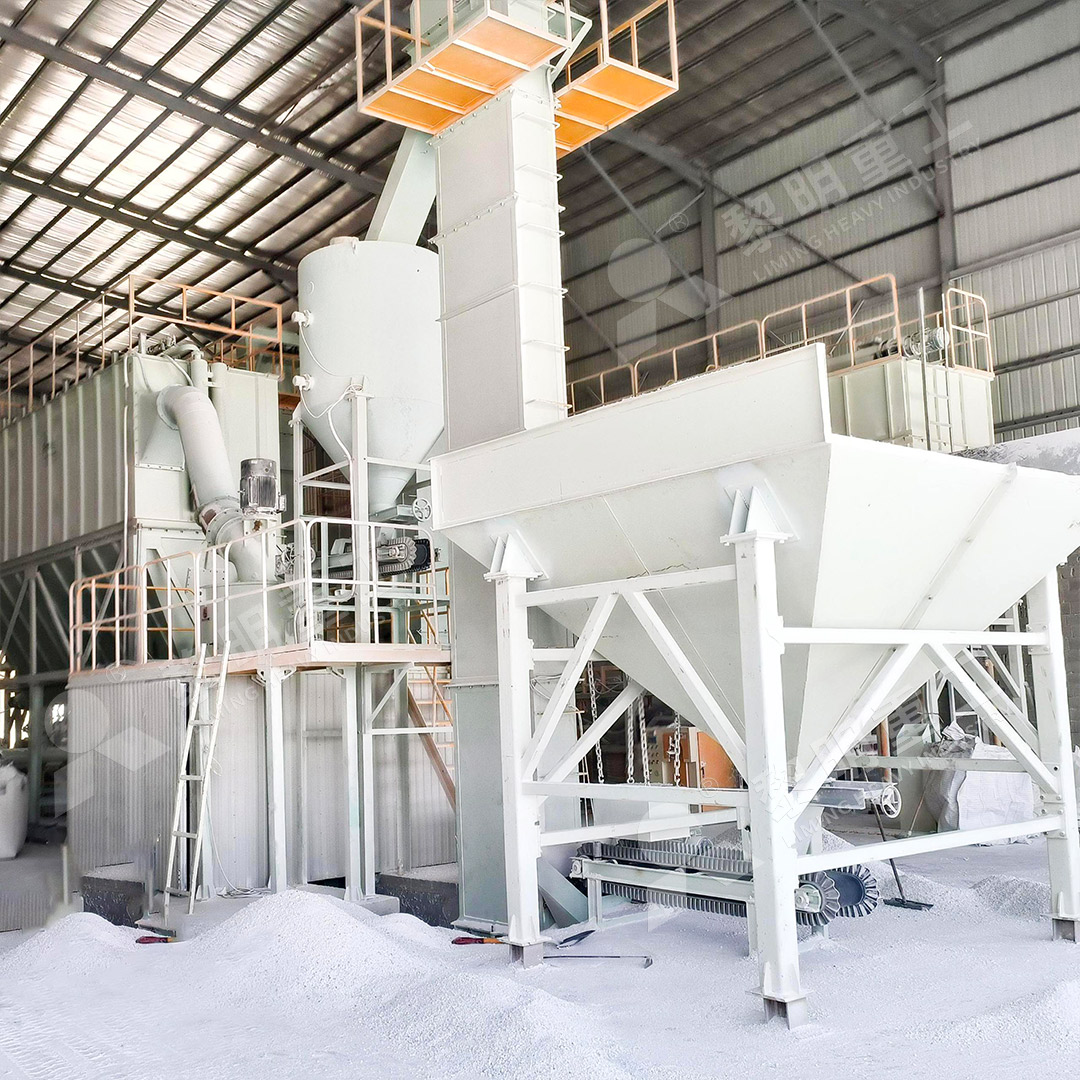
For larger scale production or applications involving slightly coarser grinds, our MTW-Z European Trapezium Mill presents a robust and efficient solution. Its design incorporates features like a dilute oil lubrication system for the grinding rollers (reducing maintenance costs), a large-diameter roller for higher efficiency, and an elastic volute damping structure for exceptional operational stability. It is perfectly suited for grinding feldspar, limestone, talc, and many other materials with high reliability.
Conclusion
The evolution of medium-speed grinding technology has provided mineral processors with powerful tools to enhance productivity, product quality, and environmental stewardship. For feldspar sand and a host of other materials, mills like the MW Ultrafine Grinding Mill and the MTW-Z European Trapezium Mill represent the culmination of this progress, offering a sophisticated blend of precision, efficiency, and operational practicality. Investing in such technology is a strategic move towards building a more competitive and sustainable processing operation.
Frequently Asked Questions (FAQs)
- What is the primary advantage of a medium-speed grinding mill over a traditional ball mill for feldspar processing?
Medium-speed mills like the MTW series or vertical mills offer significantly higher grinding efficiency, leading to energy savings of 30-50%. They also provide better control over particle size distribution, produce less iron contamination due to minimal direct metal-to-metal contact, and have a much smaller footprint. - How is the fineness of the final powder controlled in mills like the MW Ultrafine Grinding Mill?
Fineness is precisely controlled by an advanced powder separator (classifier), such as the cage-type selector in the MW Mill. By adjusting the speed of this separator, the cut point for particle size is changed. Faster speeds allow only finer particles to pass, resulting in a finer product, and vice-versa. - Can these mills handle moist materials?
While designed primarily for dry grinding, many modern medium-speed mills, especially vertical roller mills (VRMs), integrate drying capabilities. Hot air can be introduced into the grinding chamber to simultaneously dry and grind materials with a certain moisture content, eliminating the need for a separate dryer in many cases. - What measures are in place to ensure environmentally friendly operation?
These mills are designed as negative-pressure systems. They are equipped with high-efficiency pulse jet baghouse dust collectors that capture over 99.9% of particulates. Integrated silencers and soundproofing materials are used to minimize noise, ensuring compliance with industrial environmental standards. - How does the maintenance requirement compare to older mill designs?
Maintenance is greatly simplified. Features like external lubrication systems, reversible roller assemblies (allowing rollers to be swung out for servicing), and the use of durable wear-resistant alloys for grinding parts extend service intervals and reduce the time and cost of maintenance operations. - What is the typical particle size range achievable for feldspar sand?
Depending on the mill model and classifier configuration, these mills can produce feldspar powder ranging from coarse sand (~20 mesh) to ultra-fine powders exceeding 2500 mesh. The MW Ultrafine Grinding Mill, for example, is specifically designed for the 325-2500 mesh range.