
Feldspar Grinding Mill: Types, Applications, and Selection Guide
We provide a wide range of mills — including Raymond mill, trapezoidal mill, vertical mill, ultrafine mill, and ball mill, obtained ISO9001 international quality certification, EU CE certification, and Customs Union CU-TR certification. Suitable for processing minerals such as limestone, phosphate, quicklime, kaolin, talc, barite, bentonite, calcium carbonate, dolomite, coal, gypsum, clay, carbon black, slag, cement raw materials, cement clinker, and more.
The discharge range of these mills can be adjusted to meet specific processing needs, typically from 80-400 mesh, 600-3250 mesh, and can achieve the finest particle size of up to 6000 mesh(D50).
If you are looking for a reliable grinding solution to turn stone or minerals into fine powder, please feel free to contact our online customer service.
Feldspar Grinding Mill: Types, Applications, and Selection Guide
Feldspar, a group of rock-forming tectosilicate minerals, is one of the most abundant materials in the Earth’s crust. Its applications span from ceramics and glassmaking to fillers in paints, plastics, and rubber. To unlock its industrial potential, feldspar must be ground into fine or ultra-fine powders. The choice of grinding mill is critical, impacting product quality, operational efficiency, and overall project economics. This guide explores the primary mill types for feldspar processing, their ideal applications, and key selection criteria.
Primary Grinding Mill Types for Feldspar
The grinding of feldspar can be approached with several mill technologies, each with distinct mechanisms and output characteristics.
1. Raymond Mill (R Series)
The Raymond Mill is a venerable workhorse in mineral processing. Operating on the principle of grinding ring and rollers with centrifugal force, it’s suitable for producing powders in the range of 80 to 325 mesh. Its strengths lie in its simplicity, reliability, and lower initial investment. It is an excellent choice for small to medium-scale operations where producing moderately fine feldspar powder for ceramics or glass is the goal. However, for ultra-fine applications requiring higher whiteness and purity, its capabilities may be limited.
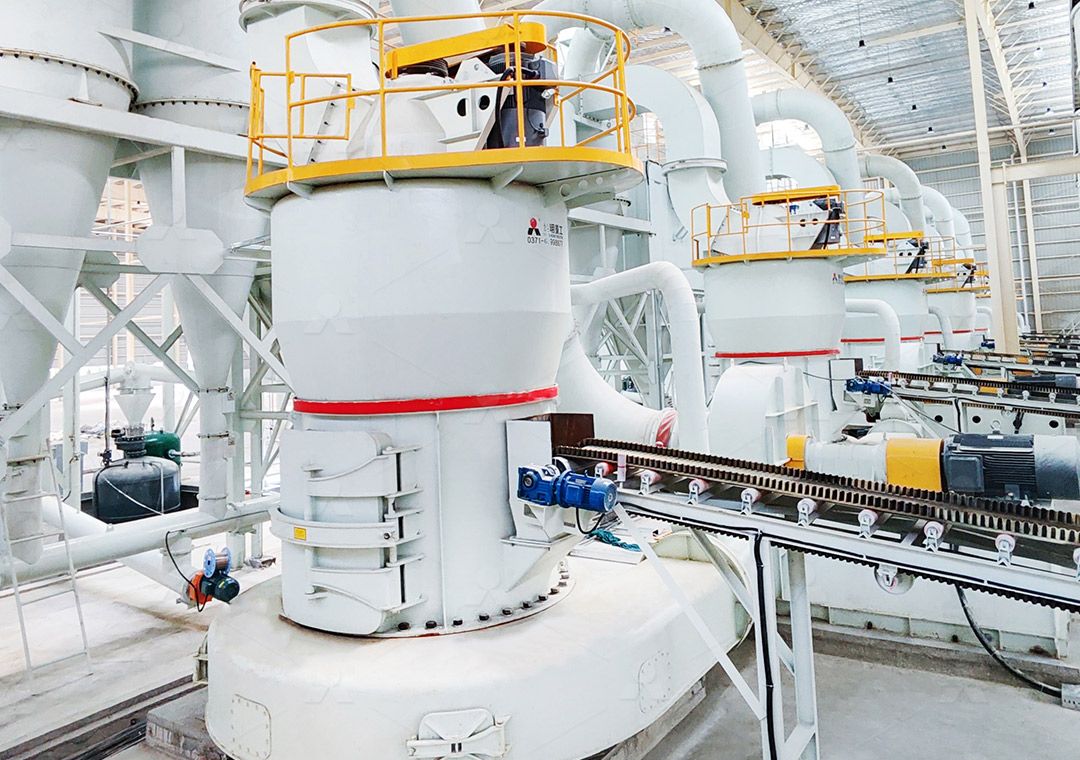
2. Vertical Roller Mills (LM & LUM Series)
Vertical Roller Mills (VRMs) represent a significant technological leap. They integrate drying, grinding, classification, and conveying in a single unit. The LM Vertical Grinding Mill is a robust solution for large-scale production, handling input sizes up to 70mm and capacities reaching 340 tph. It excels in processing feldspar for the ceramic tile and sanitaryware industries, offering excellent drying capacity and lower energy consumption compared to traditional ball mills.
For ultra-fine processing where product purity and high whiteness are paramount, the LUM Ultrafine Vertical Grinding Mill is a superior choice. It incorporates advanced grinding roller and powder separating technology. A key feature is its unique roller shell and lining plate curve, designed to generate a stable material layer for efficient single-pass grinding. This minimizes iron contamination and repeated grinding, directly enhancing the brightness and cleanliness of the final feldspar powder—a critical factor for high-end ceramics and specialty glass.
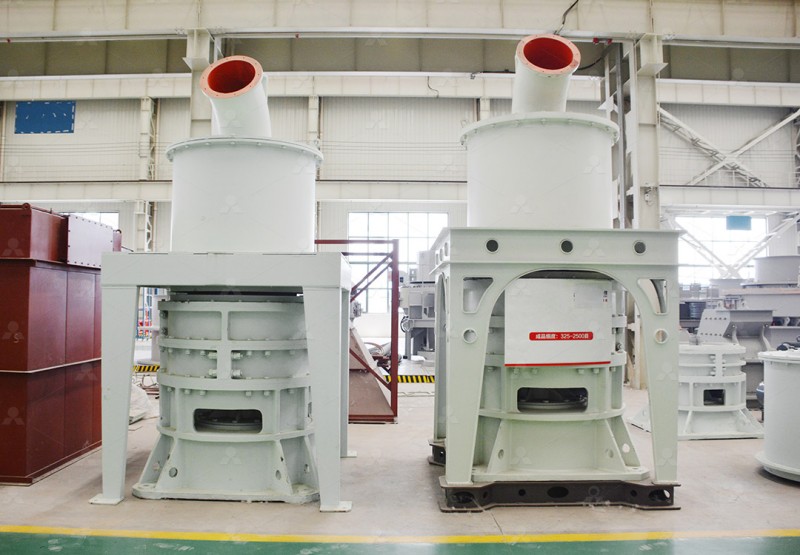
3. European Trapezium Mills (MTW & MTW-Z Series)
These mills evolved from the Raymond mill design but incorporate numerous European technological advancements. The MTW series, with its bevel gear overall drive and curved air duct, offers higher efficiency, finer output, and lower wear. The MTW-Z European Trapezium Mill introduces further innovations like a dilute oil lubrication system for the grinding rollers (reducing maintenance) and an elastic volute damping structure for smoother operation. These mills are highly versatile, capable of producing feldspar powder from coarse to fine grades (up to 425 mesh) with high throughput and stability, making them a popular choice for general industrial mineral processing plants.
4. Ultrafine Grinding Mills (MW Series)
When the application demands ultra-fine powders in the range of 325 to 2500 meshes, specialized ultrafine mills are required. Here, the MW Ultrafine Grinding Mill stands out. Engineered for customers needing to produce ultra-fine powder, it addresses the core challenges of fine grinding. Its cage-type powder selector, utilizing German technology, ensures precise particle separation, allowing adjustable fineness with a high screening rate (d97≤5μm). Notably, its grinding chamber is designed without rolling bearings or screws, eliminating common failure points and enabling worry-free, continuous 24-hour operation. Furthermore, it is equipped with an efficient pulse dust collector and muffler, making the entire production process environmentally friendly with minimal dust and noise pollution. This mill is ideal for producing high-value feldspar powders for advanced ceramics, cosmetics, and specialty chemical applications.

5. Ball Mills and Traditional Technologies
While ball mills are common and have lower investment costs, they are less energy-efficient for fine grinding feldspar compared to VRMs or trapezium mills. They may also lead to higher iron contamination due to media wear. Their use is now often limited to specific circuit configurations or where other considerations outweigh efficiency drawbacks.
Key Selection Criteria
Choosing the right mill involves balancing multiple factors:
- Required Fineness & Product Purity: Define your target particle size distribution (e.g., d97). For ultra-fine, high-whiteness products, prioritize mills like the MW or LUM series.
- Production Capacity: Match the mill’s throughput (tph) with your plant’s requirements, from small-scale (Raymond Mill) to massive (LM Vertical Mill).
- Energy Efficiency: Modern VRMs and trapezium mills can reduce energy consumption by 30-50% compared to older technologies.
- Moisture Content: If your raw feldspar is damp, select a mill with integrated drying capability like the LM or LUM Vertical Mills.
- Total Cost of Ownership: Consider not just the purchase price, but also installation footprint, maintenance ease, spare parts availability, and operating costs (power, wear parts).
- Environmental & Operational Standards: Ensure the mill system meets dust emission and noise control regulations. Fully sealed systems with pulse dust collectors, as seen in the MW and MTW mills, are essential for modern, clean operations.
Conclusion
There is no one-size-fits-all solution for feldspar grinding. The optimal mill depends on a precise understanding of the feedstock, desired product specifications, and plant operational goals. From the reliable Raymond mill for standard grades to the advanced LUM vertical mill for high-purity ultrafine powder and the specialized MW series for precise ultra-fine grinding, the modern market offers a tailored solution for every need. A thorough evaluation based on the criteria above will lead to a selection that ensures productivity, quality, and long-term profitability for your feldspar processing operation.
Frequently Asked Questions (FAQ)
1. What is the typical fineness range achievable for feldspar powder?
It varies by equipment. Raymond Mills can typically reach 80-325 mesh. European Trapezium Mills (MTW) can achieve up to 425 mesh. For ultra-fine powders, Vertical Roller Mills (LUM) and specialized Ultrafine Mills (MW) can produce powders from 325 to 2500 meshes, with the MW mill capable of a precise d97 ≤ 5μm.
2. How important is iron content control in feldspar grinding?
Extremely important, especially for ceramics and glass where color and transparency are critical. Mills that minimize metal-to-metal contact (like vertical mills with designed grinding curves) or avoid internal bearings/screws in the grinding chamber (like the MW Ultrafine Mill) significantly reduce iron contamination, preserving product whiteness.
3. Can one mill handle both grinding and drying of moist feldspar?
Yes. Vertical Roller Mills like the LM and LUM series are designed to integrate drying using hot air introduced into the mill body. This eliminates the need for a separate dryer, saving space and energy.
4. What are the main advantages of a vertical mill over a traditional ball mill for feldspar?
Key advantages include: 30-40% lower energy consumption, integrated drying, a smaller footprint (≈50% less area), shorter material retention time (reducing over-grinding), and better control over iron content and product fineness.
5. How is the fineness of the final powder controlled in these mills?
Fineness is primarily controlled by an internal dynamic classifier or powder separator. By adjusting the speed of the classifier rotor (often via the control system), the cut-point for particle size is changed. Mills like the MW series feature advanced cage-type selectors for very precise separation.
6. What maintenance features should I look for in a feldspar grinding mill?
Look for designs that facilitate easy access to wear parts. Features like the reversible structure in the LUM mill (allowing grinding rollers to be easily swung out), external lubrication systems (as in the MW mill), and the use of split-type wear parts can drastically reduce maintenance time and costs.