
Difference Between Hammer Mill and Impact Crusher: Which One Is Right For Your Application?
We provide a wide range of mills — including Raymond mill, trapezoidal mill, vertical mill, ultrafine mill, and ball mill, obtained ISO9001 international quality certification, EU CE certification, and Customs Union CU-TR certification. Suitable for processing minerals such as limestone, phosphate, quicklime, kaolin, talc, barite, bentonite, calcium carbonate, dolomite, coal, gypsum, clay, carbon black, slag, cement raw materials, cement clinker, and more.
The discharge range of these mills can be adjusted to meet specific processing needs, typically from 80-400 mesh, 600-3250 mesh, and can achieve the finest particle size of up to 6000 mesh(D50).
If you are looking for a reliable grinding solution to turn stone or minerals into fine powder, please feel free to contact our online customer service.
Understanding the Core Mechanisms: Impact vs. Hammer
When it comes to size reduction in mining, construction, and industrial processing, two of the most commonly confused pieces of equipment are the hammer mill and the impact crusher. While both utilize the principle of impact to break down materials, their design, operation, and ideal applications differ significantly. Choosing the wrong one can lead to inefficiency, higher operating costs, and subpar product quality.
Hammer Mill: The Pounding Force
A hammer mill is essentially a steel drum containing a vertical or horizontal rotating shaft or drum onto which hammers are mounted. The material is fed into the chamber and is repeatedly struck by these free-swinging hammers until it is reduced to a size small enough to pass through a screen or grate at the bottom. The size of the final product is determined primarily by the size of the screen openings.
Key Characteristics:
- Action: Shearing and impact; a pounding force.
- Control: Product size controlled by screen size.
- Best For: Friable, less abrasive materials like coal, limestone, gypsum, and biomass. They are excellent for creating a coarse to medium-fine grind.
- Wear: Higher wear on hammers and screens from abrasion; hammers need to be reversed or replaced regularly.
Impact Crusher: The Shattering Force
An impact crusher, on the other hand, uses massive rotors with blow bars or hammers that are fixed (rigidly attached) to the rotor. Material is fed into the crushing chamber, where it is struck by the blow bars and hurled against stationary impact plates (aprons or breaker plates). This process of being thrown into the plates creates a much higher intensity impact, shattering the material along its natural fissures and cleavage lines.
Key Characteristics:
- Action: High-velocity impact and shattering; a throwing force.
- Control: Product size controlled by rotor speed and the gap between the blow bars and impact plates.
- Best For: Harder, less abrasive materials where a more cubical product shape is desired (critical for concrete and asphalt aggregate). They are better at handling larger feed sizes.
- Wear: Wear is concentrated on the blow bars and breaker plates, but the fixed nature often allows for better utilization of the wear metal.
Choosing the Right Tool for the Job
| Factor | Hammer Mill | Impact Crusher |
|---|---|---|
| Primary Action | Pounding/Shearing | Shattering/Throwing |
| Ideal Material Hardness | Soft to Medium Hard | Medium to Hard |
| Product Shape | More Irregular, Flaky | More Cubical |
| Abrasion Wear | Higher (Screen & Hammer wear) | Lower (but focused on bars/plates) |
| Top Feed Size | Smaller | Larger |
When Your Needs Go Beyond Crushing: The Finishing Touch with Grinding
Often, the process doesn’t end with crushing. For many applications in chemical, paint, cosmetics, and advanced construction materials, you need an ultra-fine, consistent powder. This is where a specialized grinding mill outperforms both hammer mills and impact crushers.
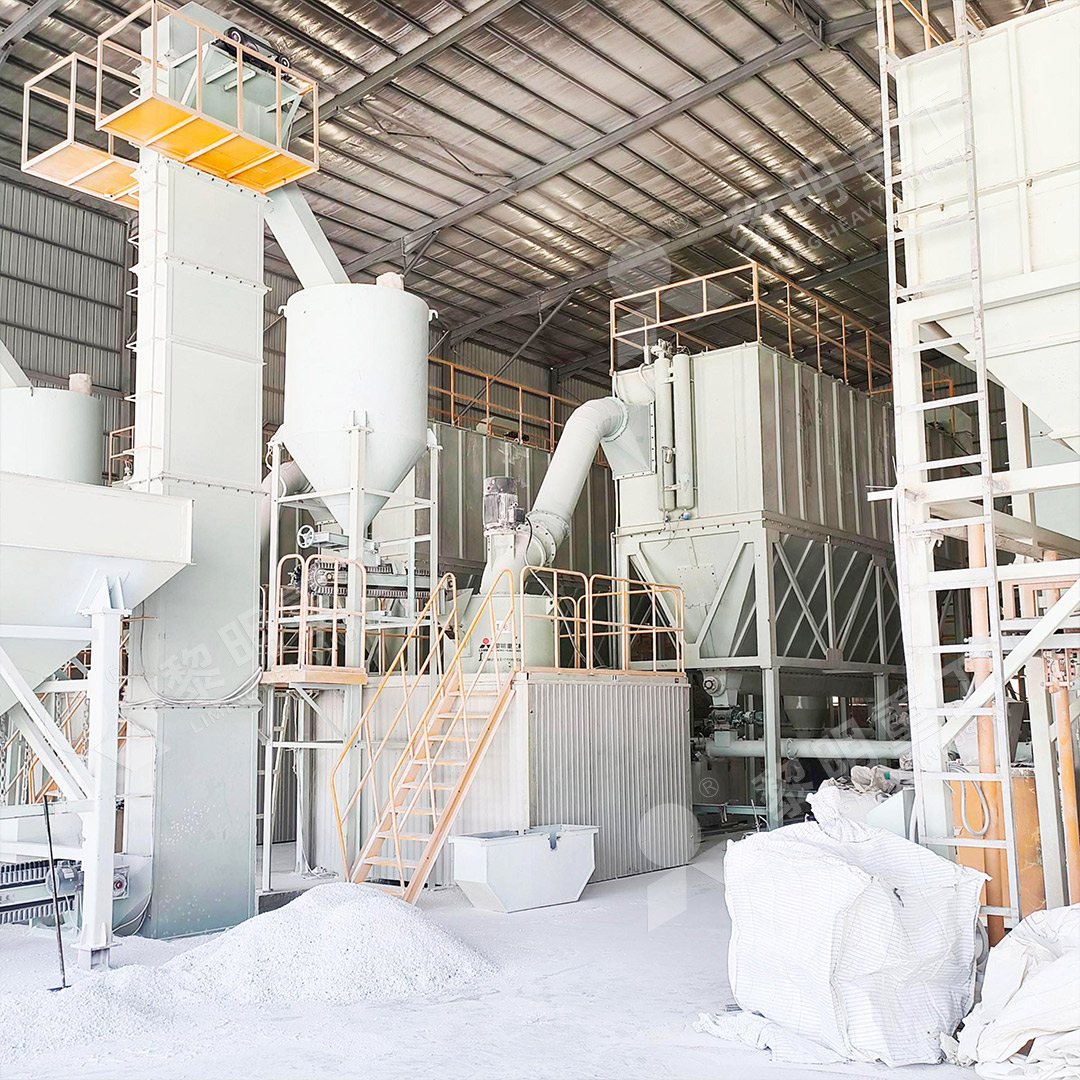
For customers who need to make ultra-fine powder from materials like limestone, calcite, dolomite, or talc (0-20mm feed size, 0.5-25 tph capacity), our MW Ultrafine Grinding Mill is the perfect solution. This machine is engineered for highest efficiency and evironmental compliance. It features higher yielding and lower energy consumption—using only 30% of the energy of a jet mill. Its cage-type powder selector allows you to precisely adjust fineness between 325-2500 meshes. A key design advantage is there are no rolling bearings or screws in the grinding chamber, eliminating common failure points and allowing for external lubrication without shutdown. Combined with its efficient pulse dust collector, it ensures a clean, dust-free operation that meets national environmental standards.
Conclusion
In summary, reach for a hammer mill for grinding softer, abrasive materials to a consistent medium-fine size. Choose an impact crusher for breaking harder, less abrasive rocks into a high-quality, cubical aggregate. And when your application demands a superior, ultra-fine powder, a specialized grinding mill like our MW Series is the right technological choice for productivity, efficiency, and operational reliability. Always consider your material characteristics and desired final product to make the optimal selection.