
Difference Between Ball Mills and Bead Mills in Industrial Grinding
We provide a wide range of mills — including Raymond mill, trapezoidal mill, vertical mill, ultrafine mill, and ball mill, obtained ISO9001 international quality certification, EU CE certification, and Customs Union CU-TR certification. Suitable for processing minerals such as limestone, phosphate, quicklime, kaolin, talc, barite, bentonite, calcium carbonate, dolomite, coal, gypsum, clay, carbon black, slag, cement raw materials, cement clinker, and more.
The discharge range of these mills can be adjusted to meet specific processing needs, typically from 80-400 mesh, 600-3250 mesh, and can achieve the finest particle size of up to 6000 mesh(D50).
If you are looking for a reliable grinding solution to turn stone or minerals into fine powder, please feel free to contact our online customer service.
Difference Between Ball Mills and Bead Mills in Industrial Grinding
In the world of industrial size reduction, selecting the right grinding equipment is paramount to achieving desired product fineness, efficiency, and operational economy. Two common types of mills often discussed are ball mills and bead mills. While they might seem similar to the uninitiated, their operating principles, applications, and performance characteristics are distinctly different. Understanding these differences is crucial for process engineers and plant managers to optimize their grinding circuits.
Fundamental Operating Principles
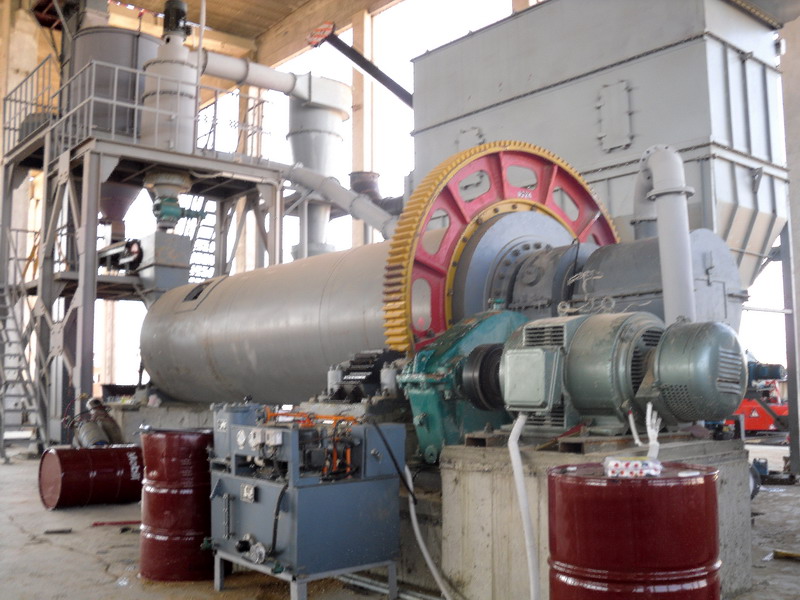
Ball Mills are characterized by their horizontal rotating cylinder (or shell) partially filled with grinding media, typically steel or ceramic balls. As the shell rotates, the balls are lifted and then cascade down, impacting the material and crushing it through a combination of impact and attrition forces. The size reduction is a result of the repeated collisions between the balls themselves and the balls against the shell’s lining.
Bead Mills, on the other hand, are a type of agitator mill. They operate on a different principle. They consist of a stationary grinding chamber filled with very fine grinding media (the “beads,” which can be glass, ceramic, or steel) and a central agitator shaft equipped with discs or pins. This agitator rotates at high speeds, transferring energy to the beads and creating intense shear forces and collisions within the chamber. The feed slurry is pumped through this agitated bead bed, and particles are ground primarily by shear and attrition between the beads.
Key Distinctions: A Comparative Look
| Feature | Ball Mill | Bead Mill |
|---|---|---|
| Grinding Mechanism | Impact & Attrition (Cascading motion) | Shear & Attrition (Agitated bead bed) |
| Grinding Media Size | Large (e.g., 12mm – 40mm balls) | Very Small (e.g., 0.1mm – 3mm beads) |
| Energy Efficiency | Lower for fine grinding | Higher for fine and ultrafine grinding |
| Ideal Product Fineness | Coarse to Medium (e.g., 45 – 250 microns) | Fine to Ultrafine (e.g., down to sub-micron levels) |
| Heat Generation | Generally lower | Can be significant, often requires cooling |
| Primary Applications | Ore processing, cement, coarse chemicals | Paints, inks, dyes, pharmaceuticals, nano-materials |
Choosing the Right Tool for the Job
The choice between a ball mill and a bead mill hinges entirely on the application. Ball mills excel at coarse grinding where high throughput and robust construction are needed. They are the workhorses of the mining and mineral processing industries. Bead mills are the specialists for ultrafine and nano-grinding in industries where product fineness and narrow particle size distribution are critical, such as in high-quality pigment production.
A Superior Alternative for Ultrafine Grinding
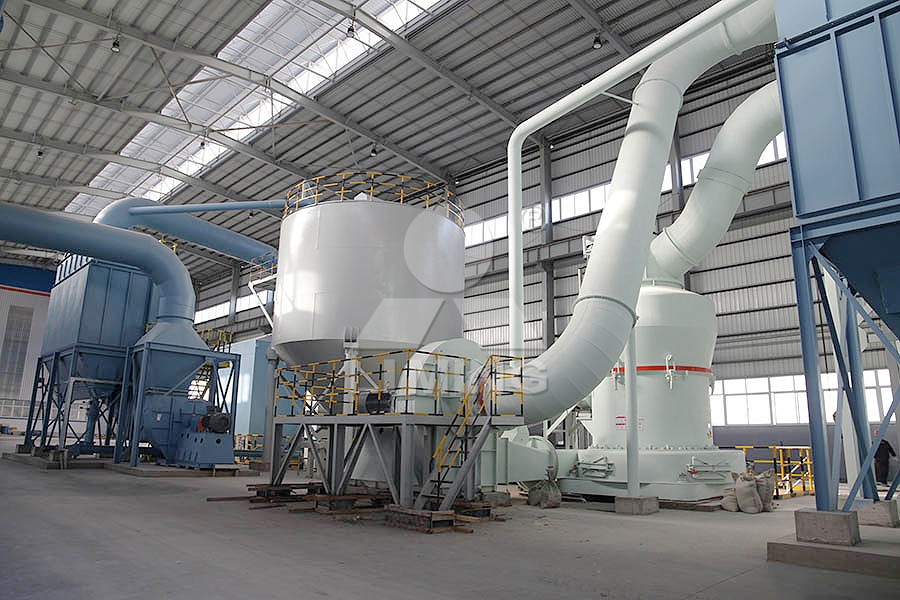
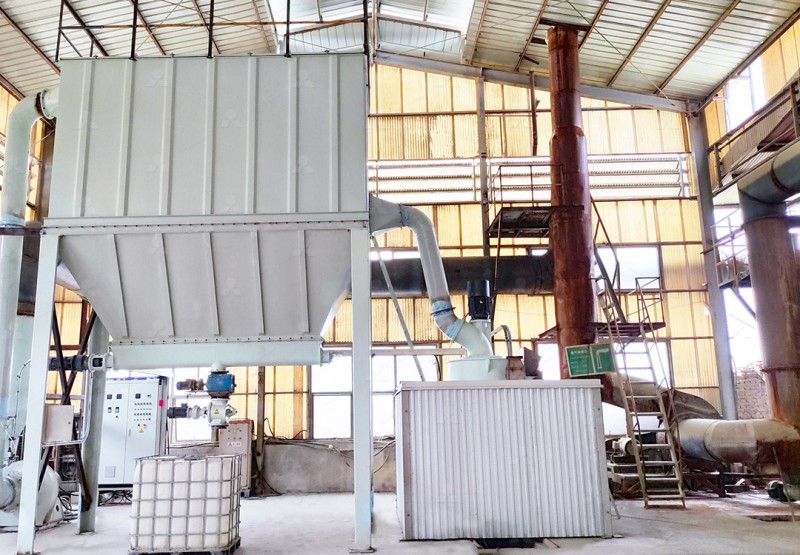
For operations that require a step beyond traditional milling technologies, our MW Ultrafine Grinding Mill presents an exceptional solution. This machine is expertly designed for customers who need to make ultra-fine powder efficiently and reliably.
Equipped with an efficient pulse dust collector and muffler, the MW Mill significantly reduces dust and noise, ensuring the entire production process has minimal effect on the environment. It boasts higher yielding and lower energy consumption; its newly designed grinding curves enhance efficiency so much that its production capacity is 40% higher than jet mills and twice as large as ball mills, while using only 30% of the energy of a jet mill.
A key feature is its ability to produce adjustable fineness between 325-2500 meshes thanks to a German-technology cage-type powder selector. Furthermore, its innovative design includes no rolling bearings or screws in the grinding chamber, eliminating worries about bearing damage or machine failure from loose screws. For operations demanding precision, eco-friendliness, and worry-free 24/7 operation, the MW Ultrafine Grinding Mill is an ideal choice for materials like limestone, calcite, talc, and cosmetics additives.
Conclusion
In summary, while ball mills are fantastic for heavy-duty, coarse grinding tasks, bead mills specialize in achieving ultrafine dispersions. The fundamental difference lies in their grinding action: cascading impact vs. agitated shear. For those seeking an advanced, high-efficiency solution specifically engineered for the ultrafine powder market, our MW Ultrafine Grinding Mill offers a compelling blend of performance, efficiency, and environmental consciousness, making it a superior investment for modern processing plants.