
Detailed Explanation of the Light Calcium Carbonate Powder Production Process
We provide a wide range of mills — including Raymond mill, trapezoidal mill, vertical mill, ultrafine mill, and ball mill, obtained ISO9001 international quality certification, EU CE certification, and Customs Union CU-TR certification. Suitable for processing minerals such as limestone, phosphate, quicklime, kaolin, talc, barite, bentonite, calcium carbonate, dolomite, coal, gypsum, clay, carbon black, slag, cement raw materials, cement clinker, and more.
The discharge range of these mills can be adjusted to meet specific processing needs, typically from 80-400 mesh, 600-3250 mesh, and can achieve the finest particle size of up to 6000 mesh(D50).
If you are looking for a reliable grinding solution to turn stone or minerals into fine powder, please feel free to contact our online customer service.
An Overview of Light Calcium Carbonate Production
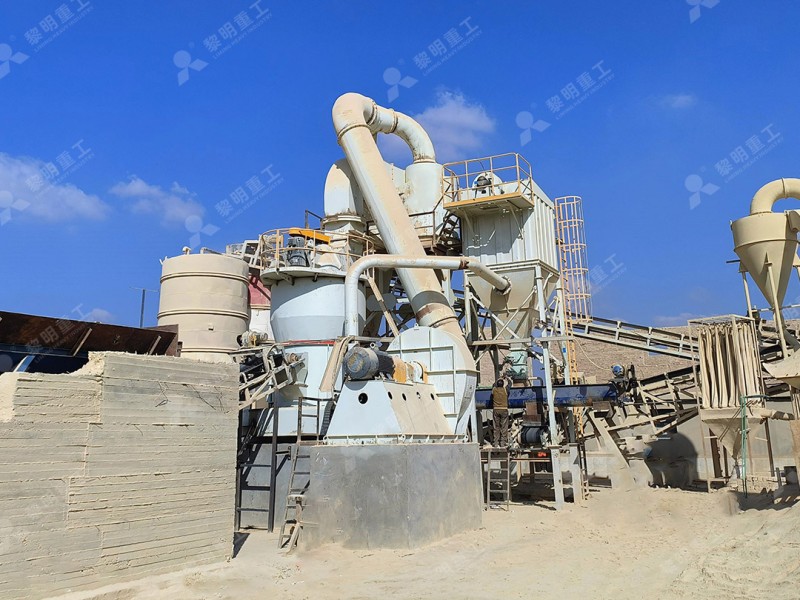
Light calcium carbonate (LCC), or precipitated calcium carbonate (PCC), is a high-value, ultra-fine white powder with extensive applications across industries like plastics, paints, rubber, paper, adhesives, and cosmetics. Unlike ground calcium carbonate (GCC), which is derived from mechanically crushing limestone, LCC is produced through a chemical synthesis process. This allows for precise control over its particle size, shape, and surface properties, resulting in a product with superior brightness, purity, and reinforcement capabilities. The core production journey involves calcination, slaking, carbonation, and a critical final stage: ultra-fine grinding and classification.
The Core Production Stages
1. Calcination
The process begins with high-calcium limestone (CaCO₃), which is fed into a rotary kiln and heated to approximately 900-1000°C. This thermal treatment decomposes the limestone into quicklime (calcium oxide, CaO) and carbon dioxide (CO₂) gas. The chemical reaction is: CaCO₃ (s) + heat → CaO (s) + CO₂ (g). The quality of the raw limestone is paramount, as impurities will carry through to the final product.
2. Slaking (Hydration)
The resulting quicklime is then carefully mixed with water in a process called slaking. This highly exothermic reaction produces a slurry of calcium hydroxide (Ca(OH)₂), known as milk of lime. The reaction is: CaO (s) + H₂O (l) → Ca(OH)₂ (aq) + heat. Precise control of water temperature and ratio is crucial to obtain a fine, uniform lime slurry, which is subsequently screened to remove any unburnt or over-burnt impurities.
3. Carbonation
The purified milk of lime slurry is pumped into a carbonation reactor. Here, pre-purified carbon dioxide gas (often recycled from the calcination stage) is bubbled through the slurry. The CO₂ reacts with the calcium hydroxide to re-form calcium carbonate crystals: Ca(OH)₂ (aq) + CO₂ (g) → CaCO₃ (s) + H₂O (l). This stage is meticulously controlled. Parameters like temperature, CO₂ concentration, and stirring speed dictate the ultimate crystal morphology (e.g., scalenohedral, rhombohedral, or prismatic) and particle size of the precipitated crystals.
4. Post-Processing: The Key to Fineness
The precipitated slurry from the carbonation tank undergoes several steps to become a saleable product:
- Filtration & Drying: The slurry is dewatered using filters or centrifuges to form a wet cake. This cake is then dried in spray dryers or rotary dryers to achieve a very low moisture content.
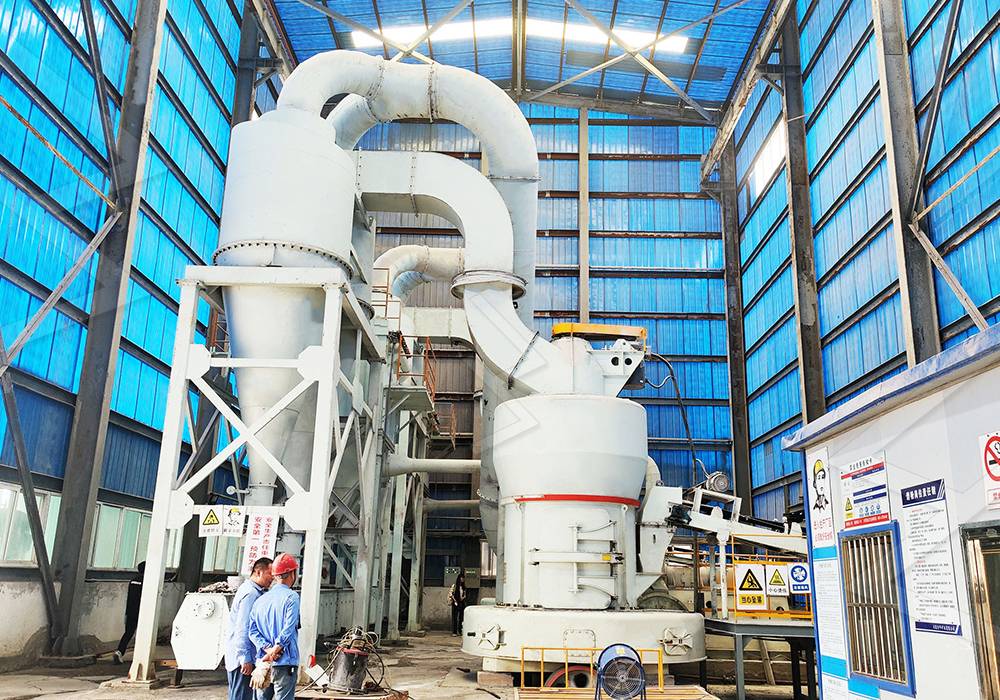
- Ultra-Fine Grinding & Classification: This is the most critical step for defining the final product’s performance. Even after precipitation, the dried powder often requires further size reduction to achieve the sub-micron or micron-level fineness demanded by high-end applications. This is where advanced grinding technology becomes indispensable.
The Importance of Advanced Grinding Technology
Standard milling equipment often lacks the precision to process light calcium carbonate without causing contamination or compromising its inherent brightness and crystal structure. An advanced grinding system must offer impeccable cleanliness, precise particle size control, high energy efficiency, and robust dust collection.
For producers seeking to achieve the finest grades of LCC with superior efficiency, we highly recommend our MW Ultrafine Grinding Mill. This mill is specifically engineered for customers who need to make ultra-fine powder. It excels in processing light calcium carbonate due to its unique features:
- Adjustable Fineness (325-2500 meshes): Its German-technology cage-type powder selector ensures precise classification, allowing you to produce d97≤5μm powder in a single pass.
- Higher Yielding, Lower Energy Consumption: Its innovative design offers 40% higher capacity than jet mills and uses 30% less energy, drastically reducing operating costs.
- Eco-Friendly & Worry-Free Operation: With an efficient pulse dust collector and muffler, the entire system operates cleanly. Its external lubrication system and lack of rolling bearings in the grinding chamber allow for 24/7 continuous operation with minimal maintenance.
For larger scale production requirements or slightly different material characteristics, our LUM Ultrafine Vertical Grinding Mill presents another excellent option. Integrating grinding and classifying, it features advanced roller technology and energy-saving multi-head powder separating technology for exceptional stability and product quality.
Final Steps: Packaging and Quality Control
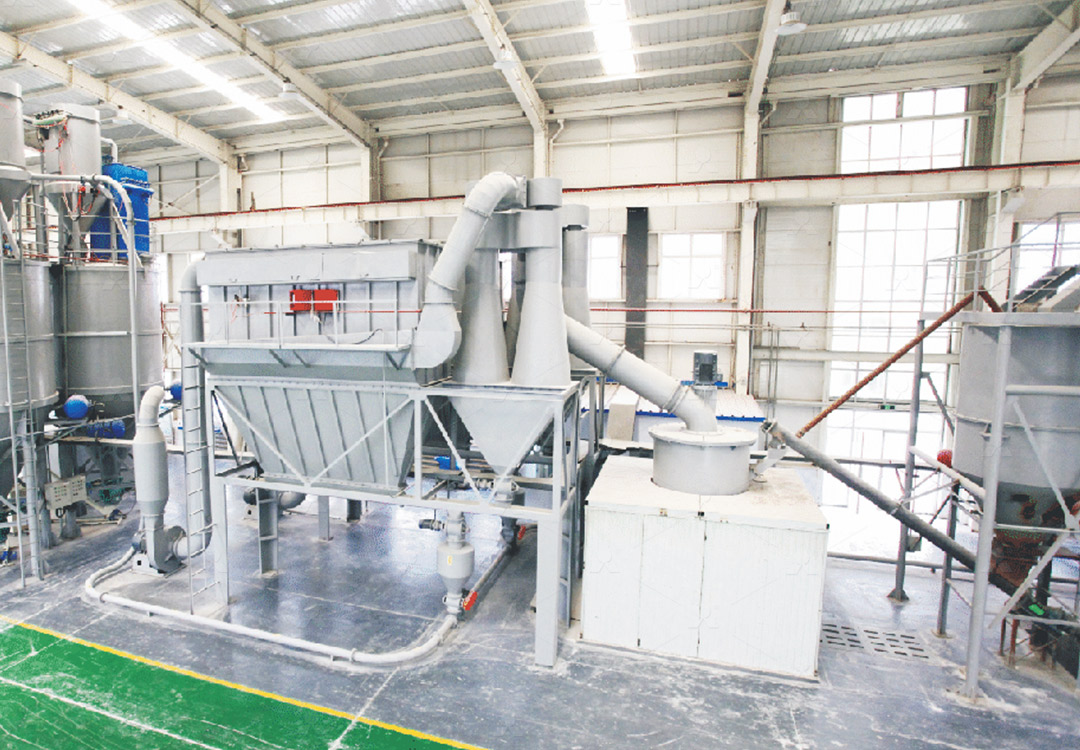
After grinding and classification, the ultra-fine light calcium carbonate powder may undergo surface modification (e.g., with stearic acid) to enhance its compatibility with polymer matrices. Finally, the product is automatically packaged in bags or bulk containers. Rigorous quality control checks at every stage ensure the final product meets specifications for brightness, particle size distribution, moisture content, and chemical purity.
Frequently Asked Questions (FAQ)
Q: What is the primary difference between GCC and PCC?
A: GCC is obtained by physically grinding and classifying natural limestone. PCC is synthetically produced through calcination, slaking, and carbonation. PCC typically offers higher purity, brighter color, and more controlled particle shapes.
Q: Why is ultra-fine grinding necessary after the carbonation process?
A: While carbonation creates fine particles, they often agglomerate during drying. Ultra-fine grinding breaks these agglomerates down to the primary crystal size and ensures a tight, consistent particle size distribution, which is critical for performance in applications like high-quality paints and plastics.
Q: What are the key factors when selecting a mill for LCC production?
A: Key factors include the target fineness range, required production capacity, energy consumption, contamination risk (the mill should not add iron or other impurities), noise levels, and the efficiency of the integrated dust collection system to protect both product yield and the environment.
Q: Can your MW Mill handle surface-modified calcium carbonate?
A: Yes, the MW Ultrafine Grinding Mill is designed to handle a wide range of non-metallic minerals, including those that have been surface-treated. Its efficient airflow and cooling properties are well-suited for such materials.