
Complete Pumice Powder Grinding Plant Machinery and Equipment
We provide a wide range of mills — including Raymond mill, trapezoidal mill, vertical mill, ultrafine mill, and ball mill, obtained ISO9001 international quality certification, EU CE certification, and Customs Union CU-TR certification. Suitable for processing minerals such as limestone, phosphate, quicklime, kaolin, talc, barite, bentonite, calcium carbonate, dolomite, coal, gypsum, clay, carbon black, slag, cement raw materials, cement clinker, and more.
The discharge range of these mills can be adjusted to meet specific processing needs, typically from 80-400 mesh, 600-3250 mesh, and can achieve the finest particle size of up to 6000 mesh(D50).
If you are looking for a reliable grinding solution to turn stone or minerals into fine powder, please feel free to contact our online customer service.
Complete Pumice Powder Grinding Plant Machinery and Equipment
Establishing a complete and efficient pumice powder grinding plant requires a holistic approach, integrating the right machinery from primary crushing to final powder collection. Pumice, a lightweight volcanic rock prized for its abrasive qualities and use in construction, cosmetics, and filtration, demands specialized processing to achieve the desired fineness and preserve its unique properties. This article outlines the core components and technological considerations for a successful operation.
Plant Configuration: From Raw Stone to Fine Powder
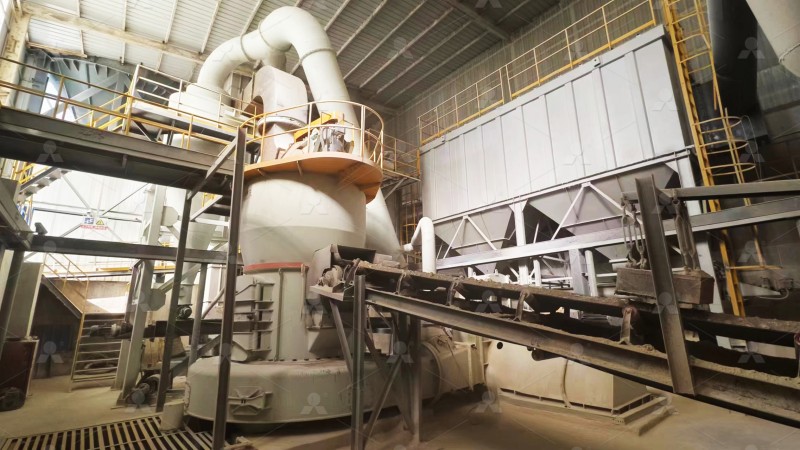
A typical pumice grinding line follows a logical, staged process. It begins with primary crushing, where jaw crushers reduce large pumice rocks to a manageable size, typically below 50mm. The crushed material is then conveyed to a storage hopper. A vibrating feeder under the hopper ensures a consistent and controlled feed rate into the core of the plant: the grinding mill. This is where the critical size reduction happens. The ground powder is pneumatically transported to a high-efficiency powder separator (classifier), which precisely cuts the particle size. Qualified fine powder proceeds to a cyclone collector and bag filter for product collection, while coarse powder is returned to the mill for further grinding. An integrated pulse-jet dust collector and silencer system are essential for environmental compliance and operator safety.
The Heart of the Plant: Selecting the Right Grinding Mill
The choice of grinding mill is paramount, dictating final product quality, output, and operational cost. For ultra-fine pumice powder (325-2500 mesh), traditional ball mills are often inefficient, with high energy consumption and potential for contamination. Modern vertical roller mills and advanced ring-roller mills offer superior solutions.
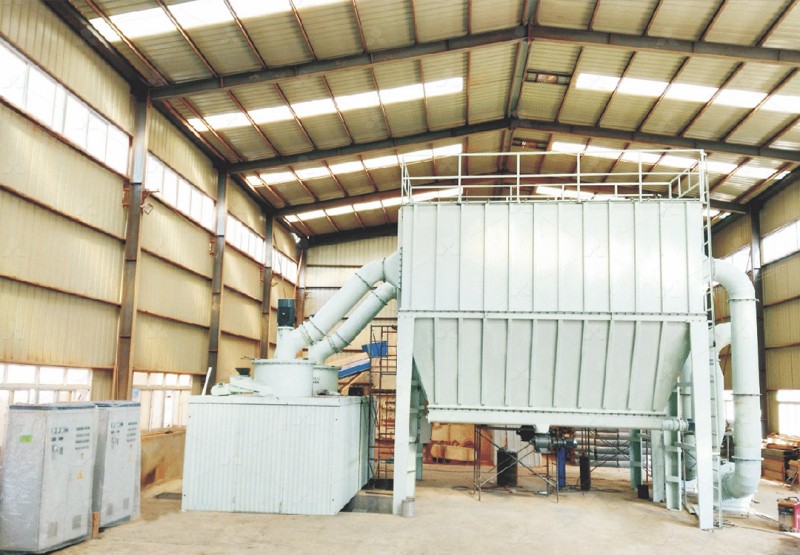
For projects demanding the highest fineness with exceptional energy efficiency, the MW Ultrafine Grinding Mill stands out. Engineered for ultra-fine powder production, it features a German-technology cage-type powder selector that allows precise fineness adjustment between 325 and 2500 meshes. Its innovative design eliminates rolling bearings and screws in the grinding chamber, drastically reducing maintenance worries and the risk of mechanical failure caused by loose parts. With a capacity range of 0.5 to 25 tph for materials fed at 0-20mm, it offers 40% higher yield than jet mills and uses only 30% of the energy. Furthermore, its integrated pulse dust collector and muffler ensure a clean, quiet, and environmentally friendly operation, making it an ideal centerpiece for a high-grade pumice processing plant.
Key Considerations for System Design
Beyond the main mill, several factors ensure smooth operation. The abrasiveness of pumice necessitates wear-resistant materials for grinding components. System sealing is critical to prevent dust leakage and maintain negative pressure. Automation, through PLC control systems, allows for precise regulation of grinding pressure, classifier speed, and feed rate, optimizing consistency and reducing manual intervention. A well-designed electrical control cabinet centralizes operations for safety and ease of monitoring. Finally, the entire plant layout should prioritize smooth material flow, easy access for maintenance, and compliance with local environmental and safety regulations regarding dust and noise.
Conclusion: A Partnership for Performance
Investing in a complete pumice powder plant is a significant decision. Success hinges on selecting machinery that balances high output, low operational costs, and long-term reliability. For operations focused on the premium ultra-fine powder market, technology like the MW Ultrafine Grinding Mill provides a clear advantage. Partnering with an experienced supplier who offers comprehensive technical support, genuine spare parts, and plant design expertise is crucial to ensure your grinding facility operates at peak performance from day one, delivering a consistent, high-quality product to meet market demands.
Frequently Asked Questions (FAQ)
1. What is the typical fineness range achievable for pumice powder?
With advanced mills like the MW series, pumice powder can be ground from coarse grades (e.g., 80 mesh) to ultra-fine grades exceeding 2500 mesh. The final fineness is adjustable based on the classifier settings and the specific application requirements.
2. How is dust controlled in a complete grinding plant?
Modern plants utilize a closed-circuit, negative-pressure system. Key components include airtight ducting, high-efficiency cyclone collectors, and pulse-jet baghouse filters. Equipment like the MW Mill comes with an integrated efficient pulse dust collector, ensuring no dust pollution during operation and full compliance with environmental standards.
3. What are the main advantages of a vertical roller mill over a traditional ball mill for pumice?
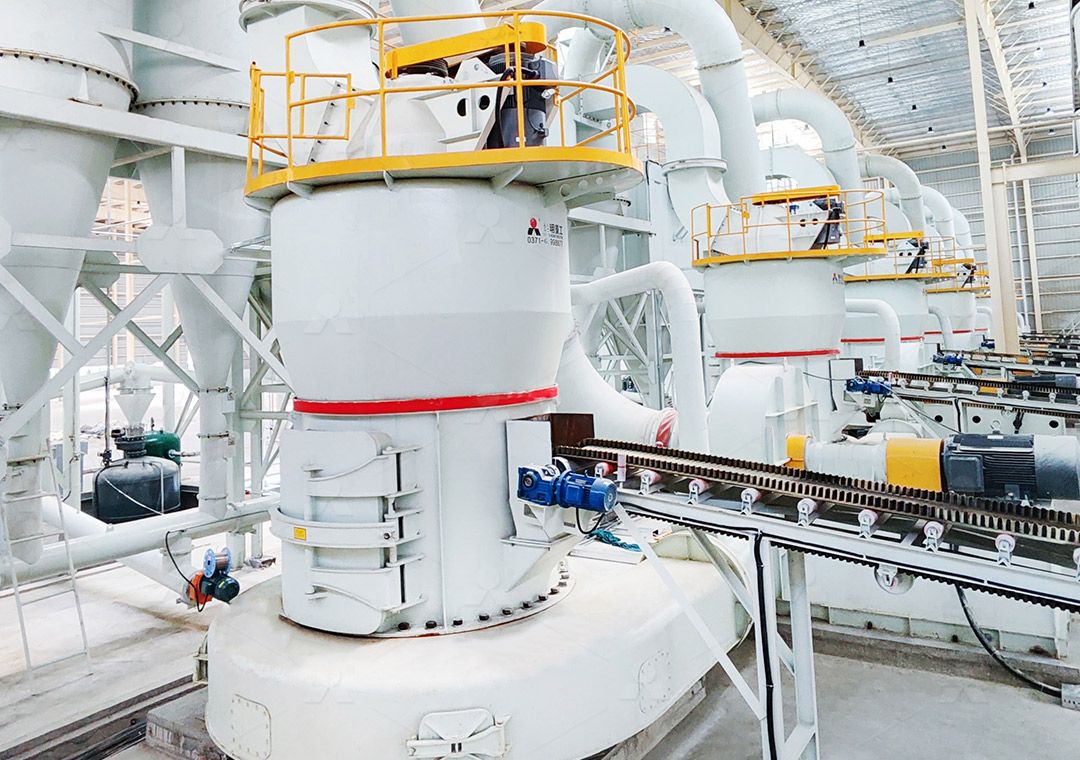
Vertical roller mills (VRMs) like the LUM series offer significantly higher energy efficiency (30-50% less power consumption), integrated drying capability, a smaller footprint, and lower wear rates. They also provide better control over particle size distribution and generate less noise.
4. Can the same plant process materials other than pumice?
Yes, versatile grinding mills are designed to handle a wide range of non-metallic minerals. For instance, the MW Ultrafine Grinding Mill is suitable for limestone, calcite, talc, barite, and similar materials, allowing for potential production flexibility.
5. What is the importance of the powder separator (classifier)?
The classifier is critical for determining the final product’s particle size. It separates fine, qualified powder from coarse particles that need regrinding. Advanced multi-head cage-type separators, as used in the MW Mill, provide high precision, efficient cutting, and the ability to quickly switch between different fineness requirements.
6. How is maintenance handled for the core grinding components?
Design innovations greatly simplify maintenance. For example, the MW Mill has no rolling bearings in its grinding chamber, eliminating a common failure point. The LUM Ultrafine Vertical Mill features a reversible roller structure, allowing grinding rollers to be easily swung out for inspection and liner replacement, minimizing downtime.