
Complete Magnesium Sulfate & Heavy Calcium Grinding Production Line Machinery
We provide a wide range of mills — including Raymond mill, trapezoidal mill, vertical mill, ultrafine mill, and ball mill, obtained ISO9001 international quality certification, EU CE certification, and Customs Union CU-TR certification. Suitable for processing minerals such as limestone, phosphate, quicklime, kaolin, talc, barite, bentonite, calcium carbonate, dolomite, coal, gypsum, clay, carbon black, slag, cement raw materials, cement clinker, and more.
The discharge range of these mills can be adjusted to meet specific processing needs, typically from 80-400 mesh, 600-3250 mesh, and can achieve the finest particle size of up to 6000 mesh(D50).
If you are looking for a reliable grinding solution to turn stone or minerals into fine powder, please feel free to contact our online customer service.
Complete Magnesium Sulfate & Heavy Calcium Grinding Production Line Machinery
Designing and implementing a high-performance grinding production line for specialized minerals like magnesium sulfate and heavy calcium carbonate demands a deep understanding of both material characteristics and advanced milling technology. These minerals, essential to industries ranging from agriculture and construction to pharmaceuticals and plastics, require precise particle size control, high purity, and consistent output. A complete production line is not merely a collection of machines; it is an integrated system where each component—from primary crushing to final powder collection—must operate in seamless harmony to achieve optimal efficiency, product quality, and environmental compliance.
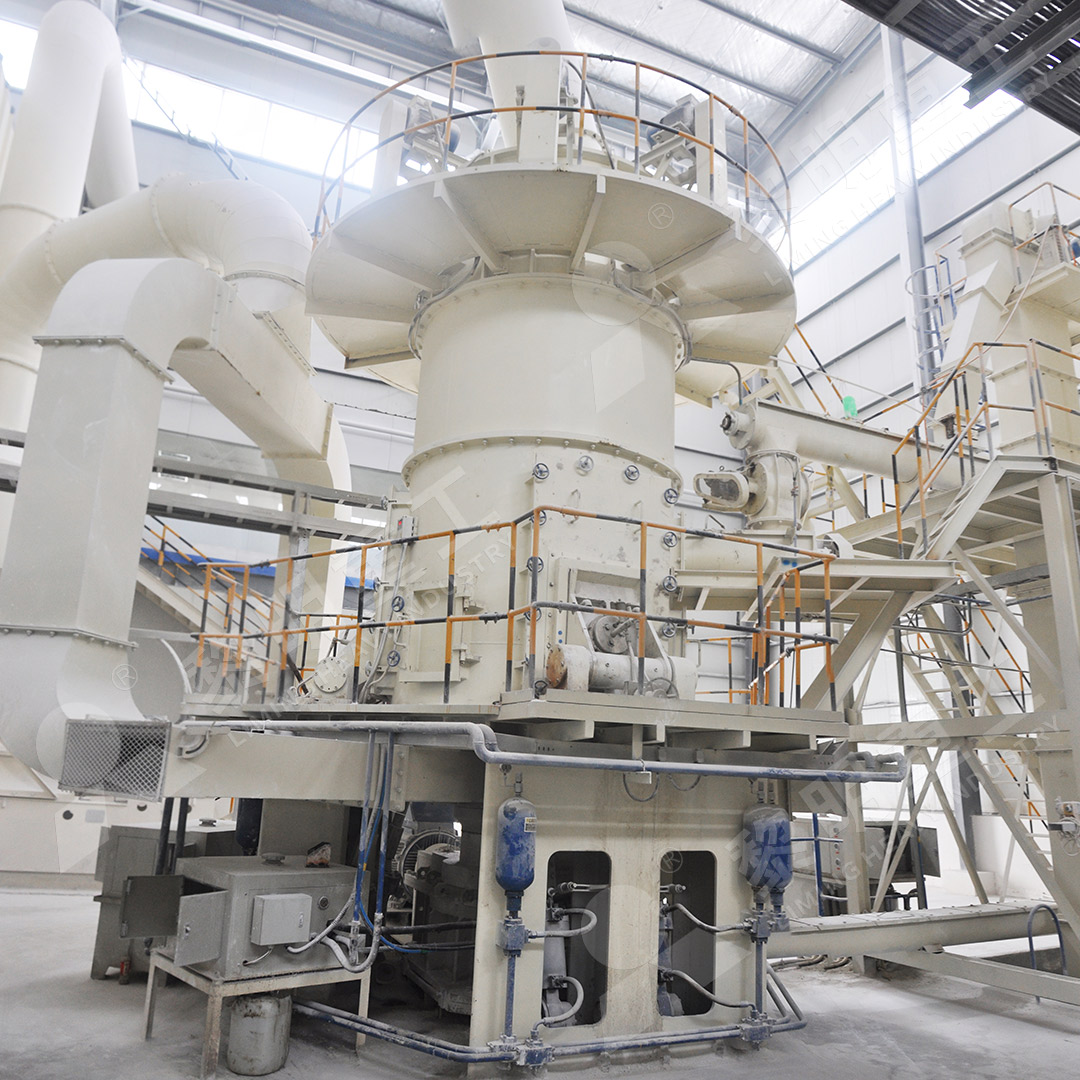
The journey begins with raw material preparation. Large lumps of magnesium sulfate or calcium carbonate are first reduced to a manageable size, typically below 20mm, using a jaw crusher. This pre-crushing stage is critical for ensuring consistent feed into the grinding mill, which directly impacts stability and throughput. The crushed material is then conveyed and elevated to a storage hopper, from which a vibrating feeder meters it steadily into the grinding mill’s inlet. This controlled feeding prevents mill overload and ensures a stable material bed for efficient grinding.
The Heart of the Process: Selecting the Right Grinding Mill
The core of any mineral processing line is the grinding mill. For ultra-fine powders of magnesium sulfate and heavy calcium, where fineness requirements can range from 325 to 2500 meshes, traditional ball mills often fall short in energy efficiency and precision. Modern vertical roller mills and advanced trapezium mills have become the industry standard, offering superior grinding efficiency, lower energy consumption, and excellent particle size distribution control.
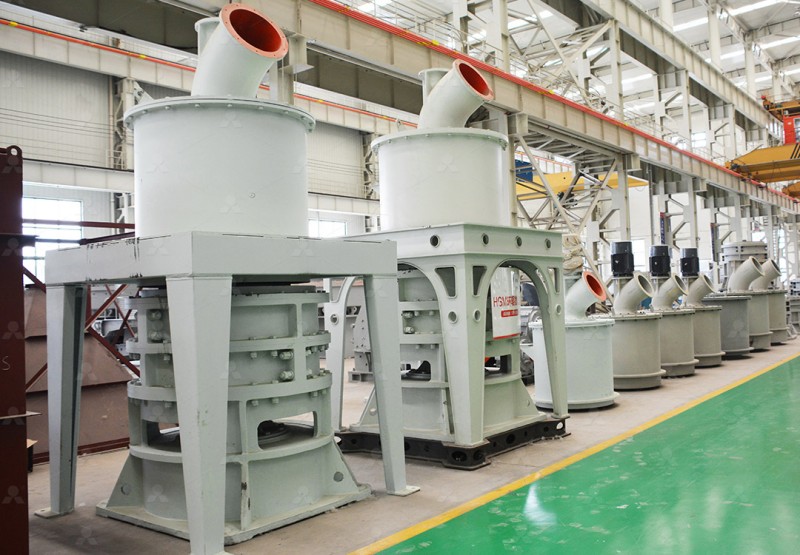
For projects demanding the highest levels of fineness and purity, the MW Ultrafine Grinding Mill presents an exceptional solution. Engineered for customers who need to make ultra-fine powder, this mill is a standout choice. It accepts a feed size of 0-20 mm and offers a capacity range of 0.5-25 tph, making it versatile for various production scales. Its newly designed grinding curves for the roller and ring enhance efficiency dramatically. Compared to jet mills or stirred mills, it can increase production capacity by up to 40% at the same power and fineness. A key feature is its German-technology cage-type powder selector, which allows precise fineness adjustment between 325-2500 meshes, achieving a remarkable d97≤5μm in a single pass. Furthermore, its innovative design eliminates rolling bearings and screws inside the grinding chamber, virtually eliminating failures related to these components and enabling worry-free, continuous 24/7 operation.
System Integration: Beyond the Mill
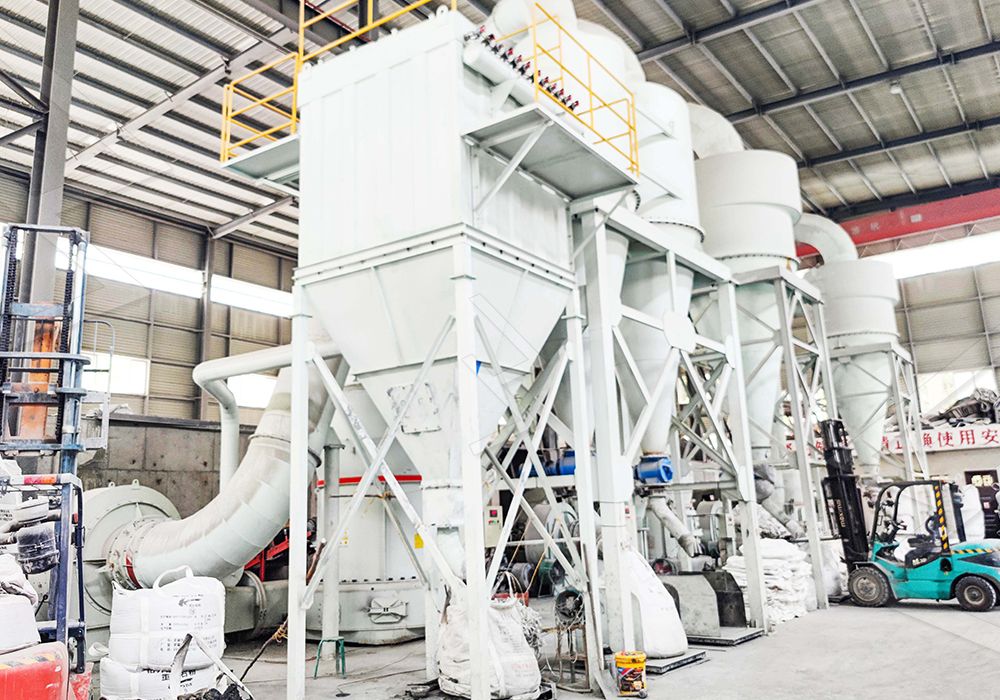
A mill alone does not make a production line. The ground material, carried by an air stream, enters a high-efficiency powder classifier or separator. This unit is responsible for the critical task of size classification. Oversized particles are rejected and returned to the mill for further grinding, while in-spec fine powder proceeds. The qualified powder is then separated from the air stream in a cyclone collector or bag filter, which acts as the final product receiver.
Environmental stewardship is non-negotiable in modern plant design. The entire milling system operates under negative pressure, ensuring no dust escapes at transfer points. An efficient pulse-jet baghouse dust collector, like the one integrated with the MW Mill, captures over 99.9% of particulate matter, making the operation clean and compliant with stringent international environmental standards. A silencer or an acoustic enclosure manages noise levels, protecting workers and the surrounding community.
Automation and Control for Consistent Quality
Modern grinding lines are governed by sophisticated Programmable Logic Controller (PLC) systems. These systems automate the entire process, monitoring and controlling parameters such as feed rate, grinding pressure, classifier speed, and temperature. This digital control ensures consistent product quality, optimizes energy use, and allows for easy adjustment of product specifications. Remote monitoring capabilities further enhance operational oversight and predictive maintenance scheduling.
Conclusion: A Partnership for Performance
Investing in a complete magnesium sulfate and heavy calcium grinding line is a significant decision. Success hinges on choosing machinery that delivers not just raw power, but precision, reliability, and efficiency. It requires a supplier with proven expertise in system engineering, from digitalized manufacturing of high-precision core parts to comprehensive after-sales support with genuine spare parts. By selecting integrated solutions like the MW Ultrafine Grinding Mill, producers can achieve higher yields with lower operational costs, produce superior quality powders, and operate a sustainable, future-proof facility that meets both market demands and environmental responsibilities.
Frequently Asked Questions (FAQ)
1. What is the typical fineness range achievable for heavy calcium carbonate in your grinding lines?
Our complete lines, particularly those centered on mills like the MW Ultrafine Grinding Mill, are designed to produce powders with adjustable fineness from 325 meshes (about 45 microns) up to 2500 meshes (approximately 5 microns). The precise cutting point is controlled by an advanced cage-type powder selector, ensuring a tight particle size distribution.
2. How do you manage dust pollution in the grinding process?
Dust control is integral to our system design. The entire milling circuit operates under negative pressure. We equip our lines, including the MW Mill, with high-efficiency pulse-jet bag filter dust collectors that capture over 99.9% of airborne particles. This ensures a clean workshop and emissions that far exceed national environmental protection standards.
3. What makes your mills more energy-efficient compared to traditional ball mills?
Our mills employ a bed-grinding principle rather than impact/attrition. Designs like the vertical roller mill and advanced trapezium mill use hydraulic-loaded rollers to compress and shear the material against a stationary table/ring. This method is inherently more efficient, reducing energy consumption by 30% to 50% compared to ball mills for the same output and fineness.
4. Can the production line handle both magnesium sulfate and heavy calcium, or is it dedicated?
The core grinding and classifying equipment is highly versatile and can process a wide range of non-metallic minerals with similar hardness and moisture characteristics. Switching between materials like magnesium sulfate and heavy calcium may require adjustments to classifier speed, grinding pressure, and possibly system cleaning, but the same line infrastructure can be used efficiently.
5. How is maintenance handled for critical components like grinding rollers?
Our mills are designed for easy maintenance. For instance, many models feature a reversible structure and hydraulic systems that allow the grinding roller to be swung out of the mill body easily. This provides ample space for inspection, replacement of wear parts like roller shells and liner plates, and other maintenance tasks, minimizing downtime and associated losses.
6. Do you provide support for spare parts and technical service?
Yes, absolutely. As a manufacturer covering both production and sales, we take full responsibility for every machine we produce. We maintain a sufficient supply of original spare parts and offer comprehensive technical services to ensure the worry-free, long-term operation of your complete production line.