
Complete Barite Grinding Plant Equipment for Powder Production
We provide a wide range of mills — including Raymond mill, trapezoidal mill, vertical mill, ultrafine mill, and ball mill, obtained ISO9001 international quality certification, EU CE certification, and Customs Union CU-TR certification. Suitable for processing minerals such as limestone, phosphate, quicklime, kaolin, talc, barite, bentonite, calcium carbonate, dolomite, coal, gypsum, clay, carbon black, slag, cement raw materials, cement clinker, and more.
The discharge range of these mills can be adjusted to meet specific processing needs, typically from 80-400 mesh, 600-3250 mesh, and can achieve the finest particle size of up to 6000 mesh(D50).
If you are looking for a reliable grinding solution to turn stone or minerals into fine powder, please feel free to contact our online customer service.
Complete Barite Grinding Plant Equipment for Powder Production
In the industrial minerals sector, barite stands out as a critical material, primarily valued for its high specific gravity and chemical inertness. Its primary application lies in the oil and gas industry as a weighting agent for drilling fluids. Beyond this, refined barite powders are essential in paints, plastics, rubber, and high-grade glass production. The transformation of raw barite ore into a consistent, high-purity powder demands a sophisticated grinding plant. A complete system is not merely about pulverization; it integrates crushing, drying, grinding, classification, and collection into a seamless, efficient, and environmentally responsible operation. The choice of core grinding technology dictates the plant’s productivity, energy profile, and final product quality, making equipment selection the paramount decision for any producer.
The Core of the Process: Selecting the Right Mill
The grinding mill is the heart of any barite processing plant. Traditional solutions like Raymond mills and ball mills have served the industry for decades, offering reliability for coarse to medium-fine applications. However, modern market demands for higher throughput, ultra-fine powders (exceeding 800 mesh), and stringent environmental controls have driven technological evolution. Today’s advanced mills are engineered for higher efficiency, lower energy consumption per ton, and superior particle size distribution control.
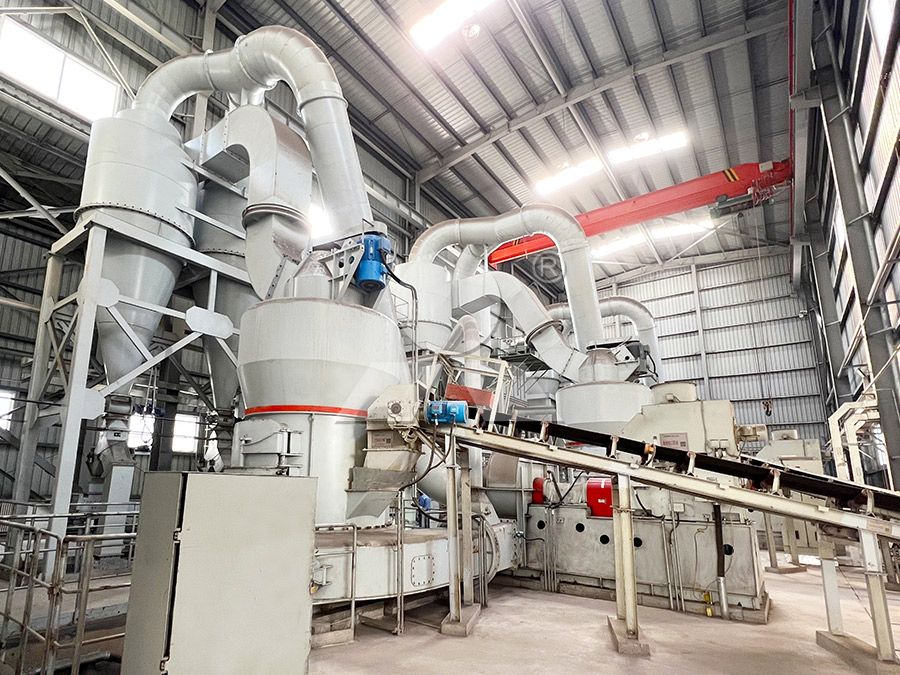
Key considerations when selecting a mill include the required product fineness range, desired capacity, moisture content of the feed material, and total cost of ownership, which encompasses energy use, wear part consumption, and maintenance downtime. A system that excels in producing coarse-grade drilling mud barite may be ill-suited for manufacturing fine fillers for paints, underscoring the need for tailored solutions.
Advanced Grinding Technologies for Superior Barite Powder
For producers targeting the high-value, ultra-fine barite powder market, advanced grinding systems offer transformative benefits. These mills move beyond simple crushing to employ mechanisms like bed compression grinding and precise air classification, resulting in powders with exceptional whiteness and purity due to minimal iron contamination.
An exemplary solution in this category is our MW Ultrafine Grinding Mill. Engineered for customers requiring ultra-fine powder between 325 and 2500 meshes, this mill represents a leap in efficiency. Its newly designed grinding curves for the roller and ring enhance grinding efficiency significantly. Compared to jet mills or stirred media mills, the MW series can achieve up to 40% higher capacity at the same fineness and power, while its system energy consumption is a remarkable 70% lower. A standout feature is its cage-type powder selector, which employs German technology for precise particle separation, achieving a screening rate of d97≤5μm in a single pass. Furthermore, its innovative design eliminates rolling bearings and screws within the grinding chamber, virtually eliminating failures related to these components and enabling external lubrication without shutdown for true 24/7 operation. Coupled with an efficient pulse dust collector and muffler, the entire production process meets stringent environmental standards.
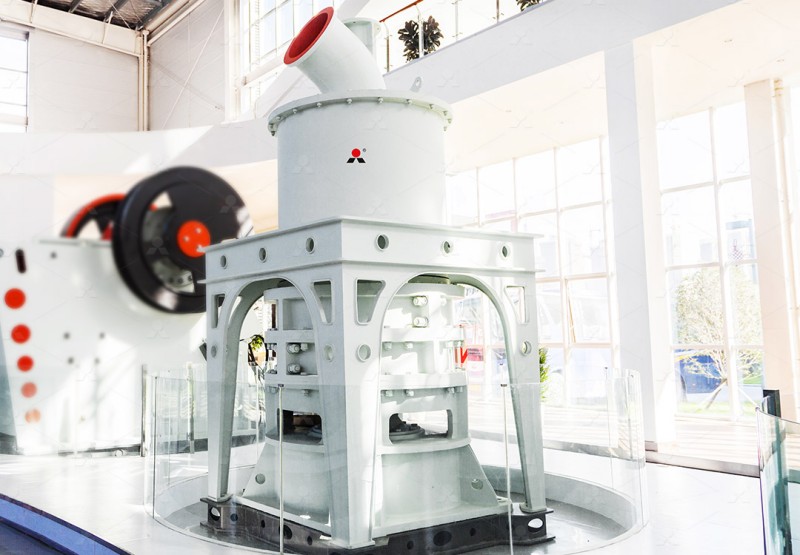
For operations requiring robust, large-scale vertical grinding, the LUM Ultrafine Vertical Grinding Mill is another premier choice. Integrating grinding, grading, and transporting, it is designed for high-yield, superior-quality powder production. Its unique roller shell and lining plate grinding curve promote stable material layer formation and high once-through powder milling rates. The mill incorporates PLC control and multi-head powder separating technology, allowing precise control over grinding parameters and reducing energy consumption by 30-50% compared to conventional mills. Its double position-limiting technology ensures operational stability by preventing destructive contact between rollers and the millstone during vibration events.
Beyond the Mill: The Complete Plant Ecosystem
A high-performance mill must be supported by a perfectly matched ecosystem of auxiliary equipment to realize its full potential. This begins with primary crushing and feeding systems that ensure a consistent, correctly sized feed to the mill. Drying systems are often integrated, especially if the raw barite has significant moisture content. The most critical auxiliary is the classification system—often a high-efficiency cyclone separator or a turbo air classifier—which continuously separates fine product from coarse material that requires regrinding.
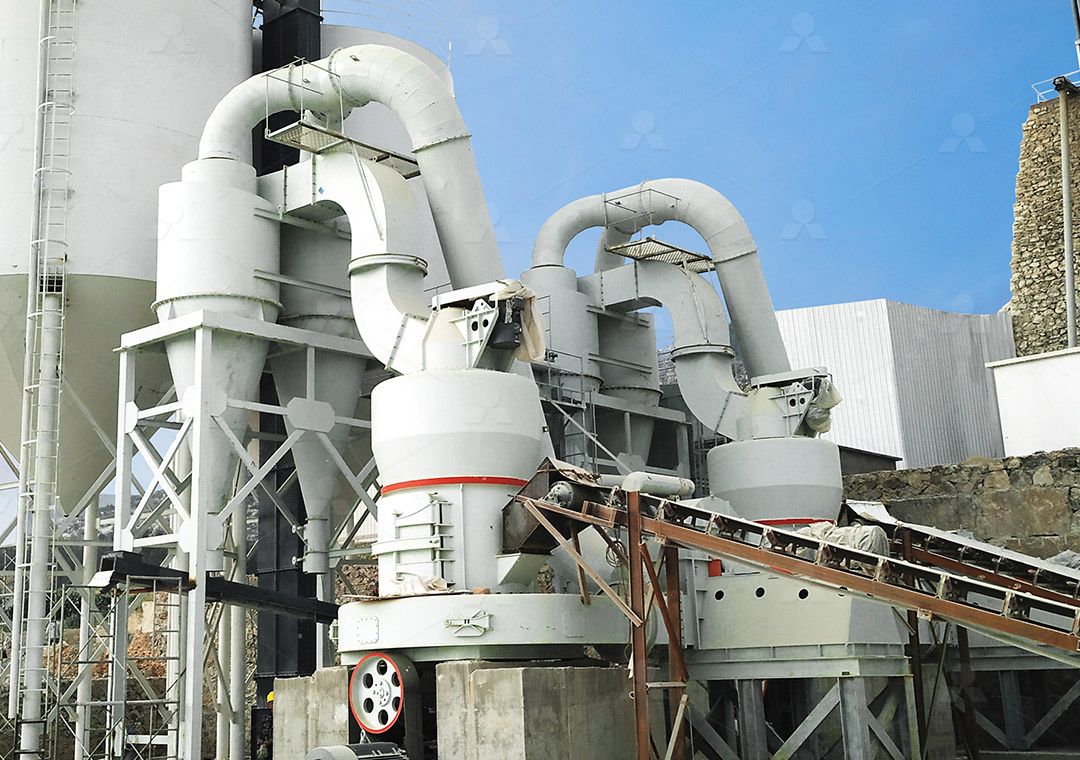
Equally important is the dust collection and material handling system. A complete plant employs pulse-jet baghouse filters to capture airborne particles, ensuring a clean working environment and maximizing product yield. All components are tied together by pneumatic or mechanical conveyors, silos, and automated packaging lines, controlled by a central PLC system for optimized, labor-efficient operation.
Ensuring Long-Term Performance and Sustainability
Investing in a complete grinding plant is a long-term commitment. Therefore, equipment durability, ease of maintenance, and manufacturer support are crucial. Look for mills with wear-resistant alloys in grinding components, accessible design for part inspection and replacement, and a reliable supply of original spare parts. Digitalized manufacturing processes ensure high precision in core parts, leading to better stability and longevity.
Modern plants are also designed with sustainability at their core. This goes beyond dust collection to include features like noise reduction cabins, energy-efficient motors and drives, and systems that operate under negative pressure to prevent any material spillage. The goal is a production facility that not only delivers exceptional product quality and economic return but also operates as a responsible neighbor within environmental and community guidelines.
Conclusion
Building a complete barite grinding plant is a complex engineering endeavor that balances technical specifications with economic and environmental imperatives. The evolution from traditional milling to advanced, integrated systems like the MW Ultrafine Grinding Mill or the LUM Ultrafine Vertical Mill offers producers a clear path to higher profitability, superior product quality, and sustainable operation. By focusing on a holistic system approach—selecting the right core technology and supporting it with optimized auxiliary equipment—producers can establish a competitive edge in the dynamic barite powder market.
Frequently Asked Questions (FAQ)
- What is the typical fineness range achievable for barite powder with your advanced mills?
Our MW Ultrafine Grinding Mill can precisely adjust product fineness between 325 and 2500 meshes, with the capability to achieve a final product where 97% of particles are 5 microns or smaller (d97≤5μm). The LUM Vertical Mill also offers excellent control for producing fine and ultra-fine barite powders. - How does your equipment manage dust and noise pollution?
Our grinding systems, like the MW series, are equipped with high-efficiency pulse jet dust collectors and integrated mufflers or noise reduction rooms. The entire milling system operates under negative pressure where applicable, ensuring no dust spillage and keeping noise levels well within environmental standards. - What are the main advantages of your mills over traditional ball mills for barite grinding?
The key advantages include significantly higher energy efficiency (30-50% less power consumption), higher capacity in a smaller footprint, superior product purity with lower iron contamination, and the ability to produce much finer powders consistently. Advanced designs also allow for easier maintenance and longer wear-part life. - Can your grinding plant handle wet or moist barite ore?
Yes, many of our mill designs, particularly the vertical roller mills like the LUM and LM series, integrate drying functionality. Hot air can be introduced into the grinding chamber to simultaneously dry and grind the material, eliminating the need for a separate drying step in many cases. - What kind of after-sales support and spare parts availability do you offer?
As a manufacturer covering both production and sales, we take full responsibility for our machines. We provide comprehensive technical services and guarantee the supply of original, high-quality spare parts to ensure worry-free, continuous operation of your plant. - How is the final product fineness controlled and adjusted during operation?
Fineness is primarily controlled by the integrated powder separator (classifier). In mills like the MW series, the cage-type powder selector’s speed can be adjusted via the control system, allowing real-time changes to the product’s particle size distribution without stopping production.