
Coal Pulverizer Standards and Specifications for Industrial Milling Systems
We provide a wide range of mills — including Raymond mill, trapezoidal mill, vertical mill, ultrafine mill, and ball mill, obtained ISO9001 international quality certification, EU CE certification, and Customs Union CU-TR certification. Suitable for processing minerals such as limestone, phosphate, quicklime, kaolin, talc, barite, bentonite, calcium carbonate, dolomite, coal, gypsum, clay, carbon black, slag, cement raw materials, cement clinker, and more.
The discharge range of these mills can be adjusted to meet specific processing needs, typically from 80-400 mesh, 600-3250 mesh, and can achieve the finest particle size of up to 6000 mesh(D50).
If you are looking for a reliable grinding solution to turn stone or minerals into fine powder, please feel free to contact our online customer service.
Coal Pulverizer Standards and Specifications for Industrial Milling Systems
The industrial landscape demands coal pulverization systems that are not only efficient and productive but also adhere to stringent operational, environmental, and safety standards. Selecting the right equipment requires a deep understanding of both the fundamental specifications and the advanced features that define modern, high-performance milling. This article outlines the key standards and considerations for coal pulverizers, providing a framework for evaluating systems that deliver reliability, precision, and sustainability.
Core Performance Specifications: Capacity and Input Size
At the heart of any pulverizer selection are the basic operational parameters: feed size and throughput capacity. The maximum input size determines the necessary pre-crushing stage, while the capacity (typically measured in tons per hour, tph) must align with the plant’s production goals. Systems must be designed to handle the specified feed consistently without clogging or excessive wear. Modern mills offer a range, for instance, from fine-grind applications accepting 0-10mm feed to heavy-duty units processing up to 70mm material, with capacities scaling from a few tph to several hundred tph to suit diverse industrial scales.
The Imperative of Grinding Efficiency and Energy Consumption
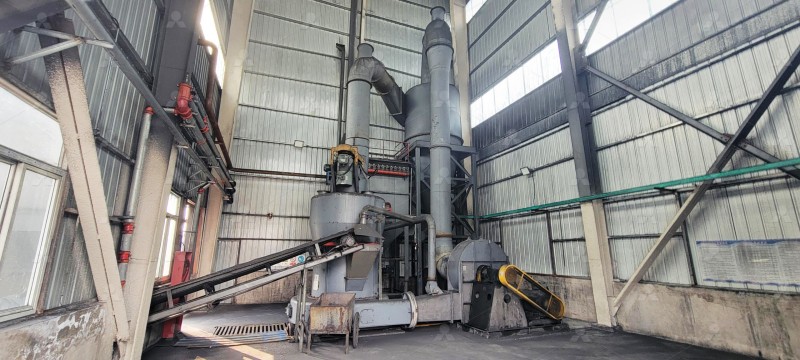
Energy efficiency is a non-negotiable standard in today’s cost-conscious and environmentally regulated environment. The grinding mechanism is paramount. Traditional ball mills, while robust, are often energy-intensive. The industry standard is shifting towards vertical roller mill (VRM) technology and advanced trapezium mills, which utilize centrifugal force and roller-to-bed grinding to achieve superior efficiency. Leading systems now integrate optimized grinding curves for rollers and rings, which can increase yield by over 40% while reducing system energy consumption by 30-50% compared to older jet or ball mill designs. This directly impacts the bottom line through lower operational costs.
Precision in Particle Size Control and Product Fineness
Consistent product fineness is critical for combustion efficiency in power generation or process consistency in other industries. The standard measure is mesh size (e.g., 325-2500 meshes). The key to achieving this lies in the powder separation or classifying technology. Advanced systems employ multi-head cage-type powder selectors or dynamic separators with PLC control. These allow for precise, adjustable cuts in particle size distribution and enable a high screening rate (e.g., d97 ≤ 5μm in a single pass). The ability to digitally control separator speed and grinding pressure ensures repeatable product quality, meeting the strictest material specifications.
Operational Reliability and Advanced Mechanical Design
Downtime is the enemy of productivity. Therefore, reliability standards encompass mechanical design innovations that extend service life and simplify maintenance. Key features include:
- Dilute Oil or Automatic Thin-Oil Lubrication: Replaces frequent manual greasing, offering maintenance-free operation and better protection for grinding rollers.
- No-Bearing/Screw Grinding Chambers: Some advanced designs eliminate rolling bearings and screws inside the chamber entirely, preventing catastrophic failures from bearing seizure or loose components.
- Reversible/Hydraulic Roller Systems: Allows grinding rollers to be easily swung out of the mill body for inspection or liner replacement, drastically reducing maintenance time and shutdown losses.
- Double Limiting Technologies: Electronic and mechanical safeguards prevent grinding rollers from direct metal-to-metal contact with the millstone during start-up or vibration, ensuring operational stability.
Environmental Compliance and System Integration
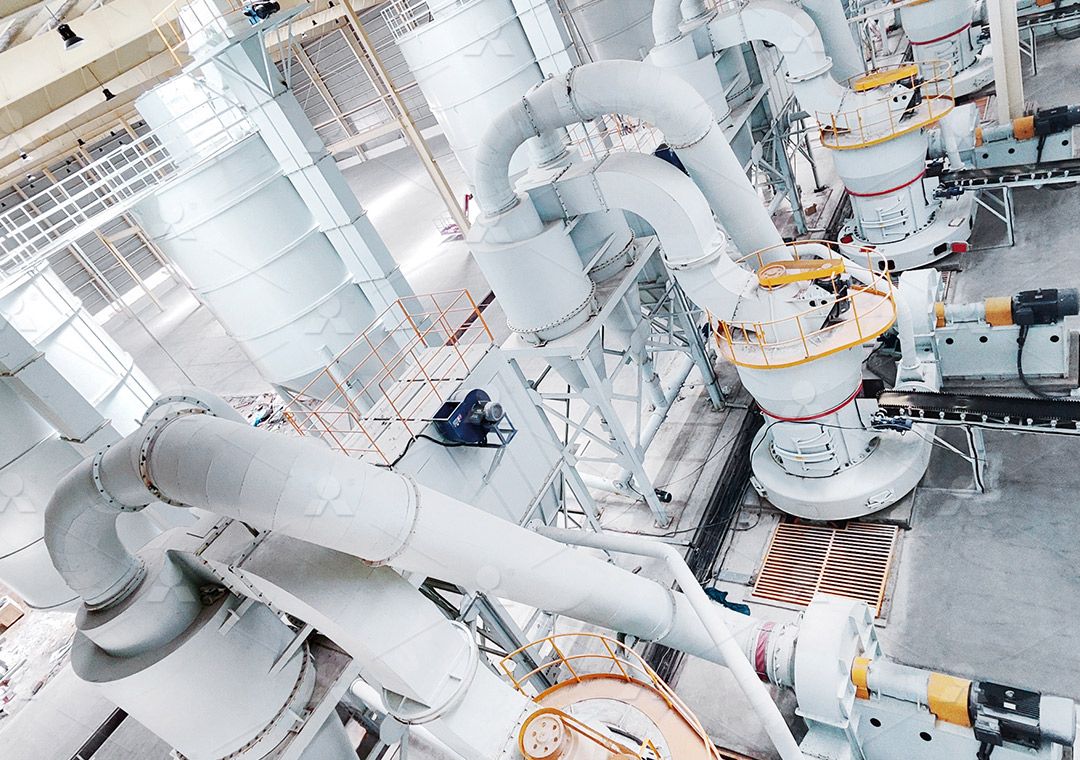
Modern pulverizer standards mandate environmental stewardship. A compliant system operates under negative pressure with a fully sealed pipeline to prevent dust spillage. Integration of high-efficiency pulse jet baghouse dust collectors is now standard practice, ensuring emissions are far below national and international standards. Furthermore, systems are equipped with silencers and soundproofing rooms to mitigate noise pollution. The holistic design from feeding to collection must adhere to green manufacturing principles, making environmental compatibility a core specification, not an afterthought.
Digitalization and Smart Control Systems
The new frontier in milling standards is digital integration. Precision manufacturing via CNC machine tools ensures high tolerances for core components. Operationally, PLC-based control systems allow for centralized monitoring and adjustment of grinding pressure, roller speed, feeder rate, and classifier parameters. This enables expert-level automatic control, remote operation, and data logging for process optimization, paving the way for Industry 4.0 integration in mineral processing plants.
Spotlight on Advanced Solutions: The MW and LUM Series
For operations requiring ultra-fine coal powder with exceptional efficiency, the MW Ultrafine Grinding Mill represents a pinnacle of design. It handles feed up to 20mm with a capacity of 0.5-25 tph, producing powder adjustable between 325-2500 meshes. Its standout feature is the grinding chamber with no rolling bearings or screws, virtually eliminating related failure modes. Coupled with its German-technology cage-type powder selector and efficient pulse dust collector, the MW series delivers high yield, low energy consumption, and worry-free, eco-friendly operation for specialized fine-powder applications.
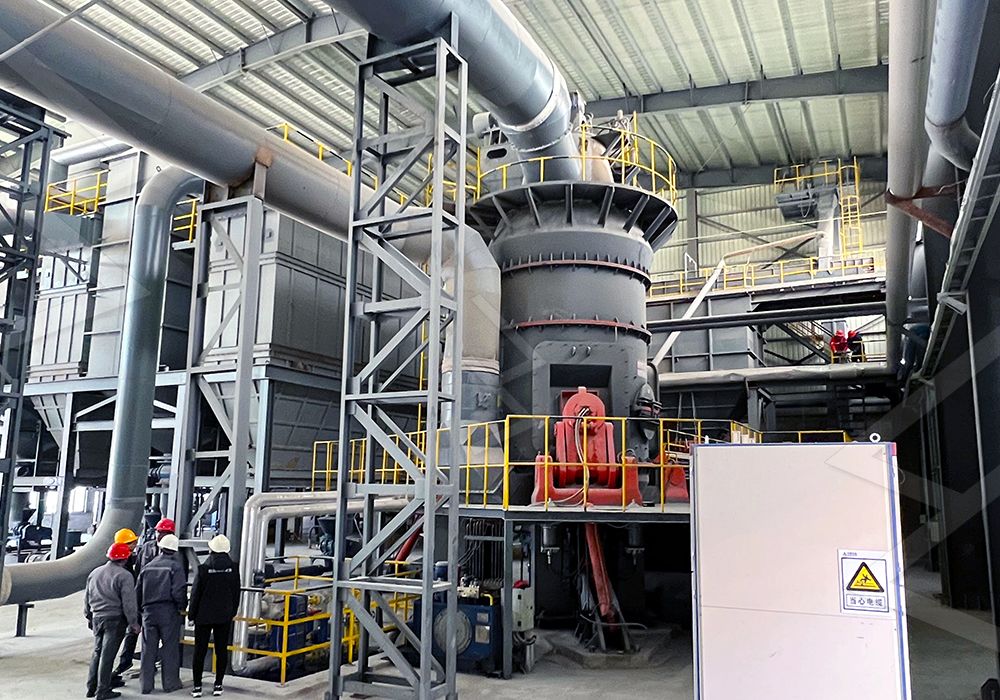
For high-capacity, precision vertical grinding, the LUM Ultrafine Vertical Grinding Mill is engineered for excellence. With an input size of 0-10mm and capacity of 5-18 tph, it integrates the latest grinding roller and powder separating technologies. Its unique roller shell design promotes stable material bed formation for higher single-pass yield and better product whiteness. The mill’s reversible roller structure, facilitated by a hydraulic system, makes maintenance remarkably straightforward, while its double position-limiting technology guarantees unmatched operational stability in demanding 24/7 environments.
Conclusion
Selecting a coal pulverizer is a strategic decision that hinges on a comprehensive set of standards—from raw capacity and energy metrics to precision, reliability, and environmental compliance. The evolution from simple crushing to intelligent, integrated milling systems demands partners who offer not just equipment, but proven technological advancements. By prioritizing specifications that encompass lifecycle cost, product quality, and sustainable operation, industries can build milling processes that are robust, efficient, and future-ready.
Frequently Asked Questions (FAQ)
1. What is the primary advantage of a vertical roller mill (VRM) over a traditional ball mill for coal grinding?
VRMs offer significantly higher energy efficiency, often reducing power consumption by 30-50%. They integrate drying, grinding, and classification in a single compact unit, have a smaller footprint, and provide quicker product fineness adjustment due to external dynamic classifiers.
2. How important is the powder separator/classifier in a modern coal pulverizer?
It is critical. The classifier determines the final product fineness and particle size distribution. Advanced multi-head cage-type or dynamic separators allow for precise, stepless adjustment of the cut point, ensuring consistent product quality and high screening efficiency, which directly impacts downstream process performance.
3. What features should I look for to minimize maintenance downtime?
Key features include: hydraulic or reversible roller systems for easy wear-part access, automatic lubrication systems (dilute oil), designs that eliminate internal bearings in the grinding zone, and the availability of original spare parts and technical support from the manufacturer.
4. Can these milling systems handle wet or high-moisture coal?
Yes, many modern vertical mills and some advanced trapezium mills are designed with integrated hot air ducts. They can simultaneously dry and grind material, handling feed moisture effectively by using hot gas from a separate generator or waste heat from other plant processes.
5. What environmental standards do these pulverizers typically meet?
Top-tier systems are designed to operate under full negative pressure with sealed pipelines. They are equipped with high-efficiency pulse jet bag filters, ensuring dust emissions are typically below 20 mg/Nm³. Noise is controlled through mill design, silencers, and soundproofing enclosures to meet occupational health standards.
6. How does digital control improve pulverizer operation?
PLC-based control systems enable stable, automated operation by constantly monitoring and adjusting key parameters like grinding pressure, feeder speed, and classifier rotor speed. This ensures optimal performance, consistent product quality, remote monitoring capability, and provides valuable data for predictive maintenance and process optimization.