
Coal Mill in Cement Plant | Vertical Roller Mill & Air-Swept Ball Mill
We provide a wide range of mills — including Raymond mill, trapezoidal mill, vertical mill, ultrafine mill, and ball mill, obtained ISO9001 international quality certification, EU CE certification, and Customs Union CU-TR certification. Suitable for processing minerals such as limestone, phosphate, quicklime, kaolin, talc, barite, bentonite, calcium carbonate, dolomite, coal, gypsum, clay, carbon black, slag, cement raw materials, cement clinker, and more.
The discharge range of these mills can be adjusted to meet specific processing needs, typically from 80-400 mesh, 600-3250 mesh, and can achieve the finest particle size of up to 6000 mesh(D50).
If you are looking for a reliable grinding solution to turn stone or minerals into fine powder, please feel free to contact our online customer service.
Coal Mill in Cement Plant: Powering Efficient Production
The heart of any cement production line lies in its pyroprocessing system, and the coal mill is its indispensable fuel provider. Responsible for grinding the raw coal into a fine powder, the coal mill ensures the consistent and efficient combustion necessary to achieve the extreme temperatures within the kiln. Selecting the right grinding technology is paramount for optimizing fuel consumption, reducing operational costs, and minimizing the plant’s environmental footprint. The two predominant technologies in modern cement plants are the Vertical Roller Mill (VRM) and the Air-Swept Ball Mill, each with distinct advantages.
Vertical Roller Mill: The Modern Standard
Vertical Roller Mills have become the industry standard for coal grinding applications due to their superior energy efficiency and compact design. A VRM utilizes a rotating table and hydraulically-loaded rollers to crush and grind the coal. The ground material is simultaneously dried by hot gases introduced into the mill, and the fine powder is air-swept to a classifier for separation.
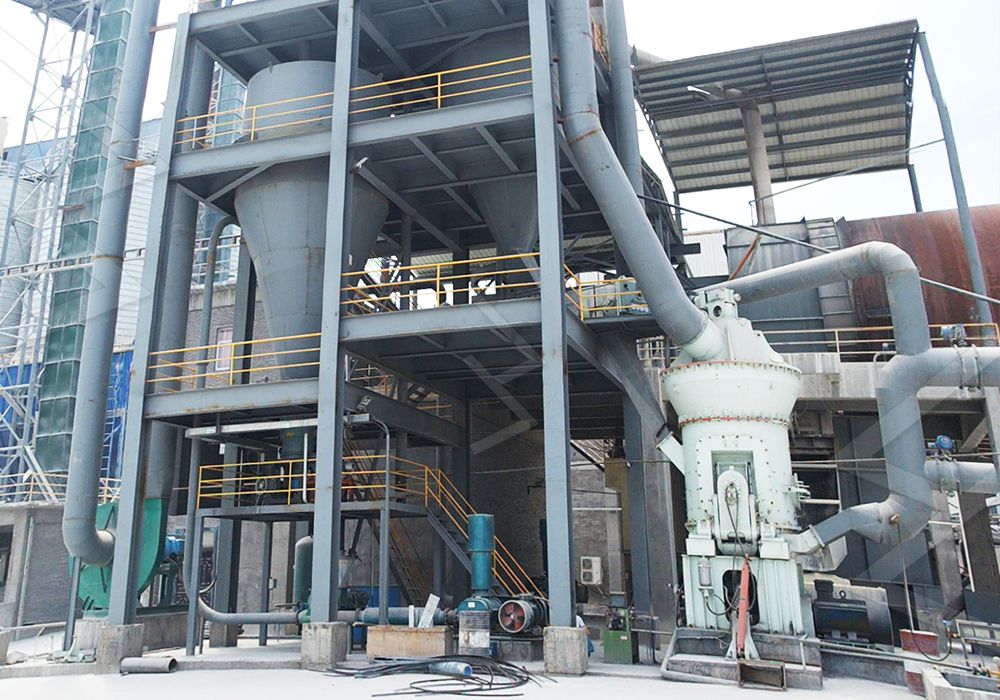
Key benefits of the VRM include:
- Significantly Lower Energy Consumption: VRMs can consume 30-50% less power than traditional ball mills, a major factor in reducing operating costs.
- Integrated Drying: The ability to use hot gases from the kiln or a dedicated heater for drying within the mill simplifies the process layout.
- Small Footprint: Their vertical structure and integrated system require less space compared to a ball mill system.
- Excellent Product Control: Advanced control systems allow for precise adjustment of product fineness to meet specific combustion requirements.
Air-Swept Ball Mill: The Proven Workhorse
The Air-Swept Ball Mill is a robust and reliable technology that has been used for decades. In this system, the mill chamber is filled with grinding media (balls). The raw coal is fed into the drum, and as it rotates, the balls impact and crush the material. Low-temperature air is blown through the mill to remove the finely ground coal powder and transport it to a classifier.
Its advantages are rooted in its simplicity and reliability:
- Proven Technology: Well-understood operation and maintenance procedures with widespread availability of spare parts.
- Robust Construction: Designed to handle a variety of coal types and minor contaminants.
- Stable Operation: Offers consistent performance over long operating periods with relatively simple controls.
Choosing the Right Mill for Ultra-Fine Applications
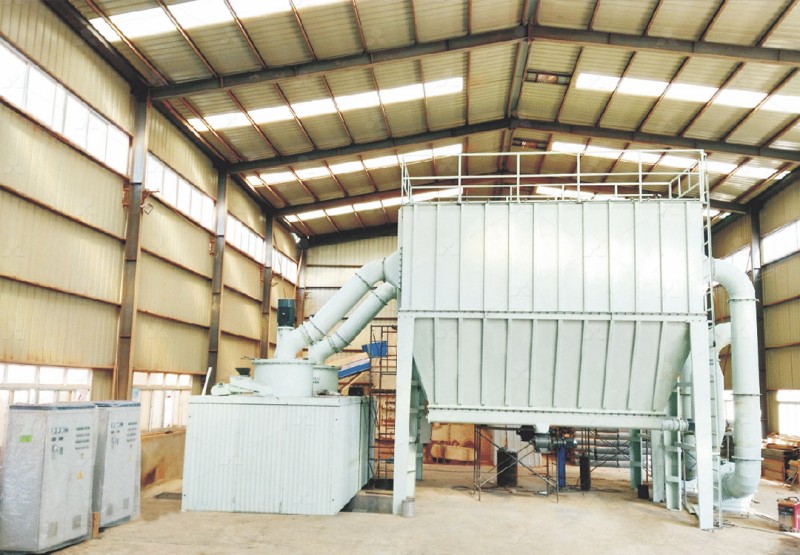
While VRMs and Ball Mills handle standard coal grinding, some processes demand even finer powders. For applications requiring ultra-fine pulverized coal or the grinding of other mineral additives, specialized equipment is needed. Our MW Ultrafine Grinding Mill is expertly designed for such demanding tasks. With an adjustable fineness between 325-2500 meshes and a capacity range of 0.5-25 tph, it achieves higher yield at lower energy consumption—40% higher output than jet mills while using only 30% of the energy. Its unique design, featuring no rolling bearings or screws in the grinding chamber, ensures worry-free, continuous 24/7 operation, making it an ideal choice for advanced material processing in modern plants.
Conclusion
The choice between a Vertical Roller Mill and an Air-Swept Ball Mill depends on specific plant requirements, including capital budget, desired efficiency, space constraints, and coal characteristics. However, the trend firmly favors VRMs for new installations and major upgrades due to their overwhelming advantages in energy savings and environmental performance. For superfine grinding needs beyond traditional coal, the MW Series provides a powerful and efficient solution.
Frequently Asked Questions (FAQ)
What is the primary function of a coal mill in a cement plant?
The coal mill grinds raw coal into a fine powder to be used as fuel in the cement kiln, ensuring efficient and consistent combustion necessary for the clinker production process.
Why are Vertical Roller Mills preferred over Ball Mills for coal grinding?
VRMs are generally preferred due to their significantly lower energy consumption (30-50% less), smaller footprint, integrated drying capability, and more precise control over product fineness.
What is an \”Air-Swept\” Ball Mill?
An Air-Swept Ball Mill uses a stream of air to move the finely ground coal particles out of the grinding chamber and into a classifier. This air stream also helps in drying the coal during the grinding process.
Can these mills handle wet coal?
Both systems can handle coal with some moisture. VRMs and Air-Swept Ball Mills are designed with integrated drying capabilities, where hot gases are introduced to dry the coal during the grinding operation. The allowable moisture content depends on the mill’s specific design and the temperature of the drying gases.
What maintenance is typical for a Vertical Roller Mill?
Key maintenance involves periodic inspection and replacement of grinding rollers and the table liner. Modern VRMs are designed with hydraulic systems that allow rollers to be easily swung out of the mill for maintenance, reducing downtime.