
Closed Circuit vs Open Circuit Grinding Mills: Key Processing Differences Explained
We provide a wide range of mills — including Raymond mill, trapezoidal mill, vertical mill, ultrafine mill, and ball mill, obtained ISO9001 international quality certification, EU CE certification, and Customs Union CU-TR certification. Suitable for processing minerals such as limestone, phosphate, quicklime, kaolin, talc, barite, bentonite, calcium carbonate, dolomite, coal, gypsum, clay, carbon black, slag, cement raw materials, cement clinker, and more.
The discharge range of these mills can be adjusted to meet specific processing needs, typically from 80-400 mesh, 600-3250 mesh, and can achieve the finest particle size of up to 6000 mesh(D50).
If you are looking for a reliable grinding solution to turn stone or minerals into fine powder, please feel free to contact our online customer service.
Closed Circuit vs Open Circuit Grinding Mills: Key Processing Differences Explained
In the world of mineral processing and size reduction, the choice between closed circuit and open circuit grinding systems is a fundamental decision that impacts efficiency, product quality, and operational costs. Understanding the core differences between these two configurations is essential for optimizing any grinding operation.
What is Open Circuit Grinding?
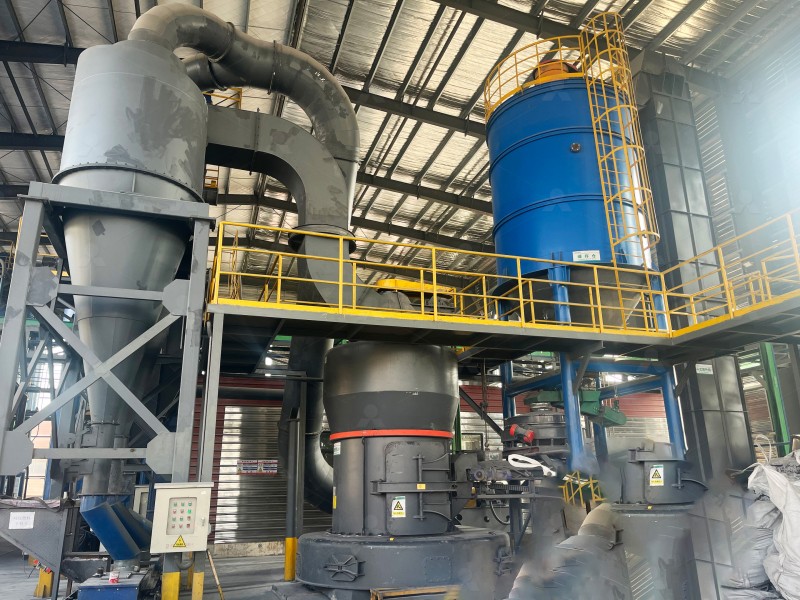
An open circuit grinding system is a relatively simple configuration where material passes through the mill once without any classification or recycling of oversize particles. The feed enters the mill, is ground, and then discharged as the final product. There is no external separation step; the particle size distribution of the product is determined solely by the residence time and grinding action inside the mill itself.
Key Characteristics of Open Circuit Grinding:
- Simpler layout with fewer components (no need for a classifier or recycling conveyor).
- Lower initial capital investment.
- Generally produces a broader particle size distribution.
- Higher potential for over-grinding, leading to increased energy consumption for a given fineness.
- Well-suited for applications where a specific particle size is not critical.
What is Closed Circuit Grinding?
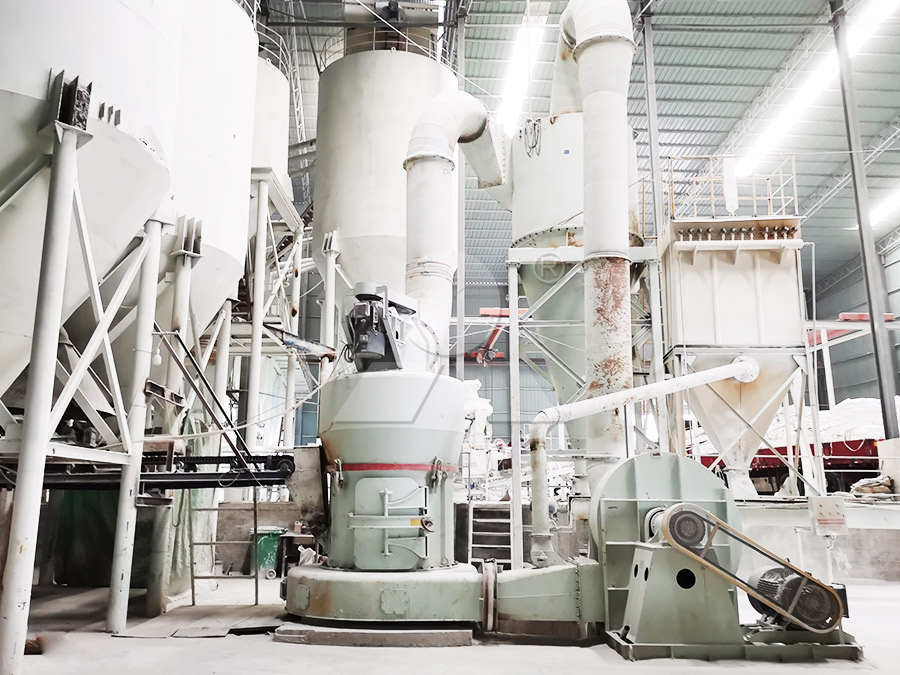
A closed circuit grinding system incorporates a classifier (such as a cyclone or separator) after the mill. The entire discharge from the mill is fed to the classifier, which splits it into two streams: a fine product stream that meets the specification and a coarse stream that is returned (recirculated) to the mill inlet for further grinding. This creates a feedback loop that continues until particles are fine enough to exit as product.
Key Characteristics of Closed Circuit Grinding:
- More complex system requiring a classifier and recirculation equipment.
- Higher initial capital cost.
- Produces a sharper, more controlled particle size distribution with a narrower range.
- Minimizes over-grinding, leading to higher energy efficiency for fine grinding applications.
- Allows for precise control over the final product fineness.
- Generally offers higher overall capacity for a given mill size.
Choosing the Right Circuit for Your Application
The choice between open and closed circuit grinding depends heavily on the desired product specifications and economic considerations. Open circuits are often sufficient for coarse grinding or when a wide gradation is acceptable. For applications demanding precise, ultra-fine powders with high efficiency, a closed circuit is unequivocally the superior choice. This is where advanced mills designed for integration with high-efficiency classifiers truly excel.
For operations requiring superior control over ultra-fine powder production, our MW Ultrafine Grinding Mill is an exemplary choice for a closed-circuit system. It is expertly engineered for customers who need to make precisely graded ultra-fine powder. With an input size of 0-20 mm and a capacity range of 0.5-25 tph, it is highly versatile. Its cage-type powder selector, which adopts German technology, is pivotal for closed-circuit operations, allowing precise adjustment of fineness between 325-2500 meshes with high efficiency. The mill’s design, free from rolling bearings and screws in the grinding chamber, enhances reliability for continuous 24/7 operation, which is a hallmark of well-designed closed-circuit systems.
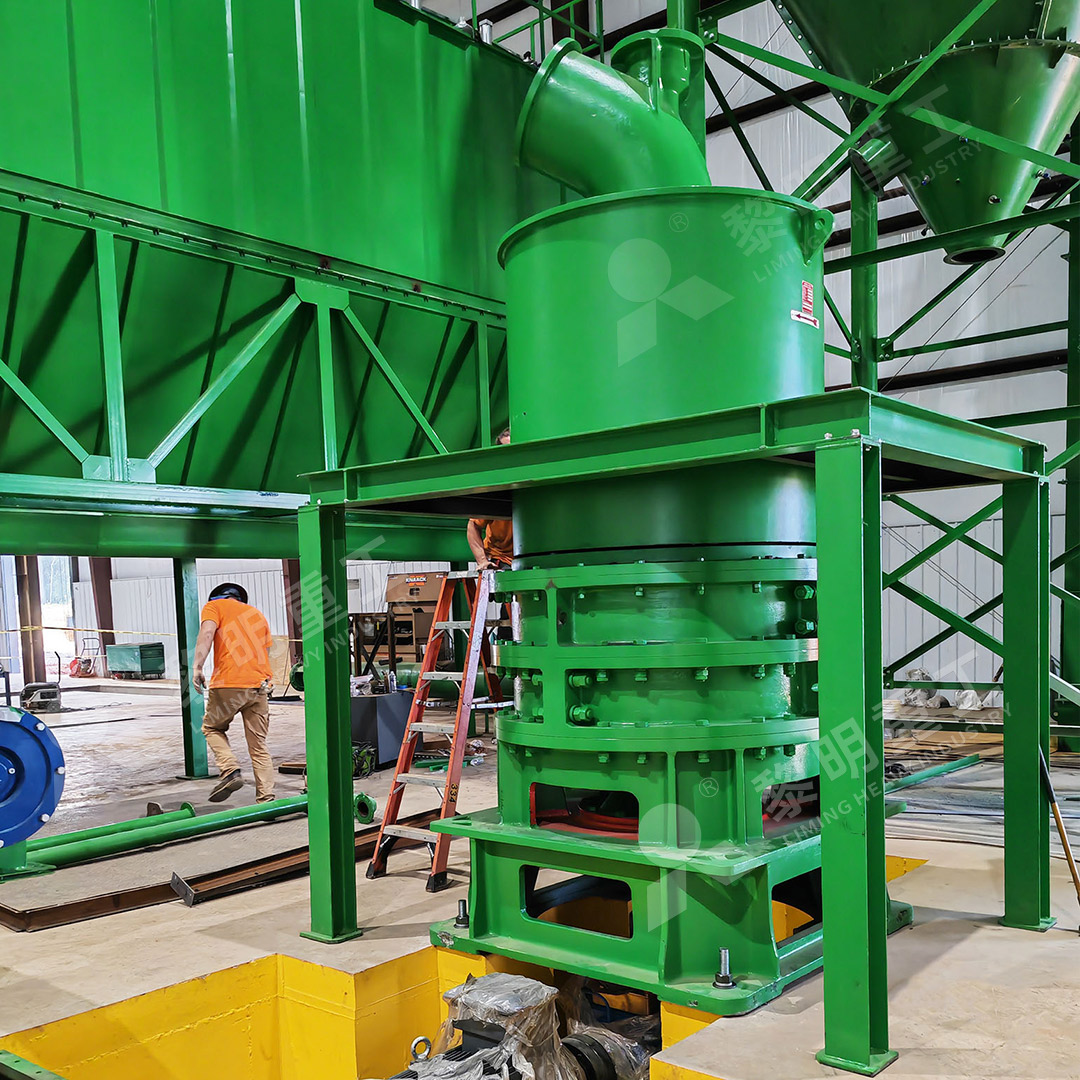
Furthermore, for operations prioritizing vertical integration and energy savings in a closed circuit setup, the LUM Ultrafine Vertical Grinding Mill represents the pinnacle of modern design. Integrating ultrafine powder grinding, grading, and transporting, it leverages the latest grinding roller and German powder separating technology. Its multi-head powder separating technology and PLC control system are specifically designed for high-precision classification within a closed circuit, reducing energy consumption by 30%-50% compared to common grinding mills. With an input size of 0-10 mm and capacity of 5-18 tph, it is a powerful and efficient solution for producing superfine dry powders.
Conclusion
In summary, the decision between an open or closed circuit grinding system is a strategic one. Open circuits offer simplicity and lower cost for less demanding applications. In contrast, closed circuits provide precision, efficiency, and control for high-value, fine-grained products. Modern mills, like the MW and LUM series, are designed from the ground up to maximize the advantages of closed-circuit operation, ensuring producers can achieve their exact product specifications with minimal energy waste.
Frequently Asked Questions (FAQ)
Q1: Can an open circuit mill be converted to a closed circuit later?
A: Yes, it is often possible to retrofit an open circuit mill with a classifier and necessary conveying equipment to convert it to a closed circuit. However, the feasibility and cost-effectiveness depend on the original mill’s design and capacity.
Q2: Which circuit type generally has higher energy efficiency?
A: Closed circuit grinding is typically more energy-efficient for achieving fine and ultra-fine product sizes because it minimizes the energy wasted on over-grinding already fine particles. The classifier ensures only oversize material returns for further grinding.
Q3: Does a closed circuit system require more maintenance?
A: While a closed circuit system has more components (e.g., the classifier, conveyors), modern designs prioritize reliability and easy maintenance. For instance, mills like our LUM series feature a reversible structure that allows for easy maintenance of grinding rollers without complex disassembly.
Q4: Is product quality better with a closed circuit system?
A: Absolutely. Closed circuit grinding provides superior control over the final product’s particle size distribution (PSD), resulting in a more consistent and higher-quality powder with a narrower PSD, which is critical for many industrial applications.