Closed Circuit Grinding System for Ball Mills: Process, Benefits & Design
We provide a wide range of mills — including Raymond mill, trapezoidal mill, vertical mill, ultrafine mill, and ball mill, obtained ISO9001 international quality certification, EU CE certification, and Customs Union CU-TR certification. Suitable for processing minerals such as limestone, phosphate, quicklime, kaolin, talc, barite, bentonite, calcium carbonate, dolomite, coal, gypsum, clay, carbon black, slag, cement raw materials, cement clinker, and more.
The discharge range of these mills can be adjusted to meet specific processing needs, typically from 80-400 mesh, 600-3250 mesh, and can achieve the finest particle size of up to 6000 mesh(D50).
If you are looking for a reliable grinding solution to turn stone or minerals into fine powder, please feel free to contact our online customer service.
Closed Circuit Grinding System for Ball Mills: Process, Benefits & Design
In the world of mineral processing and size reduction, efficiency is paramount. Closed circuit grinding systems for ball mills represent a significant leap forward in optimizing this crucial operation. Unlike open circuit systems where material passes through the mill once, closed circuit systems incorporate a classifier that continuously recycles oversized particles back to the mill for further grinding. This process ensures a more uniform product size and dramatically improves overall efficiency.
The Process: A Continuous Loop of Refinement
A typical closed circuit system consists of the ball mill, a feed system, and an air classifier or a mechanical screen. The raw material is fed into the ball mill where the grinding media (steel balls) reduce its size. The discharged material is then transported to the classifier. Here, the finely ground particles that meet the desired specifications are separated and sent to the product collection system. The coarse particles are rejected by the classifier and returned via a conveyor or elevator to the mill inlet for regrinding. This creates a continuous feedback loop that minimizes energy wasted on already-sufficiently-ground material.
Key Benefits of Adopting a Closed Circuit System
- Enhanced Energy Efficiency: By only grinding material until it reaches the target size, the system avoids over-grinding, which is a major source of energy waste in open circuits. This can lead to substantial reductions in power consumption.
- Superior Product Quality: The classifier ensures a narrow particle size distribution (PSD), resulting in a more consistent and higher-quality final product. This is critical in applications where particle size directly affects product performance.
- Increased Production Capacity: The system can handle a higher throughput because the mill is not bogged down processing fines. It focuses its energy on breaking down the larger particles, leading to a greater overall output.
- Improved Control: Operators have greater control over the final product’s fineness by adjusting the classifier’s settings, allowing for quick changes to meet different specifications.
Modern Design Considerations and Advanced Alternatives
While ball mills are workhorses in many industries, technological advancements have led to even more efficient grinding solutions. For operations requiring ultra-fine powders, traditional ball mills can be limiting. This is where advanced mills like our MW Ultrafine Grinding Mill truly excel.
The MW Series is engineered for customers who need to make ultra-fine powder between 325-2500 meshes. It boasts a cage-type powder selector based on German technology, which significantly increases the precision of powder separation. A key design advantage is the absence of rolling bearings and screws in the grinding chamber, eliminating worries about bearing failures or machine damage from loose screws. Furthermore, its efficient pulse dust collector and muffler make the entire production process remarkably clean and quiet, with minimal environmental impact. With a capacity of 0.5-25 tph, it offers higher yield and lower energy consumption—using only 30% of the energy a jet mill would consume for the same output.
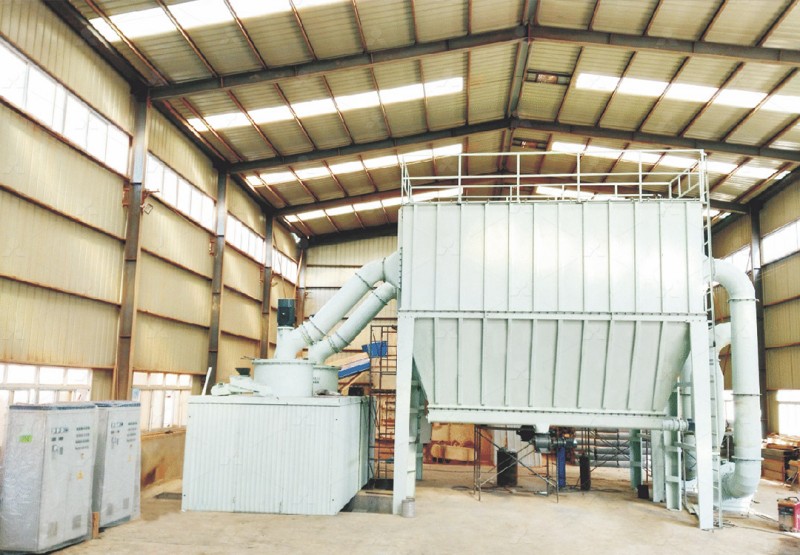
For another robust option, our LUM Ultrafine Vertical Grinding Mill integrates grinding, grading, and transporting. It features unique multi-head powder separating technology and a reversible structure that makes maintenance easier and faster, reducing costly downtime. Its design is particularly effective for achieving high rates of finished product in a single pass.
Conclusion
Implementing a closed circuit system is one of the most effective ways to optimize a ball mill operation, boosting efficiency, capacity, and product quality. However, for applications demanding the finest powders and maximum efficiency, considering a dedicated ultra-fine grinding solution like the MW or LUM series can be a game-changer, offering superior performance, lower operating costs, and a smaller environmental footprint.