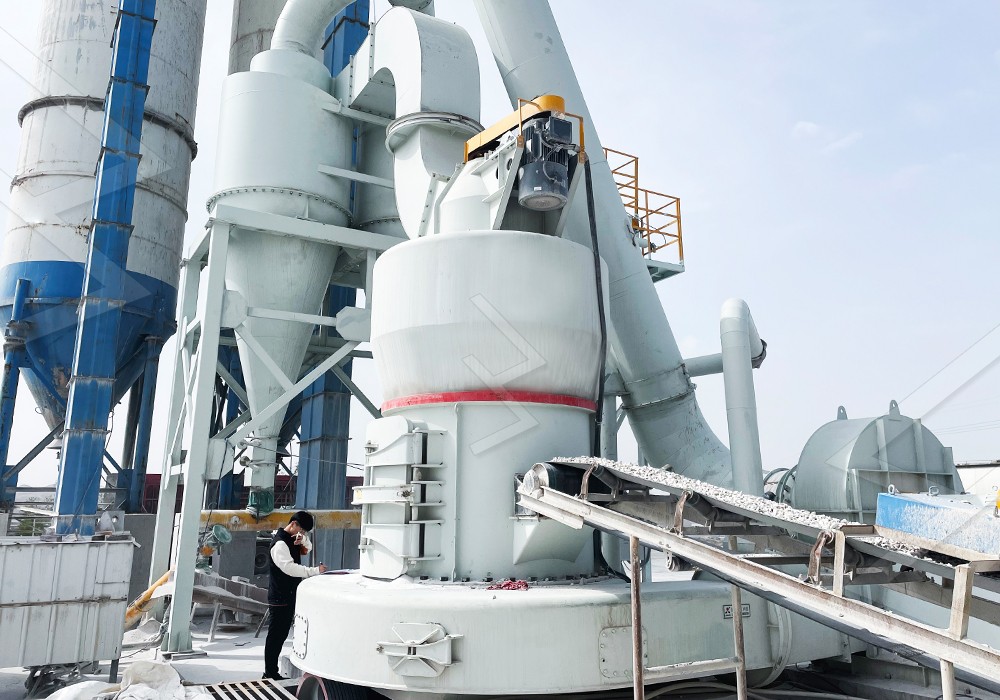
Cement Raw Material Grinding Mill Comparison Table: VRM vs. Ball Mill
We provide a wide range of mills — including Raymond mill, trapezoidal mill, vertical mill, ultrafine mill, and ball mill, obtained ISO9001 international quality certification, EU CE certification, and Customs Union CU-TR certification. Suitable for processing minerals such as limestone, phosphate, quicklime, kaolin, talc, barite, bentonite, calcium carbonate, dolomite, coal, gypsum, clay, carbon black, slag, cement raw materials, cement clinker, and more.
The discharge range of these mills can be adjusted to meet specific processing needs, typically from 80-400 mesh, 600-3250 mesh, and can achieve the finest particle size of up to 6000 mesh(D50).
If you are looking for a reliable grinding solution to turn stone or minerals into fine powder, please feel free to contact our online customer service.
Cement Raw Material Grinding Mill Comparison Table: VRM vs. Ball Mill
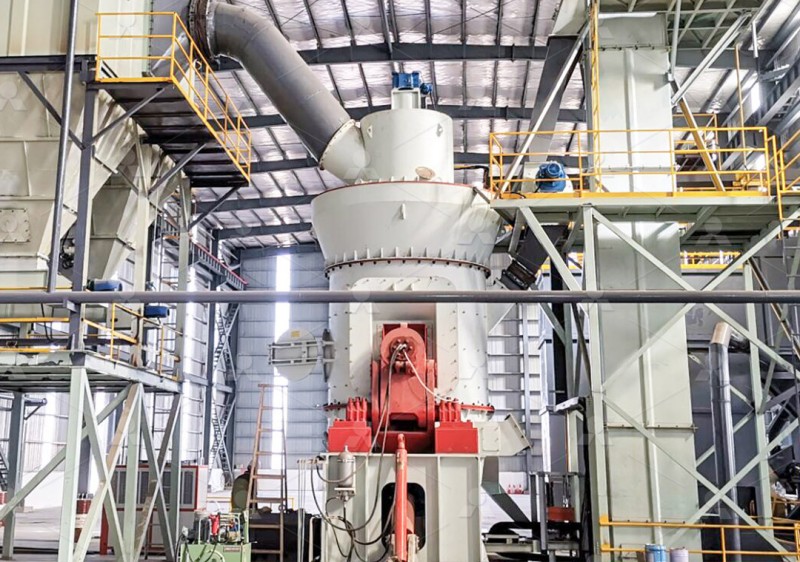
Choosing the right grinding mill for cement raw materials is a critical decision that impacts productivity, energy consumption, and overall operational costs. The two primary contenders in this arena are the traditional Ball Mill and the modern Vertical Roller Mill (VRM). Let’s break down their key differences.
Key Comparison Factors
| Feature | Vertical Roller Mill (VRM) | Ball Mill |
|---|---|---|
| Energy Consumption | 30-50% lower than ball mills. Grinding and drying in a single unit is highly efficient. | Higher energy usage. A significant portion of energy is lost as heat and noise. |
| Footprint & Layout | Compact design. Occupies up to 50% less space than a ball mill system. | Requires a larger building footprint and more auxiliary equipment. |
| Drying Capacity | Excellent. Can handle moist materials efficiently with integrated hot gas intake. | Limited. Often requires a separate pre-drying system for moist feed. |
| Noise Level | Lower operational noise due to the enclosed grinding principle. | Notoriously loud due to the tumbling action of steel balls. |
| Maintenance | Easier access to rollers and table. Modular design allows for quicker part replacement. | Maintenance can be more labor-intensive, especially for liner and ball charge replacement. |
| Product Fineness | Easily adjustable fineness with dynamic classifiers. Good particle size distribution. | Capable of very fine grinding, but may have a wider particle size distribution. |
The Modern Choice: Beyond the Traditional VRM
While standard VRMs offer significant advantages, the industry is moving towards even more advanced solutions for specific applications. For projects requiring ultra-fine powders with superior particle distribution, our MW Ultrafine Grinding Mill stands out as a premier choice.
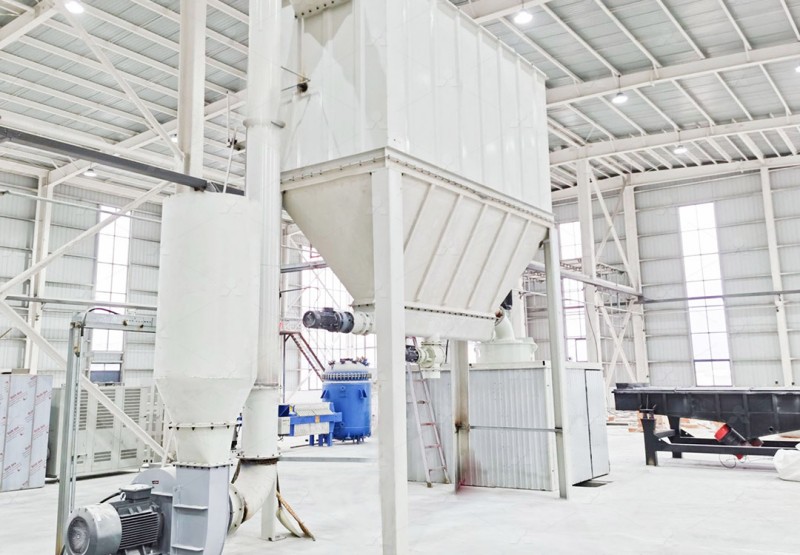
This machine is engineered for customers who need to make ultra-fine powder, boasting features that address common milling challenges. It achieves a remarkable 40% higher production capacity than jet mills and stirred mills at the same power and fineness, while its system energy consumption is a mere 30% of that of a jet mill. With an adjustable fineness range between 325-2500 meshes and a unique design that eliminates rolling bearings and screws in the grinding chamber, it drastically reduces maintenance worries and machine damage risks.
Conclusion
The shift from Ball Mills to Vertical Roller Mills is a clear trend in the cement industry, driven by the relentless pursuit of efficiency and lower operating costs. For operations focused on high-capacity, standard raw meal grinding, a robust VRM is the undisputed choice. However, for specialized applications demanding ultra-fine products, advanced solutions like our MW Ultrafine Grinding Mill provide the next level of performance, yield, and energy savings. Evaluating your specific production goals and material characteristics is key to selecting the optimal technology for your plant.