
Cement Ball Mill Working Principle and Operational Guide PDF
We provide a wide range of mills — including Raymond mill, trapezoidal mill, vertical mill, ultrafine mill, and ball mill, obtained ISO9001 international quality certification, EU CE certification, and Customs Union CU-TR certification. Suitable for processing minerals such as limestone, phosphate, quicklime, kaolin, talc, barite, bentonite, calcium carbonate, dolomite, coal, gypsum, clay, carbon black, slag, cement raw materials, cement clinker, and more.
The discharge range of these mills can be adjusted to meet specific processing needs, typically from 80-400 mesh, 600-3250 mesh, and can achieve the finest particle size of up to 6000 mesh(D50).
If you are looking for a reliable grinding solution to turn stone or minerals into fine powder, please feel free to contact our online customer service.
Cement Ball Mill Working Principle and Operational Guide
For professionals in the cement and mineral processing industries, understanding the working principle and operational nuances of a ball mill is fundamental to achieving optimal grinding efficiency, product quality, and equipment longevity. This guide provides a concise overview of the cement ball mill’s core functionality and key operational best practices.
Core Working Principle
A cement ball mill operates on a relatively simple principle. It is a horizontal, cylindrical rotating device, essentially a large drum filled with grinding media—typically high-chromium steel balls. The material to be ground (the ‘feed’) is introduced through a hollow trunnion at one end.
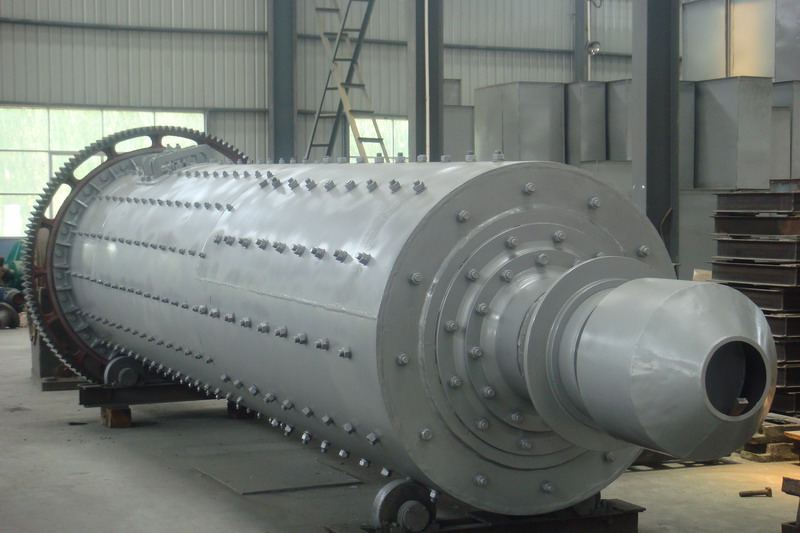
As the mill shell rotates, the grinding media are lifted to a certain height on the rising side of the shell before they cascade down (or cataract down, depending on the speed), impacting and crushing the feed material trapped between them. The reduction in particle size is achieved through a combination of impact and attrition forces. The continuous friction and collision between the balls themselves and the balls and the liner plates further grind the material into a fine powder.
The ground material, now a slurry in wet process mills or a powder in dry process mills, is discharged through the opposite trunnion, often passing through a discharge diaphragm that retains the grinding media while allowing the product to exit.
Key Operational Parameters & Best Practices
Effective operation of a ball mill requires careful attention to several critical parameters:
- Mill Speed: Operating at the correct critical speed (usually 65-80% of critical speed) is vital. Too slow, and insufficient cascading occurs; too fast, and the media centrifuge, eliminating the grinding action.
- Grinding Media Load & Size Distribution: The size, density, and composition of the balls must be matched to the feed material. A proper mix of ball sizes ensures efficient grinding of coarse and fine particles. Worn media must be regularly replenished.
- Feed Rate: An optimal, consistent feed rate must be maintained. An overloaded mill leads to inefficient grinding and increased power consumption, while an underloaded mill causes excessive wear of media and liners.
- Material Fill Level: The volume occupied by the grinding media and material inside the mill affects efficiency. It’s typically recommended to operate with a total fill level of 25-35% of the mill volume.
- Ventilation & Temperature Control: In dry grinding, adequate mill ventilation is crucial to remove heat and moisture, prevent coating on media and liners, and transport the finished product. Excessive heat can damage the mill internals and cause gypsum dehydration in cement milling.
Beyond Traditional Ball Milling: Advanced Solutions
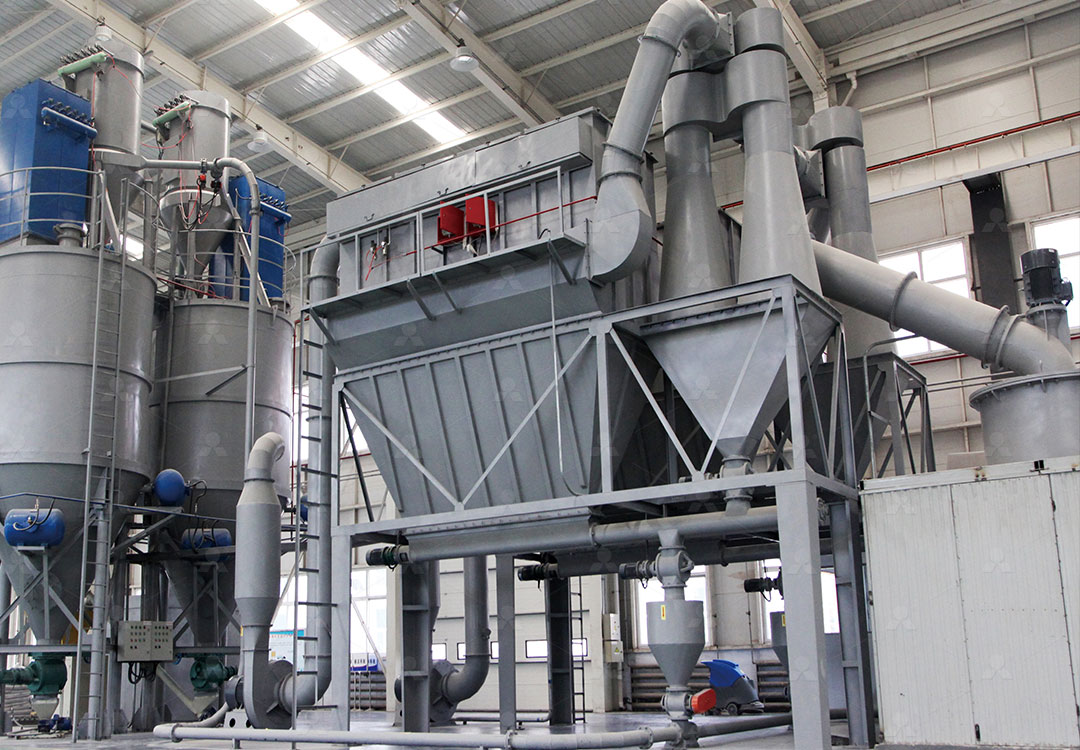
While the ball mill is a workhorse of the industry, technological advancements have led to more efficient grinding solutions for specific applications, particularly where ultra-fine powders are required. For operations looking to enhance efficiency, reduce energy consumption, and produce high-precision powders, our MW Ultrafine Grinding Mill presents a superior alternative.
This advanced mill is engineered for customers needing to make ultra-fine powder (adjustable between 325-2500 meshes) from materials like limestone, calcite, and barite. Its innovative design eliminates rolling bearings and screws in the grinding chamber, drastically reducing maintenance worries and the risk of machine damage from loose parts. A key advantage is its significantly higher yielding and lower energy consumption – it offers 40% higher capacity than jet mills and double the yield of ball mills, while consuming only 30% of the energy of a jet mill. Equiped with an efficient pulse dust collector and muffler, it ensures a cleaner, quieter, and more environmentally friendly operation, fully compliant with national standards.
Conclusion
Mastering the working principle and operational guidelines of a cement ball mill is key to maximizing productivity and minimizing downtime. Regular inspection of liners and media, monitoring of power draw and product fineness, and adherence to these best practices will ensure stable and efficient operation. For those seeking to push the boundaries of fine and ultra-fine grinding, exploring modern solutions like our MW Ultrafine Grinding Mill can unlock new levels of performance and efficiency, future-proofing your grinding operations.