
Can a Hammer Mill Be Used to Grind Granulated Slag?
We provide a wide range of mills — including Raymond mill, trapezoidal mill, vertical mill, ultrafine mill, and ball mill, obtained ISO9001 international quality certification, EU CE certification, and Customs Union CU-TR certification. Suitable for processing minerals such as limestone, phosphate, quicklime, kaolin, talc, barite, bentonite, calcium carbonate, dolomite, coal, gypsum, clay, carbon black, slag, cement raw materials, cement clinker, and more.
The discharge range of these mills can be adjusted to meet specific processing needs, typically from 80-400 mesh, 600-3250 mesh, and can achieve the finest particle size of up to 6000 mesh(D50).
If you are looking for a reliable grinding solution to turn stone or minerals into fine powder, please feel free to contact our online customer service.
Can a Hammer Mill Be Used to Grind Granulated Slag?
The short answer is yes, a hammer mill can be used to grind granulated slag, but it’s often not the most efficient or cost-effective choice for producing high-quality, fine powders required by modern industries. Let’s dive into the specifics of why that is and explore a far superior alternative.
The Challenges of Using a Hammer Mill for Slag
Hammer mills operate on a simple principle: impact and attrition from swinging hammers. While they are robust and can handle moderately abrasive materials, granulated slag presents unique challenges. Slag is a by-product of steel production and is highly abrasive. This abrasiveness leads to rapid wear and tear on the hammers and internal liners of a standard hammer mill, resulting in frequent downtime for maintenance and replacement of parts. This increases operational costs significantly.
Furthermore, achieving a consistently fine and uniform particle size with a hammer mill can be difficult. The final product often has a wide particle size distribution, which may not be suitable for applications like supplementary cementitious materials (SCM) where specific fineness is crucial for performance. The process can also be noisy and generate significant dust, posing environmental and health concerns.

A Superior Solution: Specialized Grinding Technology
For efficient, high-yield, and economical grinding of granulated slag into valuable ultra-fine powder, specialized vertical roller mills or ultrafine grinding mills are the industry standard. These mills are engineered specifically to handle abrasive materials, offering higher efficiency, lower energy consumption, and minimal wear.
For operations that require a fine to ultra-fine powder, our MW Ultrafine Grinding Mill is an exceptional choice. This machine is designed for customers who need to make ultra-fine powder from various materials, including slag.
- Input Size: 0-20 mm
- Capacity: 0.5-25 tph
- Fineness: Adjustable between 325-2500 meshes
The MW Mill boasts higher yielding and lower energy consumption. Its newly designed grinding curves of the grinding roller and ring enhance efficiency, providing 40% higher capacity than jet mills with system energy consumption only 30% of them. Crucially for abrasive slag, there are no rolling bearings or screws in the grinding chamber, eliminating worries about damage to these components from abrasive material. An efficient pulse dust collector ensures the entire operation is eco-friendly and dust-free.
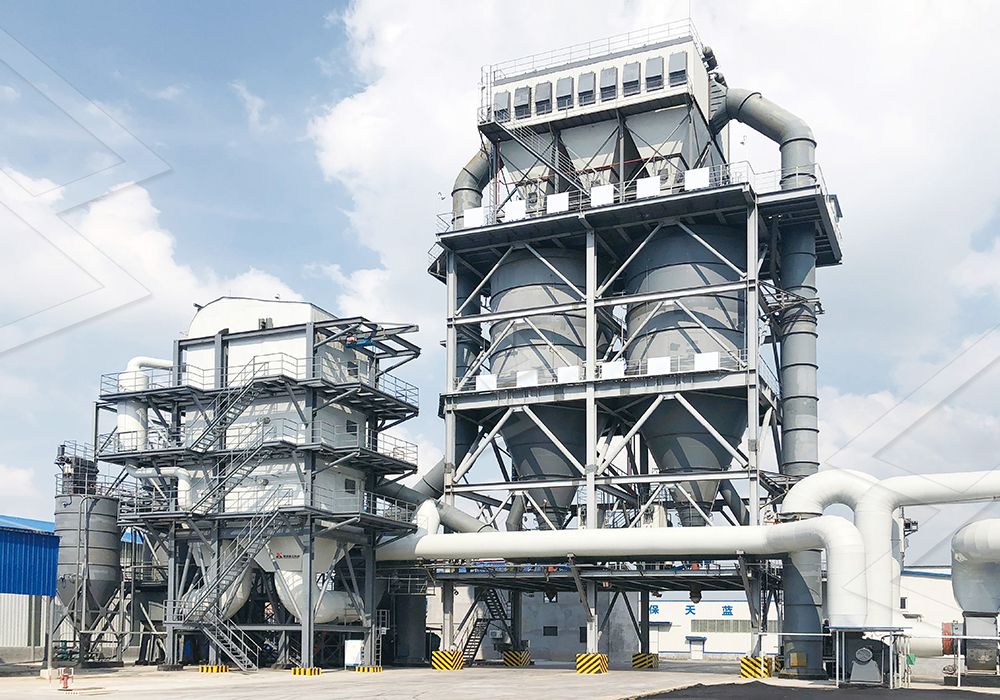
For Larger Scale Slag Processing: The Vertical Grinding Mill
If your operation involves larger input sizes or higher capacity requirements for slag, our LM Vertical Slag Mill is the perfect workhorse. It integrates drying, grinding, powder selection, and conveying into a single unit.
- Capacity: 7-100 T/H
- Input size: 38-65mm
This mill reduces its covered area by 50% compared to a ball mill system and saves 30% ~ 40% in energy consumption. Its unique grinding device is focused on slag milling, producing a fine powder with a uniform fineness and high screening rate that is ideal for cement and concrete production.
Conclusion: Choose the Right Tool for the Job
While a hammer mill might get the job done in a pinch, the high maintenance costs, inconsistent output, and energy inefficiency make it a poor long-term choice for grinding granulated slag. Investing in technology specifically designed for this purpose—like our MW Ultrafine Grinding Mill for fine powders or LM Vertical Slag Mill for large-scale processing—will result in lower operating costs, higher quality final product, and a more reliable, environmentally friendly operation. Don’t let the wrong equipment grind your profits away.
