
Can a Ball Mill Be Used as a Primary Crusher? Understanding the Limitations
We provide a wide range of mills — including Raymond mill, trapezoidal mill, vertical mill, ultrafine mill, and ball mill, obtained ISO9001 international quality certification, EU CE certification, and Customs Union CU-TR certification. Suitable for processing minerals such as limestone, phosphate, quicklime, kaolin, talc, barite, bentonite, calcium carbonate, dolomite, coal, gypsum, clay, carbon black, slag, cement raw materials, cement clinker, and more.
The discharge range of these mills can be adjusted to meet specific processing needs, typically from 80-400 mesh, 600-3250 mesh, and can achieve the finest particle size of up to 6000 mesh(D50).
If you are looking for a reliable grinding solution to turn stone or minerals into fine powder, please feel free to contact our online customer service.
Can a Ball Mill Be Used as a Primary Crusher? Understanding the Limitations
This is a question that surfaces periodically in mineral processing and aggregate production discussions. While the idea of using a single machine for multiple stages might seem appealing for streamlining operations, the reality is more complex. A ball mill, by its fundamental design and operating principles, is not suitable for use as a primary crusher. Attempting to force this application leads to significant inefficiencies, accelerated wear, and potential equipment failure. Let’s delve into the core reasons why.
The Fundamental Design Mismatch
Primary crushers, such as jaw crushers and gyratory crushers, are engineered to handle large, raw feed material directly from the mine or quarry. Their primary function is to apply massive compressive force to break down rocks measuring several feet in diameter into manageable fragments, typically 6 to 10 inches. These machines are built with robust structures, heavy-duty bearings, and wear parts designed to withstand extreme shock loads and abrasion from uncrushed ore.
In stark contrast, a ball mill is a fine grinding device. It is designed to receive material that has already been reduced to a relatively small size, usually less than 1/4 inch (6-8 mm). Its grinding action relies on the cascading and cataracting of steel balls within a rotating shell to achieve particle size reduction through impact and attrition. Feeding large, uncrushed rocks into a ball mill would be akin to putting boulders in a food blender—it’s simply not what the machine was built for.
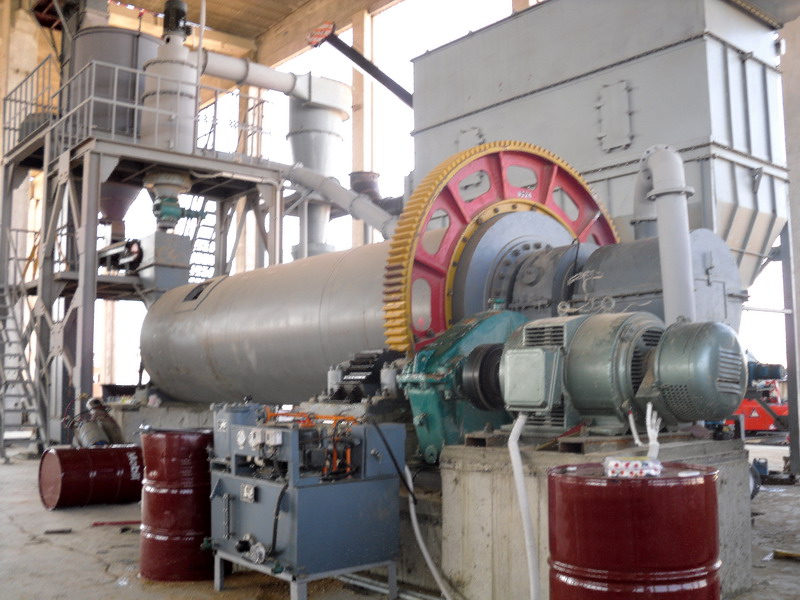
Key Limitations and Operational Risks
Using a ball mill as a primary crusher exposes several critical limitations:
- Inefficient Energy Consumption: Ball mills are already significant energy consumers. Forcing them to perform coarse crushing, a highly inefficient process for this machine type, would drastically increase specific energy consumption (kWh/ton), making the operation economically unviable.
- Severe Wear and Tear: The liners and grinding balls in a ball mill are designed for grinding pre-crushed material. Large, sharp-edged rocks would cause catastrophic damage to the mill liners and result in rapid, uneven wear of the grinding media.
- Limited Feed Size Acceptance: The inlet trunnion and internal design of a ball mill physically cannot accommodate large rocks. This would lead to constant clogging and blockages, causing frequent, unplanned downtime.
- Poor Control Over Product Size: A ball mill’s discharge product size is a function of grinding time and media size. It cannot produce a controlled, coarse product like a primary crusher. The output would be an uncontrolled mix of fines and potentially unbroken oversized material.
The Correct Process Flow: Crushing Before Grinding
The established and most efficient comminution circuit follows a logical sequence: primary crushing, secondary crushing, and finally, grinding. Each stage is optimized for a specific range of size reduction. The primary crusher does the heavy lifting, the secondary crusher further refines the product, and the ball mill takes over to achieve the final desired fineness. This staged approach ensures that each machine operates within its design parameters, maximizing efficiency, minimizing wear, and ensuring product quality.
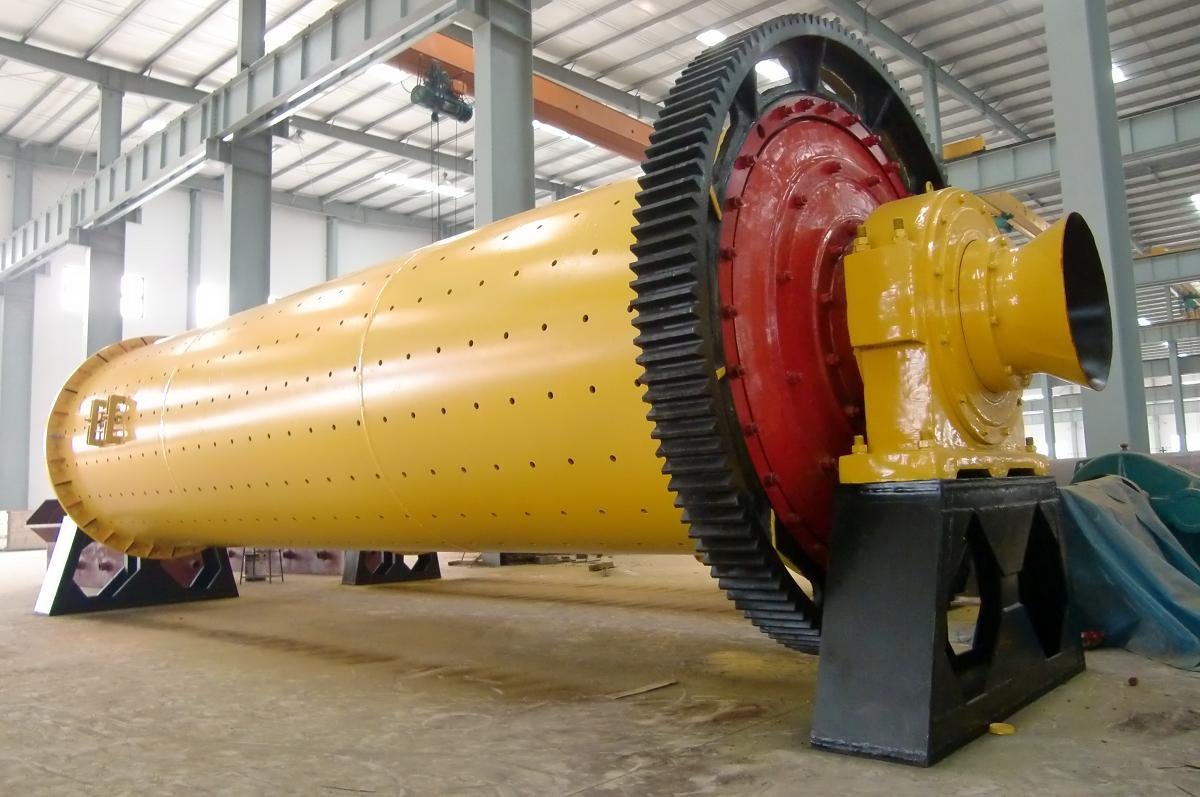
The Right Tool for Ultra-Fine Grinding
Once material has been correctly prepared through primary and secondary crushing, selecting the right grinding mill is crucial for efficiency. For operations requiring ultra-fine powders, traditional ball mills can be outperformed by more advanced technology. For instance, our MW Ultrafine Grinding Mill is specifically engineered for this purpose.
Designed to produce powders between 325 and 2500 meshes, the MW Series offers significant advantages. It achieves a production capacity 40% higher than jet mills and double that of a ball mill for the same power consumption, while system energy use is just 30% of a jet mill. Its intelligent design, including an external lubrication system and the absence of rolling bearings and screws in the grinding chamber, ensures reliable, worry-free operation with minimal maintenance. This makes it an ideal, high-efficiency successor in a circuit after proper primary crushing.
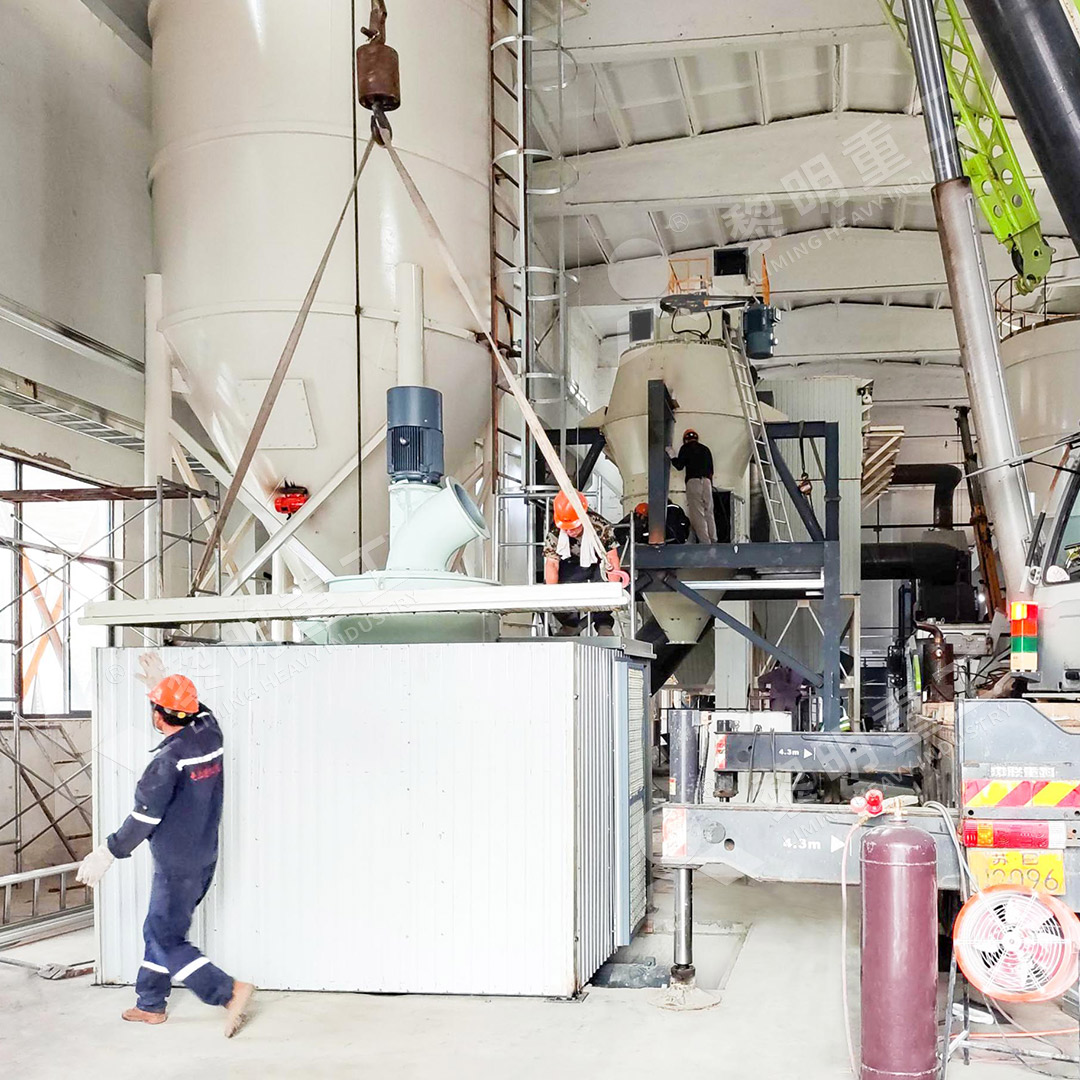
For projects demanding even higher integration and efficiency for non-metallic minerals, our LM Vertical Grinding Mill presents a compelling alternative. It integrates crushing, drying, grinding, classifying, and conveying into a single unit. Its footprint is 50% smaller than a ball mill system, and it reduces energy consumption by 30-40%. This vertical design is an excellent choice for achieving the final grinding stage after primary crushing, especially where space and energy savings are priorities.
Frequently Asked Questions (FAQ)
What is the maximum feed size for a ball mill?
Typically, ball mills are designed to accept feed material that is less than 1/4 inch (6-8 mm) in size. The exact maximum size depends on the mill’s specific design and the size of the grinding media.
Can any modifications be made to a ball mill to allow it to handle larger feed?
While minor adjustments can be made, fundamentally altering a ball mill to act as a primary crusher is not practical or advisable. The structural integrity, drive system, and liner design are not suited for the shock loads and abrasion of primary crushing, making such modifications risky and inefficient.
What is the primary advantage of using a vertical mill like the LM series over a ball mill?
LM Vertical Grinding Mills offer significant advantages in energy efficiency (30-40% less power consumption), a smaller footprint, integrated drying and grinding capabilities, and lower operational noise levels compared to traditional ball mills.
If I need ultra-fine powder, what should my process flow look like?
The optimal flow is: Primary Crusher -> Secondary Crusher -> Grinding Mill (e.g., Ball Mill or, for higher efficiency, an MW Ultrafine Grinding Mill). The crushers reduce the rock to a fine gravel, which is then efficiently ground into ultra-fine powder by the specialized grinding mill.