
Buy Used Automatic Herbal Grinder Mill: A Complete Buyer’s Guide
We provide a wide range of mills — including Raymond mill, trapezoidal mill, vertical mill, ultrafine mill, and ball mill, obtained ISO9001 international quality certification, EU CE certification, and Customs Union CU-TR certification. Suitable for processing minerals such as limestone, phosphate, quicklime, kaolin, talc, barite, bentonite, calcium carbonate, dolomite, coal, gypsum, clay, carbon black, slag, cement raw materials, cement clinker, and more.
The discharge range of these mills can be adjusted to meet specific processing needs, typically from 80-400 mesh, 600-3250 mesh, and can achieve the finest particle size of up to 6000 mesh(D50).
If you are looking for a reliable grinding solution to turn stone or minerals into fine powder, please feel free to contact our online customer service.
Buy Used Automatic Herbal Grinder Mill: A Complete Buyer’s Guide
So, you’re in the market for a used automatic herbal grinder mill? Smart move. Investing in quality grinding equipment is crucial for any herbal processing business, but buying new isn’t always in the cards. A used industrial grinder can offer tremendus value if you know what to look for. This guide will walk you through the key considerations to avoid costly mistakes and find a machine that’ll serve your business for years to come.
Why Consider a Used Grinder?
Let’s be real, the primary driver is cost. A high-quality used automatic herbal grinder mill can cost a fraction of a new one, allowing you to allocate budget elsewhere. For startups or businesses scaling up, this is a huge advantage. Many used machines have plenty of life left in them, especially if they’ve been well-maintained. You’re essentially letting the first owner take the big initial depreciation hit.

Key Things to Check Before You Buy
Don’t just jump on the first deal you see. Inspect carefully or you might end up with a very expensive paperweight.
- Wear and Tear: This is numero uno. Open it up! Check the grinding rollers, rings, or blades (depending on the mill type) for significant scoring, cracks, or excessive wear. Replacing these core components can be pricey.
- Operational History: Ask what materials were previously ground. A mill used for soft herbs like mint or basil is a better bet than one that’s been grinding abrasive roots or minerals. Cross-contamination can be a concern.
- Electrical & Mechanical Systems: Does the motor sound smooth? Are there any unusual vibrations? Check for obvious leaks, rust, or damaged wiring. If possible, request a test run with a sample of your material.
- Dust Collection & Seals: For herbal processing, containing powder is critical for both yield and worker safety. Inspect the seals and the dust collection system for damage or poor maintenance.
- Availability of Spare Parts: Can you still get parts for this model? A great deal on an obscure or discontinued model is no deal at all if you can’t fix it when it breaks.
Understanding Grinder Types for Herbal Applications
Not all grinders are created equal. For delicate herbs, you need precision and control over heat and fineness to preserve active compounds.
- Ultrafine Grinding Mills: Ideal for creating superfine herbal powders with high bioavailability. They offer precise control over particle size.
- Vertical Roller Mills: Great for efficient, large-volume grinding with integrated drying capabilities.
- Hammer Mills: A more rugged option, better for preliminary crushing or tougher herbal matter, but can generate more heat.
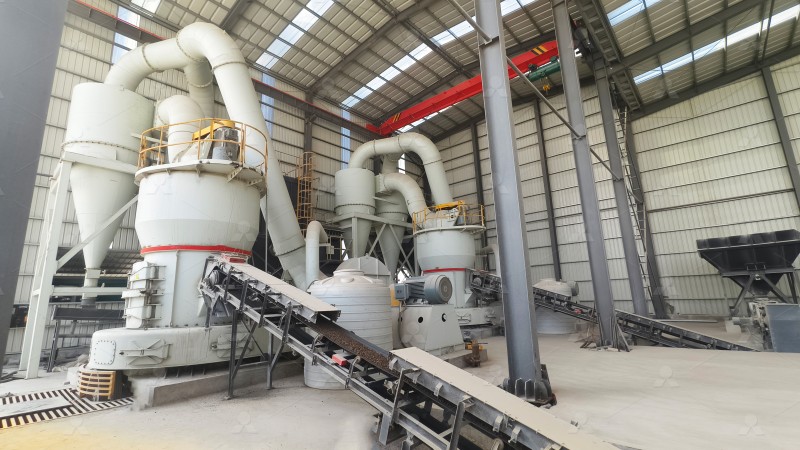
A Top-Tier Option to Look For: MW Ultrafine Grinding Mill
If you’re hunting on the used market, keep an eye out for our MW Ultrafine Grinding Mill. It’s a fantastic piece of kit for herbal processing, and a well-maintained used model is a stellar find. Here’s why:
- Precision Fineness: It can adjust fineness between 325-2500 meshes, giving you incredible control over your final powder texture – perfect for everything from coarse blends to micronized herbal extracts.
- Cool Operation: Its efficient design promotes lower energy consumption and helps minimize heat generation during grinding, which is vital for protecting the delicate properties of herbs.
- Clean & Eco-Friendly: It comes equipped with an efficient pulse dust collector and muffler, drastically reducing dust and noise pollution in your facility. The whole grinding process is contained and environmentally friendly.
- Built to Last: A key feature for used buyers: there are no rolling bearings or screws in the grinding chamber. This brilliant design eliminates common failure points, meaning a used MW mill is often in much better internal condition than other models of similar age.
With an input size of 0-20 mm and a capacity range of 0.5-25 tph, it’s versatile enough for many small to mid-scale herbal operations. If you find one, check its service history closely – it’s a workhorse.
Another Solid Contender: LUM Ultrafine Vertical Grinding Mill
Another model worth seeking out is the LUM Ultrafine Vertical Grinding Mill. Its vertical design is a space-saver, and it incorporates advanced roller and powder separating technology.
- Higher Yielding Rate: Its unique roller shell design is easier on materials, promoting a higher rate of finished product in a single pass, which maximizes your herb yield.
- Easier Maintenance: It features a reversible structure. This is a huge benefit on the used market! It allows grinding rollers to be easily swung out of the body for inspection or replacement, making future maintenance much simpler and cheaper.
- Stable Operation: Its double position-limiting technology helps avoid destructive impacts from vibration, ensuring stable, consistent grinding – a sign of a machine that likely has years of reliable service left.

Final Checklist Before Sealing the Deal
- Inspect physically for wear, rust, and damage.
- Review all maintenance logs and service records.
- Ask for a live test grind with your material.
- Verify availability and cost of critical spare parts.
- Factor in potential costs for replacement wear parts (rollers, rings, filters) and a professional service checkup after purchase.
- Confirm the machine’s electrical requirements match your facility’s power supply.
Buying used requires more diligence, but the savings can be substantial. By focusing on well-designed, robust machines like the MW or LUM series from a reputable manufacturer, you significantly increase your chances of landing a used grinder that performs like new without the new price tag. Do your homework, inspect thoroughly, and you’ll find a machine that helps your business grow. Happy hunting!